









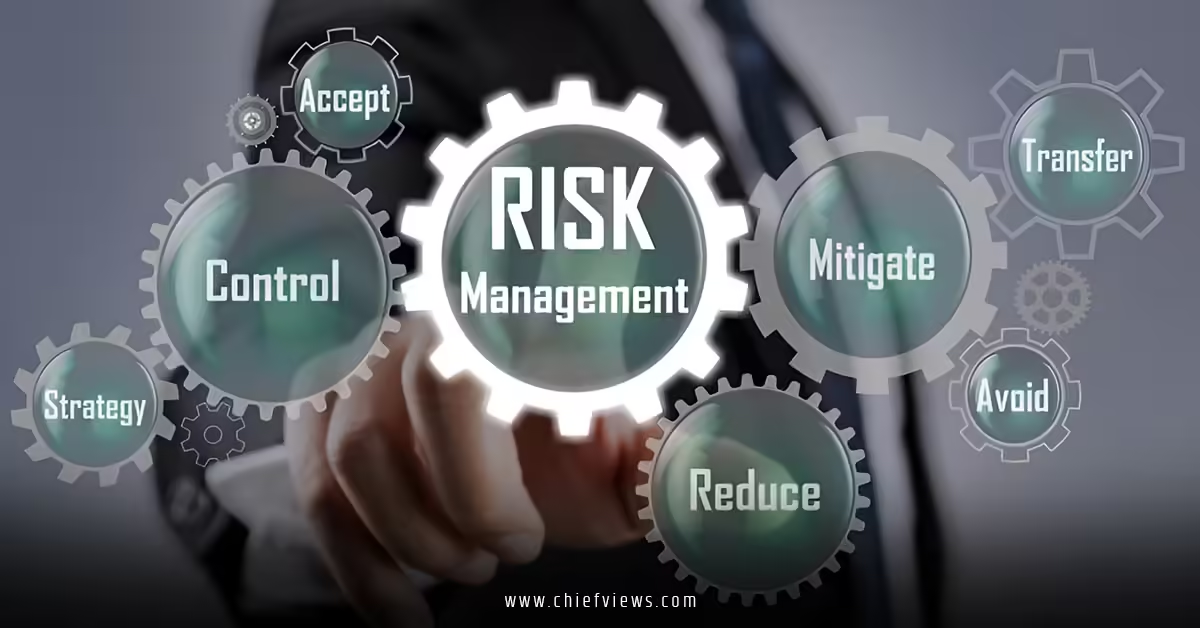
AI risk management frameworks for executives represent the systematic approach to identifying, assessing, and mitigating risks across your enterprise AI ecosystem. Think of it as your strategic blueprint for keeping AI innovations on track while protecting your company from costly failures, regulatory violations, and reputational damage.
Here’s what smart executives are implementing right now:
- Structured risk assessment processes that classify AI systems by potential impact
- Automated monitoring systems that catch problems before they escalate
- Clear escalation protocols for high-risk AI decisions and incidents
- Integration with existing enterprise risk management frameworks
- Continuous evaluation processes that adapt as AI systems evolve
The companies getting this right are deploying AI 60% faster than those managing risks ad-hoc. The ones getting it wrong are dealing with regulatory scrutiny, customer backlash, and nervous boards asking tough questions about AI oversight.
The Executive Case for Structured AI Risk Management
Here’s the reality check: Your AI systems are making thousands of decisions daily that could expose your company to significant liability. Without proper risk frameworks, you’re essentially flying blind.
Consider what happened to several major retailers whose AI pricing algorithms triggered antitrust investigations. Or the healthcare companies facing lawsuits over biased AI diagnostic tools. These weren’t technical failures—they were risk management failures.
Smart executives recognize that AI risk management frameworks aren’t just defensive measures. They’re strategic enablers that allow faster, safer AI deployment across the enterprise.


The MIT Sloan Management Review research shows companies with mature AI risk frameworks achieve 40% faster time-to-market for new AI capabilities while maintaining significantly lower incident rates.
Understanding Enterprise AI Risk Categories
Operational Risks
Model performance degradation happens gradually, then suddenly. Your fraud detection system that worked perfectly last quarter might miss new attack patterns this quarter. Your demand forecasting model might break when market conditions shift.
Data quality issues compound over time. Incomplete data feeds, schema changes, and integration failures create cascading problems across dependent AI systems.
System integration failures occur when AI components don’t play nicely with existing enterprise systems, creating data inconsistencies and operational disruptions.
Compliance and Legal Risks
Regulatory violations are becoming more common as AI oversight tightens. The EU’s AI Act, state-level AI laws, and industry-specific regulations create a complex compliance landscape.
Bias and discrimination lawsuits represent growing legal exposure. AI systems that produce disparate outcomes in hiring, lending, or customer service can trigger expensive legal challenges.
Privacy breaches through AI systems can violate GDPR, CCPA, and other data protection regulations, resulting in significant fines and legal costs.
Strategic and Reputational Risks
Competitive disadvantage from poor AI performance can erode market position. Customers notice when your AI-powered services lag behind competitors.
Brand damage from AI failures spreads quickly in social media. Public incidents involving biased or malfunctioning AI systems can take years to overcome.
Stakeholder confidence drops when boards and investors lose faith in your AI risk management capabilities.
Core Components of Executive AI Risk Frameworks
Risk Identification and Classification
Your framework needs systematic processes for identifying AI risks across the enterprise. This isn’t a one-time inventory—it’s an ongoing assessment that evolves with your AI portfolio.
AI system inventory should catalog every AI application, model, and algorithm in your enterprise. Include third-party AI services and embedded AI in purchased software.
Risk taxonomy provides standardized categories for classifying different types of AI risks. This enables consistent assessment across business units and use cases.
Impact assessment evaluates the potential business consequences of AI failures, from minor customer inconvenience to regulatory violations and legal liability.
Risk Assessment Methodologies
Different AI systems require different assessment approaches based on their risk profile and business impact.
Quantitative assessment works well for AI systems with measurable outcomes—financial trading algorithms, demand forecasting models, and operational optimization systems.
Qualitative assessment better suits AI applications with subjective or hard-to-measure impacts—content recommendation engines, customer service chatbots, and creative AI tools.
Hybrid approaches combine quantitative metrics with qualitative judgment for complex AI systems that span multiple business functions.
Risk Mitigation Strategies
Technical controls include model validation, bias testing, performance monitoring, and automated safeguards that prevent AI systems from operating outside acceptable parameters.
Process controls encompass approval workflows, escalation procedures, incident response plans, and regular review cycles for AI system performance.
Governance controls involve oversight committees, policy frameworks, training programs, and integration with existing enterprise risk management processes.
Implementation Framework for AI Risk Management
Phase 1: Foundation Building (Months 1-3)
Executive sponsorship starts with designating a senior leader to own AI risk management across the enterprise. This person needs authority to make decisions and allocate resources.
Cross-functional team formation brings together representatives from IT, legal, compliance, business units, and data science. Each perspective is crucial for comprehensive risk assessment.
Current state assessment involves inventorying existing AI systems and conducting preliminary risk assessments to identify immediate priorities.
Phase 2: Framework Development (Months 3-6)
Risk taxonomy creation establishes standardized categories and severity levels for different types of AI risks. This enables consistent assessment across the organization.
Assessment methodology design creates repeatable processes for evaluating AI risks based on system type, business impact, and regulatory requirements.
Policy and procedure documentation codifies risk management processes in clear, actionable guidelines that teams can follow consistently.
Phase 3: Deployment and Integration (Months 6-12)
Pilot program execution tests your risk framework on a subset of AI systems to identify gaps and refine processes before full deployment.
Training and change management ensures teams understand their roles in AI risk management and have the tools they need to execute effectively.
Integration with existing frameworks connects AI risk management to your broader enterprise risk management, compliance, and IT governance processes.
Phase 4: Optimization and Scaling (Months 12+)
Performance measurement tracks key metrics like risk assessment completion rates, incident frequency, and time-to-resolution for AI issues.
Continuous improvement refines processes based on experience, regulatory changes, and evolving AI technologies.
Advanced analytics leverages AI itself to improve risk management—using machine learning to identify emerging risks and predict potential failures.
Industry-Specific Risk Framework Considerations
Financial Services
Banks and financial institutions face unique AI risk challenges due to heavy regulation and high-stakes decision-making.
Model risk management requirements from federal banking regulators demand rigorous validation, testing, and ongoing monitoring of AI models used in lending, trading, and risk assessment.
Fair lending compliance ensures AI-powered credit decisions don’t discriminate against protected classes, requiring regular bias testing and outcome analysis.
Systemic risk considerations evaluate how AI failures could cascade through financial markets or affect multiple institutions simultaneously.
Healthcare
Healthcare organizations must balance AI innovation with patient safety and regulatory compliance.
FDA approval processes for AI medical devices require extensive validation and clinical testing, with ongoing post-market surveillance requirements.
HIPAA compliance for AI systems processing protected health information demands strict data governance and access controls.
Clinical decision support standards ensure AI recommendations enhance rather than replace physician judgment, with clear accountability for medical decisions.
Manufacturing and Operations
Industrial companies face AI risks related to safety, efficiency, and supply chain stability.
Safety-critical systems require fail-safe mechanisms and human oversight for AI applications controlling physical processes or equipment.
Supply chain optimization risks include over-reliance on AI forecasting and vulnerability to adversarial attacks on planning systems.
Intellectual property protection becomes crucial when AI systems learn from proprietary manufacturing data and processes.

Building Your AI Risk Management Technology Stack
Risk Assessment Tools
Automated scanning platforms identify AI systems across your enterprise and catalog their risk characteristics. These tools integrate with existing IT asset management systems to maintain current inventories.
Model validation frameworks provide standardized testing for AI model performance, bias, and robustness across different scenarios and data conditions.
Risk scoring engines combine multiple risk factors into standardized scores that enable consistent prioritization and resource allocation.
Monitoring and Alerting Systems
Performance monitoring dashboards track key metrics like accuracy, response time, and throughput for production AI systems.
Anomaly detection systems identify unusual patterns in AI system behavior that might indicate performance degradation or security issues.
Bias monitoring tools continuously assess AI outputs for discriminatory patterns and alert teams when intervention is needed.
Governance and Documentation Platforms
Risk register systems maintain centralized records of identified risks, mitigation strategies, and ownership assignments.
Audit trail capabilities document all changes to AI systems, risk assessments, and mitigation measures for compliance and forensic purposes.
Policy management platforms ensure teams have access to current procedures and can track compliance with risk management requirements.
Common AI Risk Management Pitfalls
Pitfall 1: Treating AI Risk as Purely Technical
The problem: Many organizations focus exclusively on model performance and miss business, legal, and reputational risks.
The solution: Include business stakeholders in risk assessment and consider non-technical impacts like customer trust and regulatory compliance.
Pitfall 2: Building Risk Frameworks in Isolation
The problem: Separate AI risk processes that don’t integrate with existing enterprise risk management create gaps and inefficiencies.
The solution: Extend your current risk management frameworks to cover AI rather than building parallel processes.
Pitfall 3: Over-Engineering Risk Assessment
The problem: Complex risk frameworks that require extensive documentation and analysis can slow AI deployment to a crawl.
The solution: Right-size risk assessment based on actual impact. Low-risk applications need lightweight processes; high-risk systems need thorough analysis.
Pitfall 4: Focusing Only on Pre-Deployment Risks
The problem: Many frameworks emphasize initial risk assessment but neglect ongoing monitoring and management.
The solution: Build continuous monitoring into your risk framework with automated alerts and regular review cycles.
Pitfall 5: Ignoring Third-Party AI Risks
The problem: Vendor AI services and embedded AI in purchased software often escape risk assessment processes.
The solution: Extend risk frameworks to cover all AI capabilities, regardless of whether they’re built in-house or purchased.
Measuring AI Risk Management Effectiveness
| Metric Category | Key Indicators | Target Benchmarks |
|---|---|---|
| Risk Coverage | % of AI systems with current risk assessments | 95%+ for high-risk systems |
| Incident Management | Mean time to detect and resolve AI incidents | <4 hours detection, <24 hours resolution |
| Compliance | % of AI systems meeting regulatory requirements | 100% for regulated applications |
| Business Impact | AI-related business disruptions and costs | <0.1% of AI-related revenue |
| Stakeholder Confidence | Board/executive satisfaction with AI risk reporting | Quarterly positive trend |
Advanced AI Risk Management Strategies
Predictive Risk Analytics
Leading organizations use AI itself to improve risk management—machine learning models that predict which AI systems are most likely to fail or drift.
Pattern recognition across historical incidents helps identify early warning signs and prevent similar problems in new AI deployments.
Scenario modeling evaluates how AI systems might behave under stress conditions or adversarial attacks.
Dynamic Risk Adjustment
Real-time risk scoring adjusts risk levels based on current system performance, data quality, and operational conditions.
Adaptive thresholds automatically modify alert levels and approval requirements based on changing risk profiles.
Context-aware controls apply different risk management measures based on business conditions, regulatory environment, and stakeholder concerns.
Ecosystem Risk Management
Supply chain risk assessment evaluates AI risks from vendors, partners, and third-party service providers.
Industry collaboration shares threat intelligence and best practices with other organizations facing similar AI risks.
Regulatory engagement participates in industry discussions about AI risk standards and regulatory development.
Key Takeaways for Executive Action
- AI risk management frameworks must integrate with existing enterprise risk processes, not operate in isolation
- Right-size your risk assessment based on actual business impact—not all AI systems need the same level of scrutiny
- Focus on continuous monitoring and improvement rather than one-time risk assessments
- Include business stakeholders in risk evaluation to capture non-technical impacts
- Extend risk frameworks to cover third-party AI services and vendor relationships
- Use technology to automate routine risk management tasks and scale your capabilities
- Measure framework effectiveness through business outcomes, not just process compliance
- Build predictive capabilities that identify risks before they become incidents
Creating Competitive Advantage Through AI Risk Excellence
Smart executives recognize that superior AI risk management creates competitive advantage, not just defensive protection. Companies with mature risk frameworks deploy AI faster because they’ve removed uncertainty and built stakeholder confidence.
They win customer trust by demonstrating responsible AI practices. They attract better talent because data scientists want to work at organizations that take ethics and safety seriously. They avoid the costly incidents and regulatory scrutiny that slow down competitors.
The key insight: AI risk management frameworks for executives aren’t about saying “no” to AI innovation. They’re about saying “yes” more confidently and more quickly to AI opportunities that create business value.
Understanding what CEOs need to know about enterprise AI governance provides the strategic foundation, while implementing robust risk management frameworks gives you the operational capabilities to execute that strategy safely and effectively.
Your next move: assess your current AI risk management maturity and identify the biggest gaps between where you are and where you need to be. Then build incrementally, starting with your highest-risk AI systems and expanding coverage over time.
The companies that master AI risk management will define the next decade of business competition. The ones that treat it as an afterthought will spend that decade managing crises instead of creating value.
Conclusion
AI risk management frameworks for executives represent a fundamental shift from reactive incident response to proactive risk prevention and management. The organizations building these capabilities now will have significant advantages over those that wait for regulations or incidents to force action.
The framework components—risk identification, assessment, mitigation, and monitoring—provide a systematic approach to managing AI risks across your enterprise. But success depends on executive leadership, cross-functional collaboration, and integration with existing business processes.
Start with your highest-risk AI systems, build incrementally, and focus on frameworks that enable faster, safer AI deployment rather than bureaucratic obstacles to innovation.
The future belongs to organizations that can deploy AI at scale while managing risks effectively. Building those capabilities starts with executive commitment to structured, comprehensive AI risk management.
Frequently Asked Questions
Q: How do AI risk management frameworks for executives differ from technical AI safety measures?
A: Executive frameworks focus on business impact, regulatory compliance, and strategic risk across the entire AI portfolio. Technical measures address specific model performance and safety issues. Both are necessary—executive frameworks provide the governance structure while technical measures provide the implementation details.
Q: What’s the typical timeline for implementing enterprise AI risk management frameworks?
A: Most organizations need 12-18 months to fully implement comprehensive frameworks. You can achieve initial coverage of high-risk systems in 3-6 months, but building mature capabilities across the entire AI portfolio takes longer. Start with your biggest risks and expand systematically.
Q: Should we hire dedicated AI risk managers or use existing risk management staff?
A: Most successful implementations combine both approaches—existing risk managers provide enterprise risk expertise while AI specialists contribute technical knowledge. Create hybrid teams rather than separate AI risk silos to ensure integration with existing risk processes.
Q: How do we balance AI innovation speed with risk management requirements?
A: Effective frameworks accelerate innovation by providing clear guidelines and reducing uncertainty. Build risk assessment into your AI development pipeline, create standardized approval processes for different risk levels, and automate routine risk checks to avoid slowing down low-risk deployments.
Q: What role should the board play in AI risk management oversight?
A: Boards should establish AI risk appetite, approve major risk policies, and receive regular reporting on AI risk metrics and incidents. They shouldn’t get involved in day-to-day risk decisions but should ensure management has appropriate frameworks and resources for effective AI risk management.


