




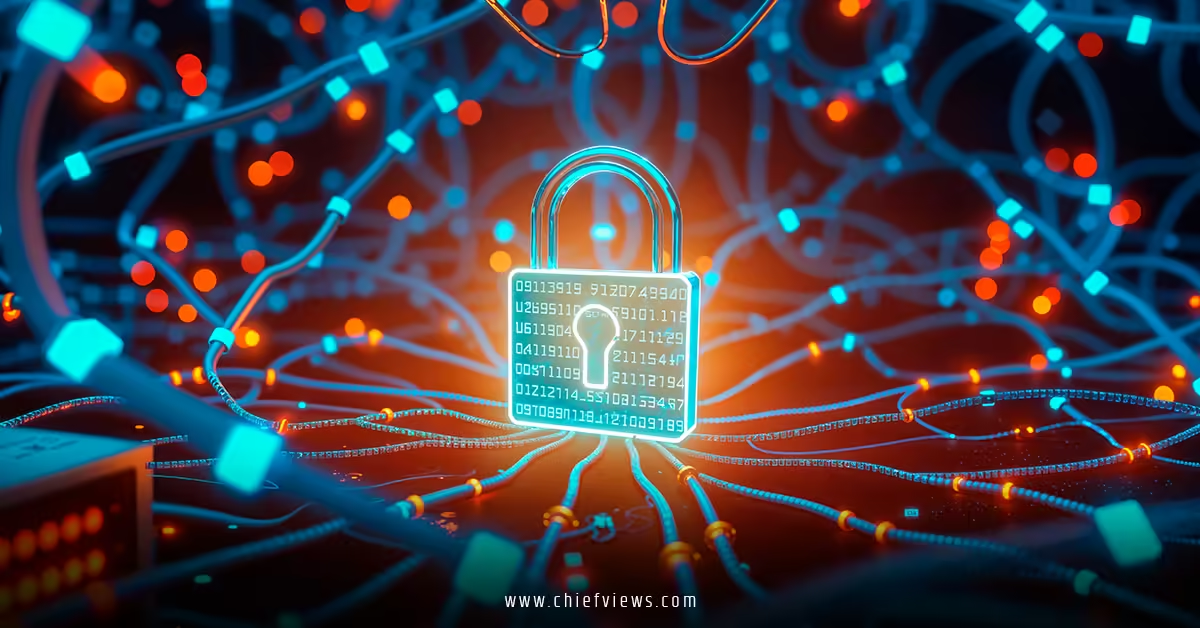
Quantum computers are coming. Fast. And they’re about to trash your encryption. Quantum-resistant encryption basics? Your crash course to survive the qubit storm.
First off: Today’s RSA, ECC? Doomed by Shor’s algorithm. A sufficiently powerful quantum rig cracks them in hours. Not years. We’re talking 2026 reality—machines pushing 1,000+ qubits.
Why care? Banks, governments, you—everything encrypted today gets retroactively exposed. “Harvest now, decrypt later” is real.
Quick Overview: What You Need to Know
Bullet-proof summary:
- Threat: Quantum breaks asymmetric crypto (public-key stuff).
- Solution: Post-quantum cryptography (PQC)—math that laughs at qubits.
- Status: NIST standardized four in 2024: Kyber, Dilithium, etc.
- Action: Inventory, migrate, test.
- Timeline: Start now. Full swap by 2030 per experts.
What Is Quantum-Resistant Encryption?
Simple terms. Encryption secures data two ways: Symmetric (AES—keys shared secretly) and asymmetric (RSA—public/private pairs for key exchange).


Quantum hits asymmetric hard. Grover’s algorithm halves symmetric strength, but that’s fixable with bigger keys.
Quantum-resistant (or post-quantum) encryption uses lattice math, hash signatures, code-based tricks. No easy quantum shortcuts.
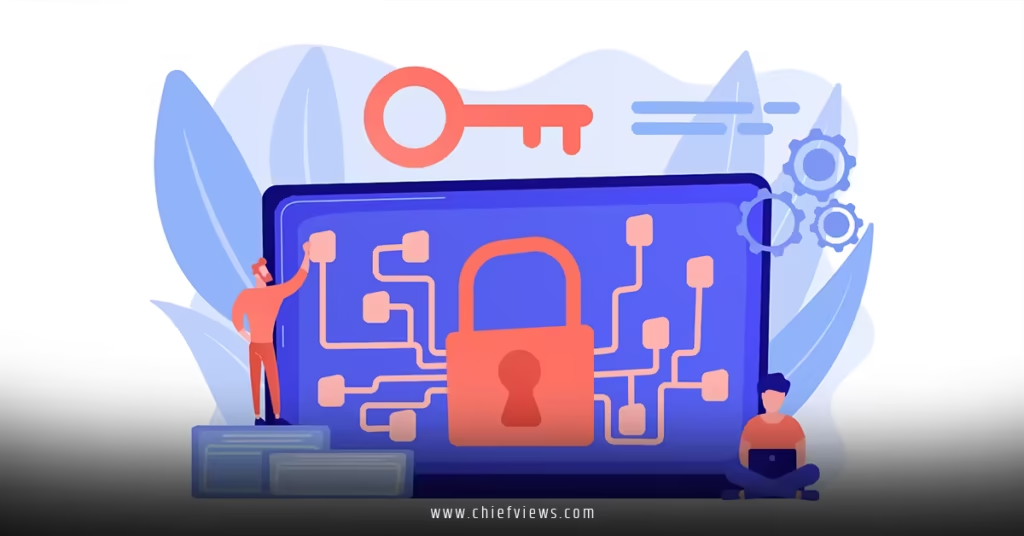
Analogy: Classical crypto is a padlock. Quantum picks it instantly. PQC? A lock made of multidimensional spaghetti—qubits get tangled trying.
NIST leads here. Their process vetted hundreds of candidates. Winners: Crystal-Kyber (key encapsulation), Crystal-Dilithium (signatures), plus Falcon, Sphincs+.
Why Quantum-Resistant Encryption Basics Matter in 2026
- Quantum supremacy hits logistics, pharma—real workloads. But adversaries eye your data vaults.
Per NIST’s PQC migration, delay risks catastrophe. USA exec order NSM-10 mandates federal shift.
For businesses? Compliance (FedRAMP, PCI-DSS updates incoming). Competitive edge: Secure AI, edge, hybrids first.
Here’s the kicker. In my years strategizing for CIOs, ignoring this is like driving without brakes—fine until the hill.
Core Algorithms: The Big Four
Break ’em down. No math degree needed.
1. Kyber (CRYSTALS-Kyber)
Key encapsulation mechanism (KEM). Replaces Diffie-Hellman, RSA for secure key swaps.
- Strength: Lattice-based. Quantum-hard.
- Speed: Matches ECC.
- Use: TLS handshakes.
2. Dilithium (CRYSTALS-Dilithium)
Digital signatures. Ditches ECDSA.
- Why? Proves authenticity without quantum cracks.
- Trade-off: Larger signatures (2-5KB vs. 64 bytes).
3. Falcon
Another signer. Compact, fast. For constrained devices.
4. SPHINCS+
Hash-based. Stateless. Ultimate fallback—provably secure.
Table for scan:
| Algorithm | Type | Key Size | Sig Size | Best For |
|---|---|---|---|---|
| Kyber | KEM | 1-2KB | N/A | Key exchange |
| Dilithium | Signatures | 2KB | 2-5KB | General signing |
| Falcon | Signatures | 1KB | 0.7KB | IoT/edge |
| SPHINCS+ | Signatures | 32B | 8-50KB | Long-term security |
Source: NIST FIPS 203-206.
Step-by-Step: Implementing Quantum-Resistant Encryption Basics
Beginner plan. Do this yesterday.
Step 1: Audit Your Crypto
Scan code, certs, protocols.
- Tools: OpenSSL
crlf, Cryptosense. - Flag: RSA<3072, ECC<256-bit.
1 week.
Step 2: Hybrid Mode First
Don’t rip-and-replace. Hybrid crypto: Classical + PQC.
- TLS 1.3 supports it.
- Libs: OpenQuantumSafe’s liboqs.
Safe transition.
Step 3: Pick and Integrate
- Servers: Update OpenSSL 3+.
- Clients: BoringSSL forks.
- Test: PQ Shield validators.
Step 4: Signatures Everywhere
Swap cert chains. Let’s Encrypt pilots PQC.
Step 5: Monitor and Iterate
Quantum benchmarks quarterly. Adjust key sizes.
Full migration: 12-24 months. Cost: 1-3% IT budget.
Common Pitfalls in Quantum-Resistant Encryption
Tripped pros stumble here.
- Pitfall 1: Size blindness. PQC bloats payloads. Fix: Compress or optimize.
- *Pitfall 2: Hybrid half-measures. One algo only. Fix: Dual until proven.
- *Pitfall 3: Forgetting symmetric. Grover nibbles AES. Fix: AES-256 min.
- *Pitfall 4: Side-channels. Timing attacks persist. Fix: Constant-time impls.
- *Pitfall 5: Vendor lag. Not all ready. Fix: Demand roadmaps.
Experience note: What I see? Teams test in prod too late. Sandbox first.
Advanced Tips for Intermediates
Hardware acceleration. Intel QAT chips speed Kyber.
Quantum + Edge. Lightweight Falcon for IoT.
Link to pro strategies: Dive deeper with CIO best practices for zero-trust cybersecurity in hybrid quantum-edge computing 2026—where PQC slots into full architectures.
FIPS compliance. USA must: NIST modules ready.
Question: Still running RSA? Time to panic-buy PQC.
Key Takeaways
- Shor’s kills public-key crypto. Act.
- NIST big four: Kyber, Dilithium, Falcon, SPHINCS+.
- Hybrid mode bridges the gap.
- Audit now. Migrate methodically.
- Size/performance trade-offs real—plan bandwidth.
- USA regs accelerating. Lead, don’t chase.
Conclusion: Lock in Your Quantum Future
Quantum-resistant encryption basics arm you against tomorrow’s threats today. Swap shaky crypto for lattice fortresses. Secure data lasts decades.
Next step: Audit one system this week. Momentum wins.
PQC isn’t optional. It’s oxygen.
FAQ
What makes encryption quantum-resistant?
Uses math (lattices, hashes) without easy quantum speedups, unlike factoring problems.
How soon must I migrate to quantum-resistant encryption?
NIST says prioritize now; full by 2030. USA feds faster.
Is quantum-resistant encryption slower?
Key gen yes, but runtime close to ECC. Optimize.
Can I use it with current systems?
Yes—hybrid TLS. Libraries like liboqs integrate seamlessly.
What’s the cost of ignoring quantum-resistant encryption basics?
Harvest attacks: Your encrypted data decrypted later. Priceless loss.