




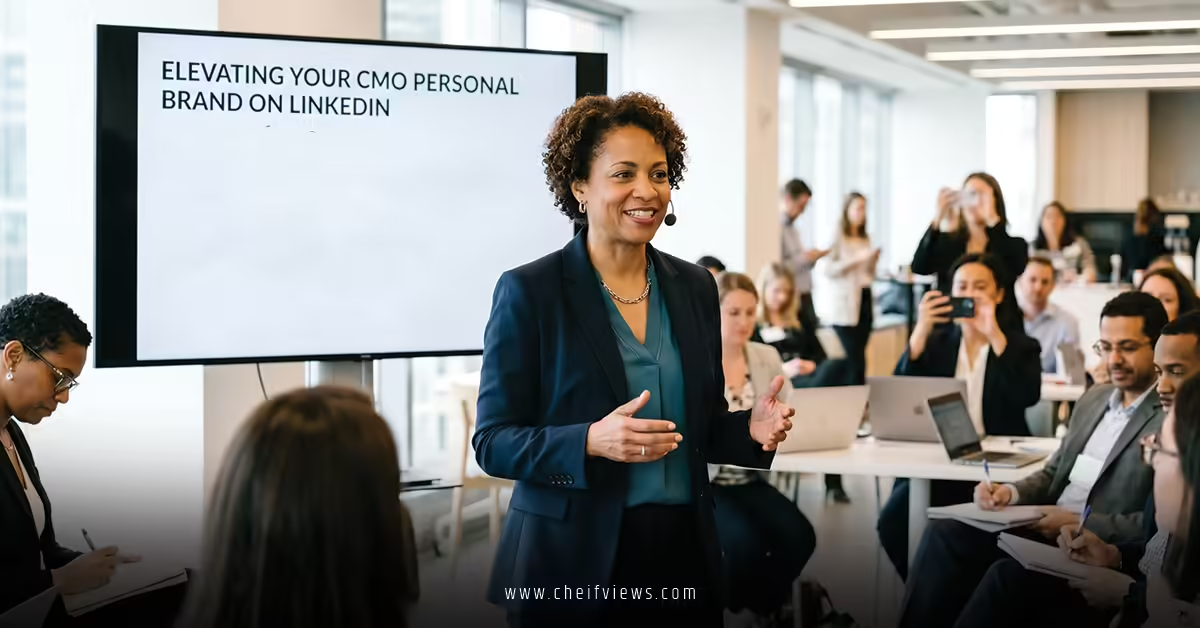
CMO personal branding and LinkedIn tips separate the executives who get headhunted from those who stay invisible. Your profile isn’t a résumé—it’s your executive billboard, relationship builder, and lead magnet rolled into one. In a year where personal profiles dominate 65% of LinkedIn feed consumption while company pages scrape by on crumbs, ignoring this is career malpractice.
Here’s what it delivers fast:
- Visibility without vanity: Position yourself as the go-to voice in marketing leadership.
- Opportunity gravity: Attract board seats, speaking gigs, and high-caliber talent.
- Trust multiplier: 82% of people trust companies more when senior leaders show up authentically online.
- Career insurance: Your personal brand outlives any single role or company layoff.
- Business impact: Executives tie nearly half their company’s perceived market value to leadership reputation.
Why CMOs Can’t Hide Behind the Corporate Brand Anymore
The game flipped. LinkedIn’s 2026 algorithm rewards depth, dwell time, and human signals over polished corporate speak. Personal profiles win because people connect with people first.
What usually happens is this: a solid CMO posts sporadically about campaign wins. Crickets. Another shares raw lessons from a failed launch, ties it to broader industry shifts, and sparks conversations that turn into partnerships. The difference? Intentional personal branding.
In my experience, the CMOs who treat LinkedIn like a side chore watch their influence plateau. Those who lean in see inbound opportunities triple. Here’s the thing—your network already knows your title. They don’t know your edge, your philosophy, or how you think until you show them.
CMO personal branding and LinkedIn tips boil down to consistency plus clarity. Nail the foundation, then layer on strategy.


Profile Optimization: Your 24/7 Executive Calling Card
Start here. A half-baked profile kills momentum before it begins.
- Headline: Ditch the default job title. Try “CMO | Helping SaaS companies turn marketing from cost center to revenue engine | Ex-[Notable Company]”. Pack value and keywords naturally.
- Profile Photo and Banner: Professional headshot that looks like you (not a glamour shot). Banner? Mission + proof + subtle CTA. Think results, not stock imagery.
- About Section: First 3-4 lines must hook. Tell your story in 3-5 punchy paragraphs. Weave in achievements, values, and what you stand for. Use first person—always.
- Featured Section: Pin your best thought leadership—case studies, original research, video explainers.
Profiles with complete, optimized sections get 40x more opportunities. That’s not hype; it’s LinkedIn data.
Content Strategy That Builds Authority in 2026
Forget volume. Focus on resonance.
LinkedIn now prioritizes interest-based distribution and meaningful engagement. Stories beat generic tips. Proprietary insights crush recycled advice. Video and documents drive stronger signals than text-only posts.
CMO personal branding and LinkedIn tips for content:
- Pick 3-4 content pillars: Marketing leadership lessons, industry trend breakdowns, campaign post-mortems, team-building wisdom.
- Mix formats: Short videos of you explaining a framework, carousels with data, text posts with bold opinions backed by experience.
- Post 3-5 times weekly. Consistency compounds. One strong post weekly beats seven mediocre ones.
- Engage first: Comment thoughtfully on peers’ content before expecting reciprocity.
The kicker? External links tank reach by up to 60%. Share value natively, then direct conversations to DMs or your site.
Step-by-Step Action Plan for Beginners and Intermediate CMOs
Ready to execute? Follow this.
Week 1: Foundation
- Audit your current profile. Fix headline, About, and banner.
- Define your unique angle—what problems do you solve that others don’t?
- Connect with 20 relevant people weekly (other CMOs, founders, journalists).
Week 2-4: Momentum
- Publish 3 posts testing formats.
- Spend 15 minutes daily engaging in target conversations.
- Repurpose one piece of internal work (anonymized) into public insight.
Ongoing: Scale
- Track what resonates using LinkedIn analytics.
- Collaborate—guest posts, AMAs, co-hosted Spaces.
- Build an email list. LinkedIn changes; owned audience doesn’t.
What I’d do if starting fresh: Post my biggest marketing failure in week one. Vulnerability cuts through noise and builds instant trust.
| Strategy Element | Beginner Approach | Intermediate Upgrade | Expected Impact |
|---|---|---|---|
| Posting Frequency | 2-3x/week | 4-5x/week with repurposing | 3-5x engagement growth |
| Content Type | Text + images | Video + documents + stories | Higher dwell time, algorithm boost |
| Engagement Time | 5 min/day | 20 min/day + relationship nurturing | Stronger network effects |
| Measurement | Likes/comments | Conversions to calls/DMs | Real business outcomes |
| Time Investment | 3-4 hours/week | 6-8 hours/week | Authority leadership position |
Advanced Tactics: Turning Presence Into Pipeline
Once basics click, layer these.
Share proprietary frameworks. Analyze trends with your spin. Host LinkedIn audio events on hot topics like AI in marketing measurement.
Build a signature series—”CMO Playbook” breakdowns or quarterly trend reports. People bookmark those.
Cross-pollinate thoughtfully. Turn a strong LinkedIn thread into a newsletter snippet.
Remember: LinkedIn’s B2B Thought Leadership resources highlight how decision-makers spend serious time with quality content.
Common Mistakes & How to Fix Them
Even seasoned CMOs trip here.
Mistake 1: Sounding like corporate PR. Fix: Write like you speak in a strategy meeting—direct, opinionated, human.
Mistake 2: Inconsistent posting. Fix: Batch content or use simple systems. Show up even when busy.
Mistake 3: Chasing virality. Fix: Focus on your ideal audience of 500-1000 key connections. Depth beats breadth.
Mistake 4: Zero engagement. Fix: Reply to every comment in the first 24 hours. Build conversations.
Mistake 5: No clear CTA. Fix: End posts with soft invitations—”What’s your take?” or “DM me if scaling marketing feels chaotic.”
Avoid these and you leapfrog 90% of executives.
CMO personal branding and LinkedIn tips shine brightest when you treat the platform as a relationship tool, not a broadcast megaphone.
Key Takeaways
- CMO personal branding and LinkedIn tips are non-negotiable for staying relevant in executive circles.
- Optimize your profile ruthlessly—it’s your most important asset.
- Prioritize storytelling and proprietary insights over generic advice.
- Consistency and authentic engagement trump perfect production.
- Measure success by conversations and opportunities, not just likes.
- Protect against algorithm shifts by owning your audience via email.
- Personal brand compounds faster than any single campaign ROI.
- Start small today. One optimized post beats months of planning.
CMO personal branding and LinkedIn tips deliver compounding returns. Your expertise deserves visibility. The relationships and doors it unlocks pay dividends for years.
Next step: Spend 30 minutes today updating your headline and About section. Then post your first insight this week. Momentum beats perfection every time.
FAQs
How long does it take to see results from CMO personal branding and LinkedIn tips?
Most executives notice inbound interest within 60-90 days of consistent effort. Real authority positioning takes 6-12 months. The key is steady execution.
Should CMOs focus only on LinkedIn for personal branding?
LinkedIn reigns for B2B and professional audiences, but layer in a personal site or newsletter for ownership. Start dominant on LinkedIn, then expand.
Can introverted CMOs succeed with CMO personal branding and LinkedIn tips?
Absolutely. Play to strengths—thoughtful long-form posts, insightful comments, and frameworks outperform performative video for many. Authenticity wins.