




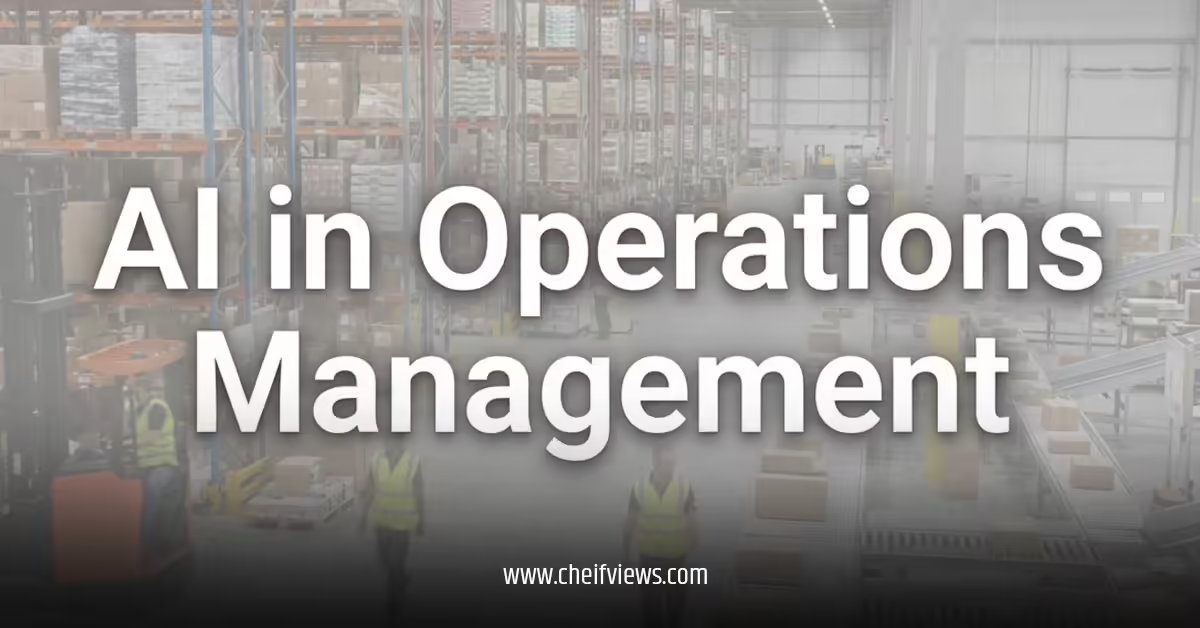
AI in operations management is reshaping how companies run their day-to-day backbone. It turns mountains of data into instant decisions, cuts waste, and makes supply chains smarter and tougher. In the USA right now, with labor gaps and nonstop disruptions, this isn’t optional tech—it’s survival gear for 2026.
- What it covers: Predictive analytics, automation, optimization, and real-time visibility across production, logistics, inventory, and more.
- Why it matters: Organizations using AI see faster throughput, lower costs, and better resilience when shocks hit.
- 2026 edge: Agentic AI and blended human-AI teams are moving from pilots to scaled impact.
- Key payoff: Higher efficiency without losing the human touch on complex calls.
The truth? Most companies dabble. Winners go all in with clear strategy.
Why AI in Operations Management Is Non-Negotiable in 2026
Operations used to mean spreadsheets and gut feel. Now AI crunches real-time signals from IoT sensors, market feeds, and internal systems. McKinsey’s latest surveys show AI adoption climbing fast, with real value emerging in operations functions.
Short wins add up. One manufacturer cuts downtime 30% with predictive maintenance. Logistics firms optimize routes on the fly and dodge delays.
Think of it like giving your ops team superpowers—while keeping humans steering the ship.


Core Applications Driving Results
AI hits every corner of operations:
- Demand Forecasting: Far more accurate than old models. Reduces overstock and stockouts.
- Predictive Maintenance: Spots equipment failure before it happens. Saves millions in unplanned downtime.
- Process Automation: Handles routine tasks so teams focus on exceptions and strategy.
- Supply Chain Optimization: Dynamic routing, supplier risk scoring, inventory balancing.
- Quality Control: Computer vision catches defects humans miss.
Gartner and others point to agentic AI—autonomous agents handling end-to-end workflows—as the big leap this year.
Step-by-Step Action Plan for Getting Started
New to this? Here’s exactly what I’d do if dropped into an ops leadership role today.
- Map Pain Points: Audit current processes. Talk to frontline teams. Pinpoint where delays, errors, or blind spots hurt most.
- Build Data Foundations: Clean and connect your data sources. Garbage data kills AI. Start small but think integrated.
- Pick High-Impact Pilots: Target one area—like inventory forecasting or maintenance scheduling. Measure baseline vs. post-AI.
- Choose Tools Wisely: Go for platforms that integrate with what you have. IBM, Google Cloud, and others offer solid ops-specific suites.
- Train and Involve Teams: Run workshops. Show quick wins. Address job fears head-on.
- Scale with Governance: Set rules for ethics, security, and explainability. Monitor ROI weekly at first.
- Iterate Relentlessly: Use results to expand. Blend AI agents with human oversight for complex decisions.
This beats the all-or-nothing approach that wastes budgets.

Comparison Table: Traditional vs. AI-Powered Operations
| Aspect | Traditional Operations | AI in Operations Management | Typical 2026 Gains |
|---|---|---|---|
| Forecasting | Historical averages, manual | Real-time predictive models | 20-40% more accuracy |
| Maintenance | Scheduled or reactive | Predictive, condition-based | 30-50% less downtime |
| Inventory Management | Static rules | Dynamic optimization | 15-35% reduction in holding costs |
| Process Efficiency | Manual workflows | Hyperautomation & agents | 25-60% faster cycle times |
| Decision Speed | Weekly reports | Real-time insights & recommendations | Hours vs. days |
| Risk Handling | Limited visibility | Multi-tier risk scoring | Faster disruption response |
Benchmarks pulled from industry reports like PwC and McKinsey—results vary by execution.
Common Mistakes & How to Fix Them
Seasoned ops pros still stumble here. Learn from the trenches:
- Mistake 1: Data Silos. AI starves without clean, connected info. Fix: Invest in integration platforms early. Prioritize master data management.
- Mistake 2: Tech-Only Focus. Shiny tools without process change. Fix: Redesign workflows first. Tie AI directly to business KPIs.
- Mistake 3: Poor Change Management. Teams resist what they don’t understand. Fix: Communicate benefits relentlessly. Involve users in pilots.
- Mistake 4: No Clear ROI Path. Endless experiments with vague outcomes. Fix: Define success metrics upfront. Review and kill underperformers fast.
- Mistake 5: Ignoring Governance. Security or bias issues bite later. Fix: Build responsible AI frameworks from day one.
What usually happens? Leaders chase hype instead of solving real problems. Stay grounded.
How AI in Operations Management Connects to Bigger Wins
Strong AI capabilities supercharge broader efforts. They give COOs the visibility and agility needed for COO leadership in supply chain transformation. Real-time insights turn reactive ops into proactive strategy.
Check PwC‘s latest on digital operations trends for more benchmarks.
McKinsey’s State of AI survey offers solid data on what’s actually delivering value right now.
Key Takeaways
- AI in operations management delivers faster, smarter decisions across the board.
- Start with data foundations and targeted pilots—don’t boil the ocean.
- Human + AI teams outperform either alone.
- Governance and change management determine success more than algorithms.
- Expect big gains in forecasting, maintenance, and optimization.
- Link it to COO leadership in supply chain transformation for maximum impact.
- Measure relentlessly and scale what works.
- In 2026, companies that embed AI deeply pull ahead on resilience and efficiency.
AI in operations management isn’t about replacing people. It’s about freeing them to do higher-value work while the machines handle the grind.
Ready to level up? Pick one painful process this week and explore AI options for it. Small moves compound fast.
FAQs
How does AI in operations management improve supply chain performance?
It enables real-time visibility, predictive demand, and dynamic adjustments. This reduces disruptions and ties directly into effective COO leadership in supply chain transformation.
What skills do operations managers need for AI in operations management?
Focus on data literacy, process thinking, and change leadership. Technical depth helps, but knowing when and how to apply AI matters most.
Is AI in operations management suitable for mid-sized companies?
Absolutely. Cloud tools and accessible platforms lower the barrier. Start small, target quick ROI areas like forecasting or maintenance, and scale from proven wins.