




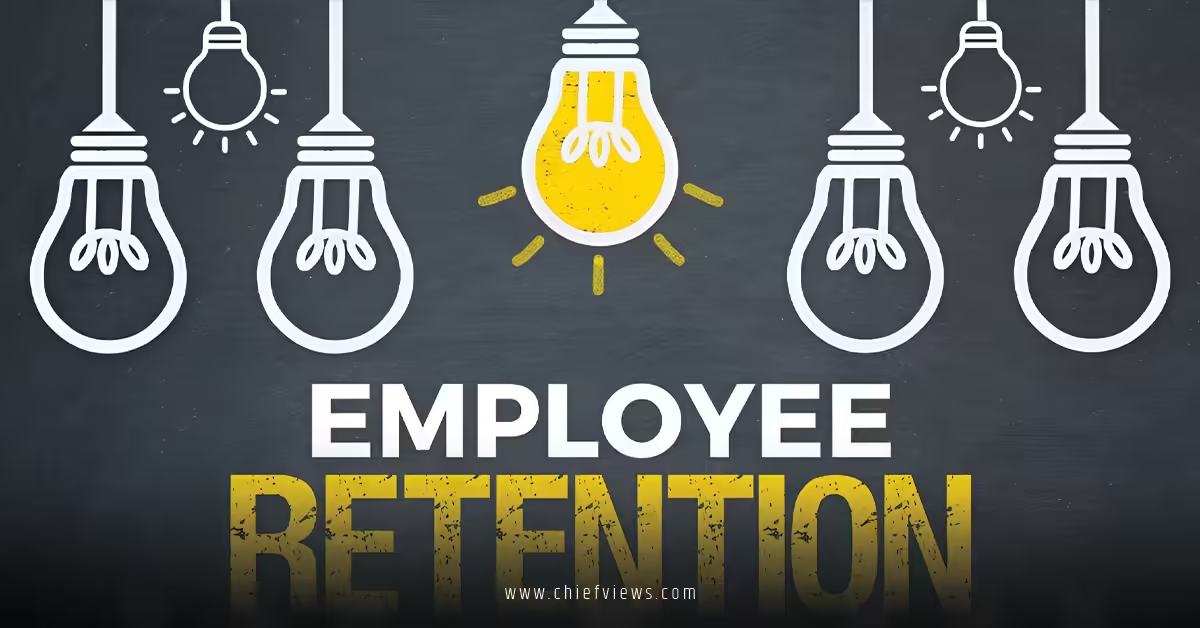
CHRO strategies for employee retention during market changes are no longer “HR issues” sitting in a silo. When markets swing, interest rates move, or demand shifts across the USA, UK, AUS, Singapore, and Dubai, your people feel it before your balance sheet does. They get nervous, recruiters start circling, and the best performers quietly explore their options. If you don’t have a clear plan, you risk losing the exact talent you need to navigate uncertainty.
In this article, we’re going to be taking a look at CHRO strategies for employee retention during market changes, and how you can keep your best people engaged and committed while your business adapts. If you would like to find out more, feel free to read on.
Pic – CC0 License
Start with honest communication, not spin
When markets move, silence is the fastest way to lose trust. People don’t leave just because the economy looks shaky; they leave because they feel kept in the dark.
We need CHRO strategies for employee retention during market changes that start with transparent communication. That means sharing what you know, what you don’t know yet, and what the business is doing about it. Give employees regular updates on market conditions, company performance, and likely scenarios. Use town halls, small group sessions, and written updates so different personalities can absorb the information in their preferred way.
Research from organizations like the Society for Human Resource Management shows that employees are more loyal when they feel informed and respected. A simple rule of thumb: if you’re updating investors or lenders, you should be updating your teams too, in language they can understand.


Anchor retention to a clear employee experience
If your employee experience is weak in stable times, market changes will expose every crack. A strong CHRO strategy starts with the basics: fair pay, clear expectations, respectful managers, and workable schedules.
We can think of the employee experience as a simple journey: how people join, grow, contribute, and leave. Your job, with your CHRO or HR lead, is to map that journey and spot pain points. Is onboarding rushed? Are career paths vague? Do managers dodge hard conversations? Each friction point becomes a risk when markets turn and competitors start pitching “better opportunities.”
You can borrow simple frameworks from sources like Gallup’s work on engagement, which highlights the value of clarity, recognition, and growth opportunities. You don’t need a huge HR department to act on this. You just need to listen, fix small frustrations quickly, and show that feedback leads to real change.
Double down on manager quality, not perks
We all love the idea of quick wins: new benefits, flexible hours, wellness apps. Those help, but they don’t beat a great manager. People stay or leave based on their direct supervisor far more than any policy document.
CHRO strategies for employee retention during market changes should treat managers as retention engines. That means training them to have tough conversations, give useful feedback, and show empathy when people are anxious about their future. A manager who can say, “Here’s what this shift means for our team, here’s what won’t change, and here’s how I’ll support you,” is worth more than any shiny perk.
You can draw on practical guides from places like the Chartered Institute of Personnel and Development in the UK to build simple training modules. Focus on coaching skills, active listening, and basic people leadership. Even in smaller firms, a short monthly manager huddle can dramatically improve the way your leaders handle change.
Build flexible work and benefits that match your market
Employee expectations differ across the USA, UK, AUS, Singapore, and Dubai, but one theme runs across all of them: flexibility. Not just remote work, but flexibility in hours, location, and even roles.
During market shifts, workloads may spike or drop, new projects may start, and some functions may shrink. If we design flexible arrangements upfront, people are more likely to stay and move with the business rather than leave. That could mean flexible schedules to handle childcare, hybrid work options where regulations allow, or role redesign that lets people build skills rather than feel stuck.
Use data from reputable sources like the World Economic Forum and national labor boards to understand trends in each region. Then shape your benefits around what matters locally: healthcare in the US, work-life balance in the UK and AUS, career progression and international exposure in Singapore and Dubai. When people see that you’re adapting to their reality, loyalty follows.

Make career growth the centerpiece, not an afterthought
One of the strongest CHRO strategies for employee retention during market changes is very simple: keep people growing. If employees feel they’re building skills that will make them valuable no matter what the market does, they’re far more likely to stay with you.
This doesn’t always mean promotion. It can mean lateral moves, project assignments, short-term secondments, or cross-functional exposure. The key is to show a visible path: “Here’s how you can grow here over the next 12–24 months, even as our markets change.”
Talent reports from firms like McKinsey consistently highlight development as a major driver of retention. You don’t need expensive programs to start. A basic internal mentoring scheme, lunch-and-learn sessions, and support for relevant online courses can make a big difference. Tie growth plans to both business needs and personal aspirations so employees feel invested in the future of the company and their own future at the same time.
Listen with real intent: use data, not guesswork
Guessing how people feel is risky. During market changes, we need data from our own workforce, not just headlines and industry reports. A smart CHRO strategy combines structured feedback with open dialogue.
Run short, regular pulse surveys to check stress levels, engagement, and intent to stay. Keep them easy to complete and share back a summary of what you heard and what you’ll do about it. Follow up with small focus groups or roundtables so people can talk in more depth. The goal isn’t to chase every comment; it’s to spot patterns and act on the ones that matter.
Independent research from companies like Deloitte shows that organizations that listen and respond quickly build stronger trust and resilience. When employees see you asking and then actually responding, they feel part of the solution, not just subject to decisions made above them.
Align retention with business reality, not wishful thinking
We should be honest: retention is not about keeping everyone forever. It’s about thoughtfully keeping the right people, in the right roles, for the right phase of your business. Market changes often force tough calls—restructures, new priorities, or exiting certain markets.
Strong CHRO strategies for employee retention during market changes start with a clear workforce plan. Which skills are mission-critical? Which roles will change or fade? Where do you need to reskill, redeploy, or hire differently? When you have that map, you can be transparent with employees, invest in the people and skills you’ll truly need, and support those who may need to move on with dignity and assistance.
This is where HR leadership and business leadership must work hand in hand. Retention shouldn’t be a standalone HR target; it should be an output of solid strategic planning and honest conversations.
Turn uncertainty into a shared mission
We hope that you have found this article enlightening in some way, especially if you’re juggling market changes and worrying about losing good people. The big takeaway is this: retention in uncertain times is less about fancy programs and more about consistent, human-centered leadership. Talk openly, build solid manager capability, give people flexible ways to work, and keep their growth front and center.
If we treat employees as partners in navigating change rather than passengers, they’re far more likely to stay on the journey with us. Your CHRO or HR lead can set the strategy, but it’s the daily behavior of managers and founders that makes people say, “This is where I want to stay, even when the market is shifting around us.”