





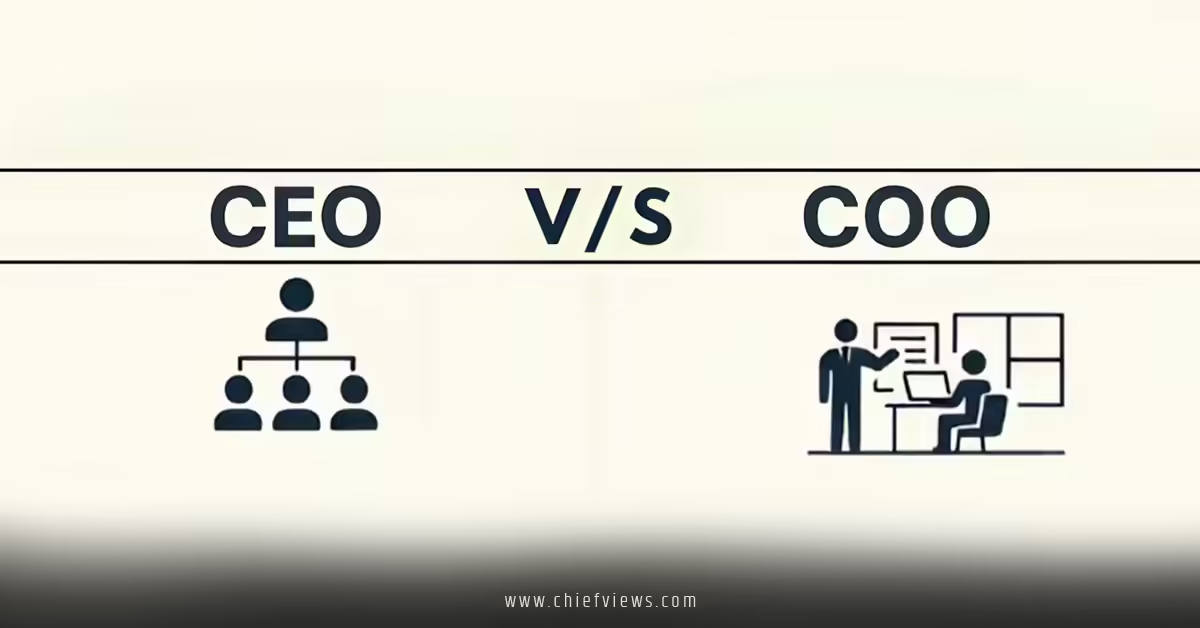
CEO vs. COO: A Comprehensive Comparison – if you’ve ever wondered why some companies seem to have two “bosses” and how they don’t step on each other’s toes every day, you’re in exactly the right place. The Chief Executive Officer and the Chief Operating Officer sit at the very top of the corporate food chain, yet they play dramatically different roles. Think of them as the visionary captain steering the ship into uncharted waters (CEO) and the masterful engineer below deck making sure the engines actually run, the crew is fed, and nobody falls overboard (COO). In this monster deep-dive, we’re breaking down everything you need to know in this CEO vs. COO: A Comprehensive Comparison.
What Does CEO Actually Stand For – And Why Should You Care?
Let’s start with the rockstar everyone knows: the CEO, or Chief Executive Officer. This is the face of the company – the person investors cheer for, journalists chase, and employees both love and fear in equal measure.
The CEO is ultimately accountable for everything. Profits? On them. Scandals? On them. Stock price doing the moon mission or crashing like Icarus? Still on them. They set the grand vision, charm Wall Street, negotiate billion-dollar acquisitions, and decide whether the company pivots to AI, blockchain, or vegan cheeseburgers tomorrow.
In short: the CEO dreams the dream and convinces the world it’s worth betting on.
COO Meaning: The Unsung Hero Keeping the Lights On
Now flip the camera backstage – meet the COO, the Chief Operating Officer. If the CEO is the director of the blockbuster movie, the COO is the producer who makes sure the cameras roll, the actors get paid, and the catering doesn’t poison Tom Cruise.



The COO executes the CEO’s vision at warp speed. They translate “let’s conquer the universe” into actual budgets, timelines, hiring plans, supply-chain fixes, and IT systems that don’t crash on Black Friday. They’re obsessed with efficiency, metrics, processes, and making the impossible feel routine.
CEO vs. COO: A Comprehensive Comparison of Core Responsibilities
Here’s where the rubber meets the road in our CEO vs. COO: A Comprehensive Comparison.
| Area | CEO Focus | COO Focus |
|---|---|---|
| Vision & Strategy | Creates it | Executes it |
| External Stakeholders | Primary face (investors, media, regulators) | Rarely in the spotlight |
| Time Horizon | 3–10 years out | Next quarter to next 3 years |
| Risk Appetite | High (moonshots welcome) | Calculated (don’t break what works) |
| Decision Style | Bold, decisive, sometimes gut-driven | Data-driven, process-oriented |
| Accountability | To the board and shareholders | To the CEO |
Who Reports to Whom? The Reporting Structure Debate
In most companies, the COO reports directly to the CEO. It’s a classic “number one and number two” dynamic. But hold the phone – not always!
Some organizations (especially founder-led ones like early Facebook) never even bother creating a COO role. Mark Zuckerberg ran both vision and execution for years. Others bring in a COO precisely when the CEO admits, “I’m great at dreaming, terrible at spreadsheets.”
You’ll also see co-CEO structures (Salesforce did this for a while) or the rare “Office of the CEO” where CEO and COO are practically joined at the hip. Bottom line in this CEO vs. COO: A Comprehensive Comparison: the org chart isn’t set in stone; it depends on the company’s stage, industry, and the personalities involved.
CEO vs. COO Salary and Compensation Differences
Money talks, so let’s talk numbers (2024–2025 U.S. averages, public company data).
- Public company CEO total compensation: $14–$20 million (mostly stock)
- Public company COO total compensation: $6–$12 million
Private companies? The gap narrows dramatically. A Series C startup might pay its CEO $300k–$500k base plus equity, while the COO pulls $250k–$400k. Equity is where the real lottery ticket hides for both.
Fun fact: some legendary COOs (Tim Cook at Apple, Sheryl Sandberg at Meta) eventually stepped into the CEO chair and 10x’d their net worth.
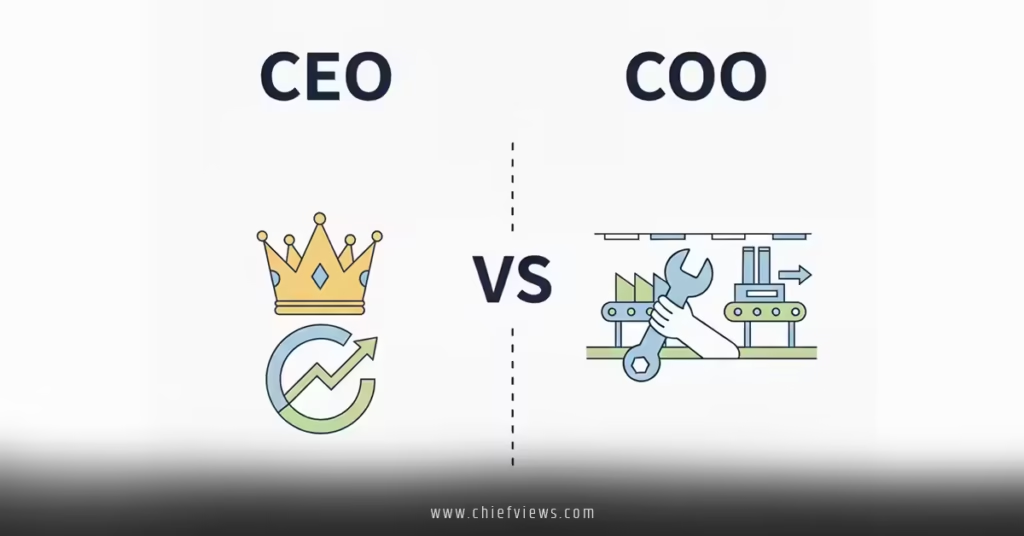
Skills Showdown: CEO vs. COO Required Superpowers
CEO Skill Set
- Charisma that can raise a Series F in a recession
- Ability to simplify complex ideas into a single slide
- Tolerance for ambiguity (and paparazzi)
- Storytelling that makes analysts cry happy tears
COO Skill Set
- Process ninja who can optimize a supply chain in their sleep
- Crisis calmer – remember when the warehouse burned down?
- Master delegator who builds other leaders
- Spreadsheet wizardry that would make Excel blush
Notice the overlap? The best leaders have a little of both. That’s why you see so many COOs promoted to CEO – they already know how the sausage is made.
Real-World Examples That Bring CEO vs. COO: A Comprehensive Comparison to Life
Apple: Steve Jobs (CEO) + Tim Cook (COO)
Jobs painted the insane vision (a computer in every pocket). Cook figured out how to manufacture a billion iPhones without bankrupting the company. When Jobs passed, Cook slid into the CEO chair seamlessly – proving the COO apprenticeship model works.
Microsoft: Satya Nadella (CEO) + Kevin Scott (CTO, but Amy Hood CFO acts COO-like)
Nadella rebooted culture and bet everything on cloud. The operations machine underneath him scaled Azure from laughingstock to AWS’s worst nightmare.
Indra Nooyi (CEO) + a rotating cast of COOs at PepsiCo
Nooyi famously said she never wanted a COO who would just “mind the store.” She wanted a partner who challenged her. That tension created magic.
When Companies Don’t Need a COO (And When They Desperately Do)
Startups under 100 people? Probably no COO. The founder(s) wear 47 hats.
Scale-ups hitting $50–$500M ARR with global offices, complex supply chains, or regulatory headaches? Bring in a COO yesterday or watch chaos reign.
Mature enterprises going through turnarounds (think IBM under Ginni Rometty or Starbucks bringing back Howard Schultz)? A rock-solid COO becomes the difference between survival and obituary.
Can One Person Be Both CEO and COO?
Absolutely – especially in smaller companies. Elon Musk effectively acts as both at Tesla and SpaceX (although he now has presidents under each). Jeff Bezos ran Amazon as CEO/COO for years before Jassy and Olsavsky split duties.
The danger? Burnout. Even superhumans have limits. Eventually the company grows so complex that trying to do both becomes corporate malpractice.
CEO vs. COO: A Comprehensive Comparison of Career Paths
Want to become a CEO one day? Two main tracks emerge:
- The Visionary Founder/CEO path (Zuckerberg, Spiegel, Hououz)
- The COO-who-ascends path (Cook, Nadella at Microsoft, Sundar Pichai started very COO-like at Google)
McKinsey research shows about 25–30% of Fortune 500 CEOs were once their company’s COO. So if you’re a process-loving, execution-obsessed type, the corner office is still within reach.
The Gender Angle Nobody Talks About
Here’s a fascinating wrinkle in our CEO vs. COO: A Comprehensive Comparison: women are dramatically more likely to hold COO roles than CEO roles in Fortune 500 companies (roughly 3x more). Why? Some say the COO role plays to traditional strengths society encourages in women – collaboration, operations, empathy – while the CEO role still carries the “charismatic white knight” stereotype. Progress is happening, but slowly.
How Boards Decide Between Promoting the COO or Hiring an External CEO
When a CEO leaves, boards face the million-dollar question (literally). Internal COO candidate advantages:
- Knows the culture cold
- Zero learning curve
- Signals stability to the markets
External rockstar advantages:
- Fresh eyes and bold change
- Proven track record elsewhere
- Sometimes exactly what a stagnant company needs
Apple chose internal (Cook). GE chose external (Larry Culp) after Immelt – with mixed results. There’s no universal right answer.
The Future: Is the Traditional COO Role Dying?
Cloud software, AI ops tools (yes, even Grok helps here), and remote work have flattened organizations. Some predict the COO role morphs into “Chief Growth Officer” or “Chief Business Officer” or simply disappears into a web of EVPs.
Yet crises (COVID, supply-chain Armageddon, wars) keep reminding us: world-class execution never goes out of style. The title may change, but someone still has to make the trains run on time.
Conclusion: So Who Wins in CEO vs. COO: A Comprehensive Comparison?
Nobody wins – because it’s not a competition. The magic happens when an extraordinary CEO and an extraordinary COO lock arms and charge forward together. One without the other is like having a rocket with no fuel or fuel with no rocket. Get both right, and you don’t just build a company – you build an empire.
Whether you’re an aspiring leader trying to figure out which path fits your soul, a board member structuring your executive team, or just a business nerd who can’t get enough org-chart drama, remember this: great CEOs inspire the possible; great COOs make it inevitable.
Now go forth and execute (or dream – depending on which seat you’re gunning for).
FAQs About CEO vs. COO: A Comprehensive Comparison
1. In the CEO vs. COO debate, who has the final say on major decisions?
In almost every case, the CEO has the final word. The COO can (and should) push back hard, but the buck stops at the Chief Executive Officer.
2. Can a company succeed without a COO but fail without a CEO?
Yes – many founder-led companies thrive for years without anyone officially titled COO. But remove the CEO without a clear successor and you get instant chaos (see Uber post-Kalanick).
3. What’s the biggest misconception people have in CEO vs. COO: A Comprehensive Comparison?
That the COO is “just” operations. World-class COOs shape strategy every single day through the questions they ask and the trade-offs they force.
4. Is the COO role a stepping stone or a destination in CEO vs. COO: A Comprehensive Comparison?
It can be either. Some COOs love running operations forever (and make bank doing it). Others treat it as the ultimate CEO audition – Tim Cook and Satya Nadella style.
5. How should I decide whether my growing company needs a COO right now?
Ask yourself: “Is the CEO spending more than 30% of their time on day-to-day execution instead of vision, culture, and external relationships?” If yes – hire (or promote) a COO yesterday.
Read More:ChiefViews