




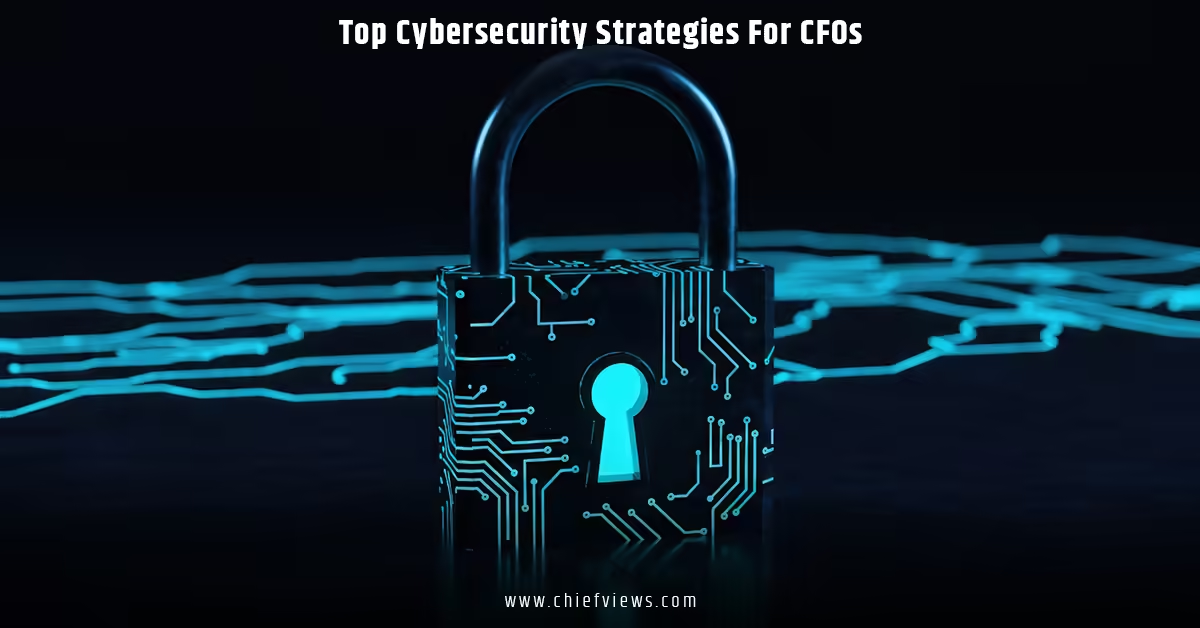
Top cybersecurity strategies for CFOs in 2025 are more critical than ever, as financial leaders find themselves at the crossroads of tech risks and bottom-line impacts. Imagine you’re the CFO steering a ship through stormy digital waters— one wrong move, and a cyber breach could sink your company’s finances faster than you can say “ransomware.” But hey, don’t sweat it just yet. In this article, we’ll dive into practical, forward-thinking approaches that blend financial savvy with security smarts. I’ll share insights drawn from the latest trends, like AI-driven threats and regulatory hurdles, all while keeping things straightforward for you, whether you’re a seasoned exec or just dipping your toes into cyber waters.
As we roll into 2025, CFOs aren’t just number crunchers anymore; you’re the guardians of the balance sheet against invisible foes. Why? Because cyber attacks aren’t just IT headaches—they’re financial nightmares that can wipe out millions in a blink. Think about it: a single data breach could cost your firm an average of $4.88 million, according to recent reports.pwc.com So, let’s unpack the top cybersecurity strategies for CFOs in 2025, turning potential pitfalls into strategic wins.
Why CFOs Must Lead on Top Cybersecurity Strategies for CFOs in 2025
Ever wondered why the CFO’s role in cybersecurity has exploded? It’s simple: money talks, and cyber risks scream financial disaster. In 2025, with AI supercharging attacks and regulations tightening like a vice, you’re not just funding security—you’re owning it. Picture this: your board expects you to quantify cyber risks in dollars and cents, just like any other investment.financealliance.io Gone are the days when IT handled this alone; now, it’s your turf.
First off, understand the landscape. Cyber inequity is widening—big firms armor up with fancy tools, while smaller ones lag behind, creating ripe targets for hackers.reports.weforum.org For CFOs, this means assessing your organization’s position in this divide. Are you a fortress or a sitting duck? Top cybersecurity strategies for CFOs in 2025 start with this self-audit, aligning security spends with business goals.
And let’s not ignore the human element. Insider threats, whether accidental or malicious, top the list of worries. You know that employee who clicks a phishing link? That could be your multimillion-dollar oops moment. By prioritizing training and culture, you’re not just checking boxes—you’re building a resilient team.
The Evolving Role of CFOs in Cybersecurity Management
Your job as CFO in 2025? It’s like being the quarterback in a high-stakes game where hackers are the opposing team. You’re calling the plays on budgets, compliance, and even incident response.preferredcfo.com No more silos—CFOs collaborate with CISOs to translate tech jargon into financial realities.


Take risk quantification, for instance. Use models to put a price tag on potential breaches. This isn’t guesswork; it’s data-driven foresight that justifies every dollar spent on defenses. And with tariffs and economic shifts looming, tying cybersecurity to profitability becomes non-negotiable.prnewswire.com
Key Threats Shaping Top Cybersecurity Strategies for CFOs in 2025
What keeps you up at night? If it’s not AI-enhanced attacks, it should be. In 2025, deepfakes impersonating executives are the new norm, tricking teams into fraudulent transfers.mayerbrown.com Ransomware evolves too, targeting supply chains and demanding bigger ransoms.
Nation-state actors? They’re not sci-fi villains; they’re real, exploiting AI for sophisticated espionage.jpmorganchase.com For finance execs, this means fortifying against disruptions that could halt operations and erode investor trust.
Don’t forget quantum computing risks—it’s like a super-hacker on steroids, potentially cracking today’s encryption.sps.wfu.edu And regulatory scrutiny? With new rules from SEC and beyond, non-compliance could hit your disclosures hard.pwc.com
Emerging AI-Driven Cyber Risks for Finance Leaders
AI isn’t just a tool; it’s a double-edged sword. Hackers use it to craft personalized phishing or automate attacks at scale.kpmg.com As a CFO, flip the script—leverage AI for threat detection, but vet it carefully to avoid new vulnerabilities.
Think of AI as your new intern: brilliant but needs supervision. Integrate it into strategies, but always with human oversight to catch biases or flaws.
Building a Robust Budget for Top Cybersecurity Strategies for CFOs in 2025
Money matters, right? In 2025, 77% of execs plan to boost cyber budgets, and you should too.financialexecutives.org But how do you allocate without breaking the bank?
Start with prioritization: Focus on high-impact areas like cloud security and third-party risks.oldnational.com Use ROI metrics—ask, “What’s the cost of inaction?” This turns security from a cost center to a value driver.
Involve your team early. Collaborate on budgets that cover hardware, software, and training. Remember, a well-trained staff is your best firewall.
Allocating Resources to High-Impact Areas
Zero in on supply chain defenses. Audits and compliance checks aren’t optional; they’re essential.onestream.com Analogize it to checking your car’s brakes before a long drive—skip it, and you’re courting disaster.
Invest in advanced tools like AI-driven monitoring, but balance with basics like multifactor authentication (MFA).cfo.com

Implementing Zero Trust in Top Cybersecurity Strategies for CFOs in 2025
Zero Trust? It’s not paranoia; it’s prudence. Assume breach and verify everything— that’s the mantra for 2025.sps.wfu.edu For CFOs, this means segmenting networks to limit damage.
Why does it matter? In a world of remote work and cloud reliance, traditional perimeters are obsolete. Implement it step-by-step: Start with identity management, then expand.
It’s like locking every room in your house, not just the front door. This approach minimizes insider threats and speeds recovery.
Steps to Adopt Zero Trust Architecture
Begin with assessment: Map your assets and risks. Then, enforce least-privilege access—give users only what they need.
Train your finance team on this model; they’re often the gatekeepers of sensitive data.mgocpa.com Monitor continuously, adjusting as threats evolve.
Leveraging AI and Automation in Top Cybersecurity Strategies for CFOs in 2025
AI is your ally against the deluge of threats. Automate detection to spot anomalies before they escalate.ncxgroup.com But beware: Hackers use AI too, so stay ahead.
For CFOs, this means investing in tools that predict risks, like predictive analytics for fraud.
Think of it as a crystal ball for cyber woes—accurate enough to save fortunes.
Balancing AI Benefits with Potential Risks
Vet vendors rigorously. Ensure AI integrations don’t introduce backdoors. Regular audits keep things tight.
Combine AI with human intuition for the best results.
Enhancing Third-Party Risk Management
Vendors are extensions of your firm, so their weaknesses are yours. In 2025, supply chain attacks surge, making vetting crucial.jpmorganchase.com
Conduct regular audits, include cyber clauses in contracts, and monitor continuously.
It’s like choosing partners for a dance—pick the clumsy one, and you both fall.
Best Practices for Vendor Assessments
Use frameworks like NIST for evaluations. Require proof of compliance and incident response plans.
Diversify suppliers to avoid single points of failure.
Fostering a Cybersecurity Culture Among Teams
Culture eats strategy for breakfast, right? Train your staff relentlessly on phishing, passwords, and reporting suspicious activity.
Make it engaging—use gamification or real-world simulations.
As CFO, lead by example: Share stories of near-misses to humanize risks.
Training Programs Tailored for Finance Departments
Focus on BEC (business email compromise) and deepfake awareness.bakertilly.com Short, frequent sessions work better than annual marathons.
Encourage a “see something, say something” mindset.
Navigating Regulatory Compliance in 2025
Regulations are thickening—SEC disclosures demand transparency on cyber incidents.pwc.com As CFO, you’re on the hook for accurate reporting.
Stay ahead: Map requirements to your strategies, and integrate into financial planning.
Non-compliance? It’s like speeding without a seatbelt—risky and costly.
Preparing for SEC and Global Standards
Build robust disclosure processes. Collaborate with legal for timely filings.
Monitor international rules if you’re global.
Incident Response and Recovery Planning
Plan for the worst: Have a playbook ready, including financial contingencies like insurance claims.preferredcfo.com
Test it regularly with simulations. Involve all stakeholders—CFOs coordinate liquidity and communications.
Recovery isn’t just tech; it’s restoring trust and operations swiftly.
Financial Implications of Cyber Incidents
Quantify downtime costs. Use insurance wisely, but don’t rely solely on it.
Post-incident, analyze for lessons to strengthen future defenses.
Integrating Cybersecurity into Strategic Planning
Make cyber a board-level priority. Tie it to growth initiatives, like digital transformations.auxis.com
As CFO, advocate for metrics that show security’s ROI.
It’s not an add-on; it’s core to sustainability.
Aligning Cyber Goals with Business Objectives
Use KPIs like reduced incident rates or faster response times.
Foster cross-departmental alignment for holistic protection.
Measuring Success in Top Cybersecurity Strategies for CFOs in 2025
How do you know it’s working? Track metrics: Breach frequency, response time, compliance scores.
Regular audits and benchmarks against peers keep you sharp.
Celebrate wins to maintain momentum.
KPIs and Metrics for CFO Oversight
Focus on financial metrics: Cost savings from prevented attacks, insurance premium reductions.ncxgroup.com
Use dashboards for real-time insights.
In wrapping up
these top cybersecurity strategies for CFOs in 2025, remember: It’s about proactive leadership, not reactive firefighting. You’ve got the tools—budgets, AI, Zero Trust—to turn risks into opportunities. Don’t wait for a breach to act; start today, fortify your defenses, and watch your organization thrive in a secure future. Your balance sheet—and your peace of mind—will thank you.
FAQs
What are the most urgent top cybersecurity strategies for CFOs in 2025 to combat AI threats?
In 2025, top cybersecurity strategies for CFOs in 2025 include investing in AI detection tools and training against deepfakes to stay ahead of sophisticated attacks.
How can CFOs integrate top cybersecurity strategies for CFOs in 2025 into budget planning?
By quantifying risks and prioritizing high-ROI areas like Zero Trust, CFOs can align top cybersecurity strategies for CFOs in 2025 with financial goals effectively.
Why is third-party risk management a key part of top cybersecurity strategies for CFOs in 2025?
Supply chain vulnerabilities are rising, so rigorous vendor assessments are essential in top cybersecurity strategies for CFOs in 2025 to prevent indirect breaches.
What role does training play in top cybersecurity strategies for CFOs in 2025?
Employee awareness programs reduce insider threats, making them a cornerstone of top cybersecurity strategies for CFOs in 2025 for building a resilient culture.
How do regulations influence top cybersecurity strategies for CFOs in 2025?
With stricter SEC rules, compliance integration ensures transparent disclosures, bolstering trust in top cybersecurity strategies for CFOs in 2025.
Read More:ChiefViews