


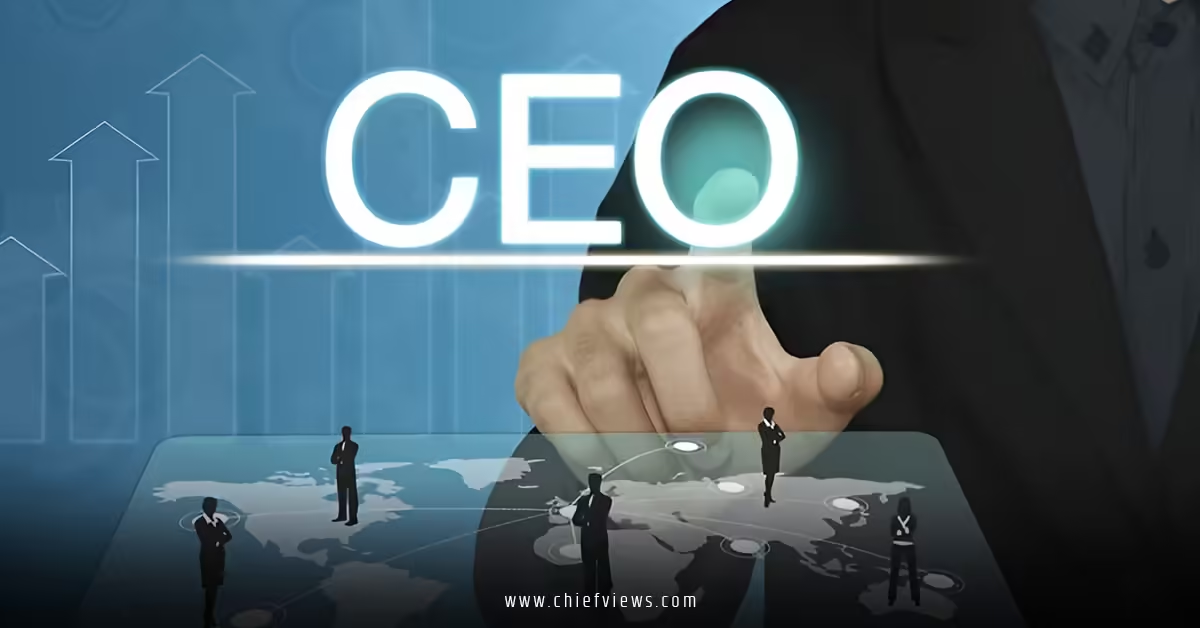
CEO strategic planning is the cornerstone of effective corporate leadership, guiding organizations through uncertainty and toward long-term success. If you’ve ever wondered how top executives like Tim Cook at Apple turn bold ideas into reality, this article dives deep into the strategies, tools, and mindsets that define CEO strategic planning. Drawing from reliable business insights and real-world examples, we’ll break it down in a conversational style, making it accessible for aspiring leaders while offering fresh perspectives for seasoned pros.
Picture CEO strategic planning as the blueprint for a skyscraper—without it, even the strongest foundation crumbles under pressure. In today’s fast-paced business world, CEOs must not only envision the future but also execute plans that adapt to market shifts, technological advancements, and global challenges. As we explore this topic, we’ll link back to related concepts, such as CXO duties and responsibilities, to show how strategic planning fits into the broader executive landscape. By the end, you’ll have practical takeaways to apply in your own career, whether you’re climbing the corporate ladder or leading a startup.
The Fundamentals of CEO Strategic Planning
CEO strategic planning involves the high-level process of defining a company’s direction, allocating resources, and making decisions that drive growth and sustainability. At its heart, it’s about asking the right questions: Where are we headed, and how do we get there? This isn’t just about crunching numbers; it’s a blend of vision, analysis, and teamwork that sets the stage for organizational success.
For instance, a CEO might start by conducting a SWOT analysis (Strengths, Weaknesses, Opportunities, Threats) to evaluate the company’s position. According to a study by McKinsey & Company, companies with robust CEO strategic planning are 67% more likely to outperform their peers. This highlights why it’s essential for CEOs to integrate data-driven insights with intuitive leadership, ensuring every plan aligns with the company’s core values and market demands.
In practice, CEO strategic planning often includes setting measurable goals, like increasing market share or launching new products. Think of it as plotting a road trip: You need a map (the strategy), fuel (resources), and checkpoints (milestones) to reach your destination. By weaving in elements from CXO duties and responsibilities, such as risk management and stakeholder engagement, CEOs can create more resilient strategies that withstand economic turbulence.


The Evolution of CEO Strategic Planning in a Digital Age
Over the decades, CEO strategic planning has transformed from a reactive approach to a proactive, technology-infused process. In the 1990s, it was largely about internal efficiencies, but today, it’s shaped by AI, big data, and remote work trends. It’s like upgrading from a basic compass to a GPS system—CEOs now have tools that provide real-time insights for better navigation.
A 2023 report from Deloitte points out that CEO strategic planning increasingly incorporates sustainability and diversity initiatives, reflecting global priorities. For example, CEOs at companies like Patagonia use strategic planning to align business goals with environmental stewardship, proving that profitability and purpose can coexist. This evolution underscores the need for CEOs to stay adaptable, blending traditional strategies with innovative tactics to stay ahead.
What’s the impact on CXO duties and responsibilities? Well, as CEOs focus more on long-term planning, other C-suite leaders like CFOs step in for tactical support, creating a collaborative ecosystem. Have you ever noticed how tech giants like Google pivot quickly? That’s CEO strategic planning in action, turning potential disruptions into opportunities.
Key Components of Effective CEO Strategic Planning
To master CEO strategic planning, let’s break it down into core elements. This isn’t a one-size-fits-all formula; it’s a customizable framework that adapts to your company’s size and industry. We’ll start with the basics and build toward advanced strategies, keeping things engaging with relatable analogies.
Setting Vision and Goals in CEO Strategic Planning
The first step in CEO strategic planning is crafting a clear vision that inspires the entire organization. Imagine you’re a ship captain charting a course through foggy waters—you need a North Star to guide you. CEOs define this by establishing SMART goals (Specific, Measurable, Achievable, Relevant, Time-bound) that align with the company’s mission.
For example, a CEO might aim to expand into new markets, as Amazon’s Jeff Bezos did with international e-commerce. This involves market research, competitor analysis, and resource allocation, all while considering CXO duties and responsibilities like financial oversight from the CFO. Effective vision-setting not only motivates teams but also builds trust with investors, enhancing the company’s overall authoritativeness.
Resource Allocation and Risk Management
Another pillar of CEO strategic planning is deciding how to allocate resources efficiently while mitigating risks. Think of it as a game of chess: Every move must be calculated to protect your pieces and advance your position. CEOs use tools like budgeting software and scenario planning to forecast outcomes and adjust strategies on the fly.
A Harvard Business Review article emphasizes that successful CEO strategic planning involves diversifying investments to buffer against uncertainties, such as supply chain disruptions. By linking this to CXO duties and responsibilities, CEOs ensure that financial and operational teams are in sync, creating a safety net for bold initiatives.
Fostering Innovation and Team Collaboration
In CEO strategic planning, innovation isn’t optional—it’s essential. CEOs must encourage a culture of creativity, perhaps by hosting brainstorming sessions or partnering with startups. It’s like tending a garden: You plant seeds (ideas), nurture them (with resources), and harvest the results (innovations).
Real-world examples, like Tesla’s Elon Musk, show how CEO strategic planning drives breakthroughs in electric vehicles. This often ties back to CXO duties and responsibilities , where CTOs handle the tech side, ensuring seamless integration. The key? Building cross-functional teams that collaborate effectively, turning individual efforts into collective wins.
Challenges and Essential Skills for CEO Strategic Planning
CEO strategic planning isn’t without hurdles. Executives often grapple with rapid changes, internal resistance, and ethical dilemmas, making it feel like solving a puzzle with missing pieces. To overcome these, CEOs need a mix of skills, including strategic thinking, emotional intelligence, and adaptability.
For instance, during economic downturns, CEO strategic planning might involve cost-cutting while maintaining morale—a delicate balance. Skills like data analysis and decision-making under pressure are crucial, as noted in a PwC survey where 85% of CEOs highlighted these as top priorities. By drawing parallels to CXO duties and responsibilities, such as the CEO’s role in crisis response, we see how these skills ripple through the organization.
Real-World Applications and Case Studies
Let’s make this practical with case studies. Take Microsoft’s Satya Nadella, whose CEO strategic planning revitalized the company through cloud computing investments. By focusing on partnerships and innovation, he turned Microsoft into a tech leader, demonstrating how strategic planning can pivot a business.
Another example? During the pandemic, CEOs at healthcare firms like Johnson & Johnson used strategic planning to accelerate vaccine development, linking back to CXO duties and responsibilities for operational efficiency. These stories show that effective planning isn’t just theoretical—it’s a game-changer.
The Future of CEO Strategic Planning
Looking ahead, CEO strategic planning will emphasize AI integration, sustainability, and inclusive leadership. With trends like remote work and ESG factors on the rise, CEOs must plan for a world where adaptability is king. As businesses evolve, so does the connection to CXO duties and responsibilities, fostering a more integrated C-suite approach.
Conclusion
In wrapping up our dive into CEO strategic planning, it’s evident that this process is the engine of organizational growth, blending vision, execution, and resilience. From setting bold goals to navigating challenges, effective CEOs turn strategies into successes that benefit everyone involved. Whether you’re an emerging leader or a curious reader, embracing these principles can spark real change. What’s your take—ready to apply some of these ideas in your world?
Frequently Asked Questions
What is the role of data in CEO strategic planning?
Data plays a pivotal role in CEO strategic planning by providing insights for informed decisions, helping executives like those in CXO duties and responsibilities [blocked] anticipate trends and mitigate risks.
How does CEO strategic planning differ from day-to-day operations?
While CEO strategic planning focuses on long-term vision and big-picture goals, day-to-day operations handle immediate tasks, creating a complementary dynamic as outlined in CXO duties and responsibilities [blocked].
Can small businesses benefit from CEO strategic planning?
Absolutely—CEO strategic planning helps small businesses scale efficiently, much like how larger firms use it, by aligning resources with growth objectives related to CXO duties and responsibilities [blocked].
What skills enhance CEO strategic planning?
Key skills include analytical thinking and leadership, which tie into broader CXO duties and responsibilities [blocked], enabling CEOs to drive innovation and team collaboration.
How does CEO strategic planning address ethical concerns?
It incorporates ethical frameworks to ensure sustainable practices, linking back to CXO duties and responsibilities [blocked] for building trust and long-term value.