







As we navigate 2026, artificial intelligence has shifted from a nice-to-have experiment to the core engine reshaping HR operating models. Traditional HR structures—built around human-led processes, shared services, and centers of excellence—are rapidly evolving into AI-infused, agile systems where humans and intelligent agents co-deliver value.
This isn’t just about adding chatbots or automating payroll. It’s about fundamentally redesigning how HR creates strategic impact. According to leading insights from Gartner, evolving the HR operating model delivers the highest predicted productivity gains from AI—up to 29% more than investments in tools or training alone.
Curious about the future? Let’s explore how AI in HR operating models 2026 is redefining the function—and why forward-thinking CHROs are leading the charge. (For deeper context on leadership in this space, check out our related guide on how CHRO can lead AI driven workforce transformation in 2026.)
Why HR Operating Models Must Evolve in 2026
The old playbook no longer works. In 2026, over 80% of HR departments rely on generative AI or predictive analytics daily. Agentic AI—systems that autonomously plan, execute, and adapt across multi-step workflows—has moved from pilot to production.
Traditional models focused on efficiency through centralization and standardization. Today’s reality? Volatility, skills flux, and the need for hyper-personalization. Employees expect instant, tailored experiences. Businesses demand faster insights and measurable ROI.
The result? HR must shift from service provider to strategic orchestrator. This evolution isn’t optional—it’s survival.

Here are some powerful visuals showing the shift toward AI-powered HR dashboards and analytics platforms that power modern operating models:
These examples highlight real-time, data-rich interfaces that CHROs now use to drive decisions.
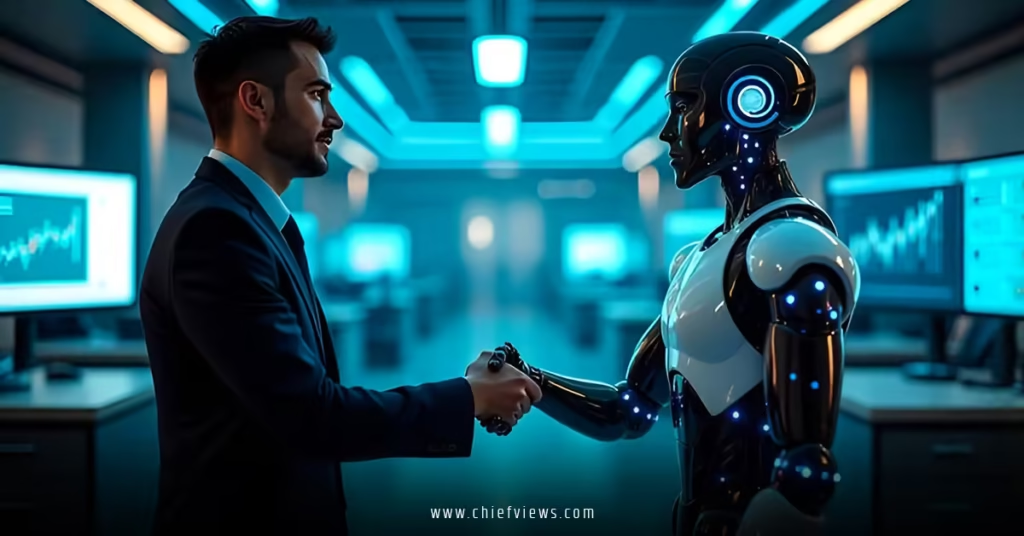
Key Components of AI-Infused HR Operating Models in 2026
So, what does an AI in HR operating models 2026 actually look like? Here’s the breakdown.
1. From Human-Centric to Human-Machine Hybrid Delivery
AI agents now handle Tier 0 and Tier 1 interactions—policy queries, benefits guidance, leave requests. This frees HR business partners to focus on strategic talent advisory.
Visualize the classic three-tier service model transforming into a collaborative ecosystem:
Here’s a classic representation of evolving HR operating models with AI integration:
And this diagram illustrates the broader shift in hybrid human-AI workforce structures:
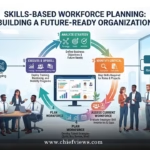
2. Skills-First, Dynamic Workforce Planning
Forget rigid job descriptions. In 2026, roles decompose into tasks, then re-bundle between humans and machines. AI-powered talent marketplaces match skills to work dynamically.
This skills-based approach becomes the new unit of currency for planning, mobility, and development.
3. Centralized AI Governance with Distributed Execution
CHROs establish HR-specific AI strategies alongside enterprise frameworks. This includes ethical guidelines, bias audits, and continuous monitoring—ensuring trust and compliance.
4. Productized HR Services
Centers of Excellence evolve into product teams that design personalized experiences: onboarding journeys, learning paths, career ecosystems—all powered by AI.
Challenges in Implementing AI-Driven HR Operating Models
No transformation is smooth. Common roadblocks include:
- Legacy tech debt slowing integration
- Resistance from teams fearing obsolescence
- Measuring true ROI beyond vanity metrics
- Balancing speed with ethical safeguards
The good news? Organizations addressing these early see outsized gains in productivity, employee experience, and strategic influence.
How CHROs Lead the Shift to AI in HR Operating Models 2026
This is where leadership shines. How CHRO can lead AI driven workforce transformation in 2026 starts with owning the HR-focused AI roadmap. Treat AI as a talent segment. Build “now-next” strategies: deliver today while architecting tomorrow.
Partner tightly with CIOs. Pilot aggressively. Scale responsibly. Above all, communicate transparently—employees need to understand AI as an ally, not a replacement.
The Bottom Line: Opportunity Awaits Bold HR Leaders
In 2026, AI in HR operating models isn’t a trend—it’s the new reality. Those who redesign thoughtfully will unlock unprecedented strategic value, stronger cultures, and workforces ready for whatever comes next.
The question isn’t whether AI will change HR. It’s whether your HR function will lead the change—or be changed by it.
Ready to step up? Start small: audit one process, pilot an AI agent, measure impact. Momentum builds fast.
FAQ :
1. What is the biggest change in HR operating models in 2026 due to AI?
HR is moving from human-only service delivery to hybrid human–AI models, where AI agents handle routine queries and analytics while HR professionals focus on strategic advisory and employee experience.
2. How quickly should companies adopt AI in their HR operating model in 2026?
Start with 2–3 high-impact pilots (recruitment, onboarding, workforce analytics) in the first half of 2026, then scale aggressively in Q3–Q4 once governance and employee trust are established.
3. Will AI in HR operating models replace HR business partners in 2026?
No. It will upgrade them. AI takes over data-heavy and repetitive tasks, allowing HRBPs to become trusted strategic partners focused on leadership coaching, culture, and complex talent decisions.
4. What is one must-have capability for HR operating models using AI in 2026?
Strong AI governance: clear ethical guidelines, regular bias audits, transparency about AI decisions, and human-in-the-loop oversight for high-stakes processes (hiring, performance, promotion).
5. How does this connect to how a CHRO can lead AI-driven workforce transformation in 2026?
The redesigned HR operating model is the foundation. A forward-thinking CHRO who owns the AI roadmap, pilots aggressively, and communicates transparently turns HR into the strategic engine of organization-wide AI transformation.


