





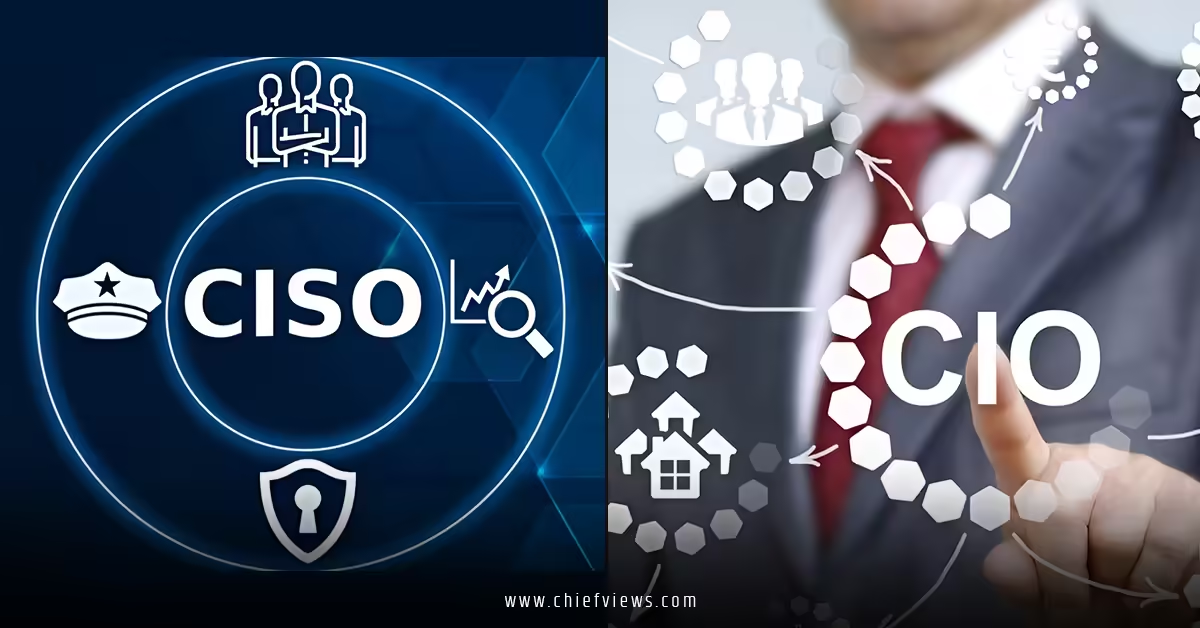
CISO vs CIO responsibilities often get tangled in the fast-paced world of IT leadership, but getting them right is crucial for any organization aiming to thrive amid rising cyber threats. Think of the CIO as the architect building a high-speed highway for business innovation, while the CISO is the traffic cop ensuring no crashes happen along the way. In 2026, with breaches costing millions and regulations tightening, understanding CISO vs CIO responsibilities isn’t optional—it’s essential. I’ve seen these roles evolve up close, and today, let’s break it down clearly, from core duties to overlaps, reporting lines, and how they team up to keep your organization secure and growing.
Why CISO vs CIO Responsibilities Matter More Than Ever in 2026
The digital landscape has shifted dramatically. AI adoption is exploding, remote work lingers, and ransomware attacks target supply chains relentlessly. CISO vs CIO responsibilities now sit at the heart of boardroom conversations. According to recent benchmarks, 64% of CISOs still report into IT leadership like the CIO, but 36% report directly to the CEO or business side—signaling a push for independence.
This evolution reflects reality: Technology drives growth (CIO turf), but security protects it (CISO domain). Get CISO vs CIO responsibilities wrong, and you risk innovation stalling under fear or security holes under unchecked speed. Get it right, and you unlock resilient, agile business.
The CIO’s Core Responsibilities: Enabling the Business Engine
The Chief Information Officer (CIO) acts as the strategic IT leader. Their focus? Aligning technology with business objectives to fuel efficiency, innovation, and growth.
CIOs own the big picture:



- Developing and executing IT strategy
- Managing infrastructure (cloud, networks, applications)
- Overseeing IT budgets and vendor relationships
- Driving digital transformation initiatives
- Ensuring reliable, scalable systems
In practice, a CIO might champion migrating to cloud platforms for cost savings or rolling out AI tools to boost productivity. They’re the bridge between tech and the board, translating geek-speak into dollars and growth metrics.
But here’s the key: CIOs increasingly touch security because tech enablement without protection is reckless. They set the stage for secure innovation, but they don’t dive deep into threat hunting—that’s where CISO vs CIO responsibilities diverge sharply.
The CISO’s Core Responsibilities: Protecting the Crown Jewels
Enter the Chief Information Security Officer (CISO). This role is laser-focused on safeguarding information assets against threats. While the CIO builds and expands, the CISO defends.
Typical CISO duties include:
- Designing and implementing cybersecurity policies
- Managing security risks and conducting assessments
- Overseeing incident response and recovery
- Ensuring compliance with regulations (GDPR, SEC rules, etc.)
- Leading threat intelligence and vulnerability management
- Building security awareness culture
CISOs live in the world of zero trust, penetration testing, and real-time monitoring. They ask tough questions: What if we get hit? How fast can we recover? Their metric isn’t just uptime—it’s risk reduction and resilience.
In 2026, CISOs are stepping up as executive leaders, with more holding C-level titles and direct board access. This shift underscores why CISO vs CIO responsibilities need clear boundaries.
Key Differences: A Side-by-Side Breakdown of CISO vs CIO Responsibilities
Let’s cut through the noise with a direct comparison:
| Aspect | CIO Responsibilities | CISO Responsibilities |
|---|---|---|
| Primary Focus | IT strategy, innovation, business enablement | Cybersecurity, risk mitigation, protection |
| Scope | Broad—covers all IT operations | Narrow—specialized in security |
| Goal Orientation | Growth, efficiency, transformation | Defense, compliance, resilience |
| Access Mindset | Enable access for productivity | Restrict access to minimize risk |
| Budget Influence | Overall IT spend | Security-specific allocations |
| Reporting (2026 Trends) | Often reports to CEO | 64% to CIO/CTO, 36% to CEO/Board |
| Key Metrics | ROI on tech, system uptime | Mean time to detect/respond, breach reduction |
The CIO asks, “How can tech make us faster and better?” The CISO counters, “But is it safe?” This tension isn’t conflict—it’s balance.
Areas of Overlap: Where CISO vs CIO Responsibilities Intersect
Despite differences, CISO vs CIO responsibilities overlap significantly, especially in cybersecurity.
Shared ground includes:
- Data governance and privacy
- Vendor risk management
- Incident response planning
- Regulatory compliance
- Technology adoption (secure cloud, AI ethics)
In many organizations, the CIO ensures secure processes for new tools, while the CISO provides the security playbook. Collaboration shines here—joint risk workshops, shared KPIs, and co-owned budgets lead to stronger outcomes.
Reporting Structures in 2026: Who Does the CISO Answer To?
One of the hottest debates in CISO vs CIO responsibilities is reporting lines. In 2026, the majority (64%) of CISOs report into IT leadership, often the CIO or CTO. This setup offers tight integration but risks security being deprioritized under IT goals.
The growing minority (36%) report directly to the CEO, COO, or board—ideal for independence and board-level visibility. Regulations increasingly push this model for objectivity.
Best practice? Hybrid: CISO reports to CIO for ops, dotted line to CEO for strategy. This keeps alignment without silos.
The Power of Collaboration: Making CISO vs CIO Responsibilities Work Together
Strong CISO vs CIO responsibilities execution demands partnership. When aligned:
- Innovation accelerates securely
- Risk communication improves
- Budgets get justified faster
- Resilience strengthens
Practical tips:
- Weekly syncs on risks and initiatives
- Joint steering committees
- Shared dashboards (security posture + IT performance)
- Co-presenting to the board
I’ve watched organizations transform when CIOs and CISOs treat each other as allies, not rivals. The result? Faster digital moves with fewer breaches.
CISO vs CIO Responsibilities in Cybersecurity: A Deeper Dive
Cybersecurity amplifies CISO vs CIO responsibilities. The CIO sets the foundation—secure architectures, patch management, secure-by-design principles. The CISO executes the defense—threat hunting, controls, monitoring.
For a full deep dive on the CIO’s cybersecurity role, check our comprehensive guide on CIO Responsibilities in Cybersecurity. It covers strategies, tools, and best practices that complement the CISO’s tactical focus.
Together, they form a dynamic duo: CIO enables, CISO protects.
Challenges in Balancing CISO vs CIO Responsibilities
Common pitfalls:
- Budget fights (security vs innovation)
- Siloed thinking
- Talent shortages
- Evolving threats outpacing roles
Overcome them with clear RACI matrices, regular alignment sessions, and executive sponsorship.
Best Practices for Mastering CISO vs CIO Responsibilities
- Define clear roles and handoffs.
- Foster open communication.
- Align on shared goals (e.g., secure innovation).
- Invest in joint training.
- Measure success collaboratively.
Implement these, and you’ll build a powerhouse leadership pair.
Conclusion: Embrace the Duality for Lasting Success
CISO vs CIO responsibilities aren’t competing forces—they’re complementary pillars. The CIO drives forward momentum; the CISO ensures the journey is safe. In 2026, organizations that master this partnership outperform those that don’t. Review your structure today: Are roles clear? Is collaboration strong? Take action—align your leaders, secure your future, and watch your business flourish in a threat-filled world.
Five Unique FAQs on CISO vs CIO Responsibilities
1. What is the main difference in CISO vs CIO responsibilities?
The primary difference in CISO vs CIO responsibilities lies in focus: CIOs drive IT strategy and business enablement, while CISOs specialize in protecting against cyber threats and managing security risks.
2. Does the CISO report to the CIO in most organizations?
In 2026, yes—about 64% of CISOs report to IT leaders like the CIO or CTO, though a growing number report directly to the CEO or board for greater independence.
3. How do CISO vs CIO responsibilities overlap in practice?
CISO vs CIO responsibilities overlap in areas like data governance, compliance, vendor risk, and incident response, requiring close collaboration for effective outcomes.
4. Why is collaboration key in CISO vs CIO responsibilities?
Strong collaboration in CISO vs CIO responsibilities enables secure innovation, better risk communication, and faster resilience—preventing silos that could lead to breaches or stalled progress.
5. Can a CISO transition to CIO role successfully?
Yes, many CISOs move into CIO positions, leveraging their risk management expertise and strategic leadership skills to scale into broader IT oversight.