




Agentic AI implementation strategies are quickly becoming the defining factor for companies that want to move beyond basic chatbots and generative tools into truly autonomous, goal-driven systems. If you’ve been following AI trends, you know 2026 marks the year agentic AI shifts from exciting demos to core business infrastructure. Gartner predicts that 40% of enterprise applications will embed task-specific AI agents by the end of this year, turning passive assistants into proactive workflow partners.
But here’s the catch—jumping in without a solid plan leads to wasted resources, runaway costs, or outright project cancellations (some forecasts warn over 40% of agentic initiatives could fail by 2027 due to poor governance or unclear value). So, how do you implement agentic AI effectively? This guide breaks down proven strategies, practical steps, frameworks, and real-world considerations to help you build reliable, scalable agentic systems. Whether you’re modernizing your tech stack or starting fresh, these approaches will set you up for success.
What Exactly Is Agentic AI?
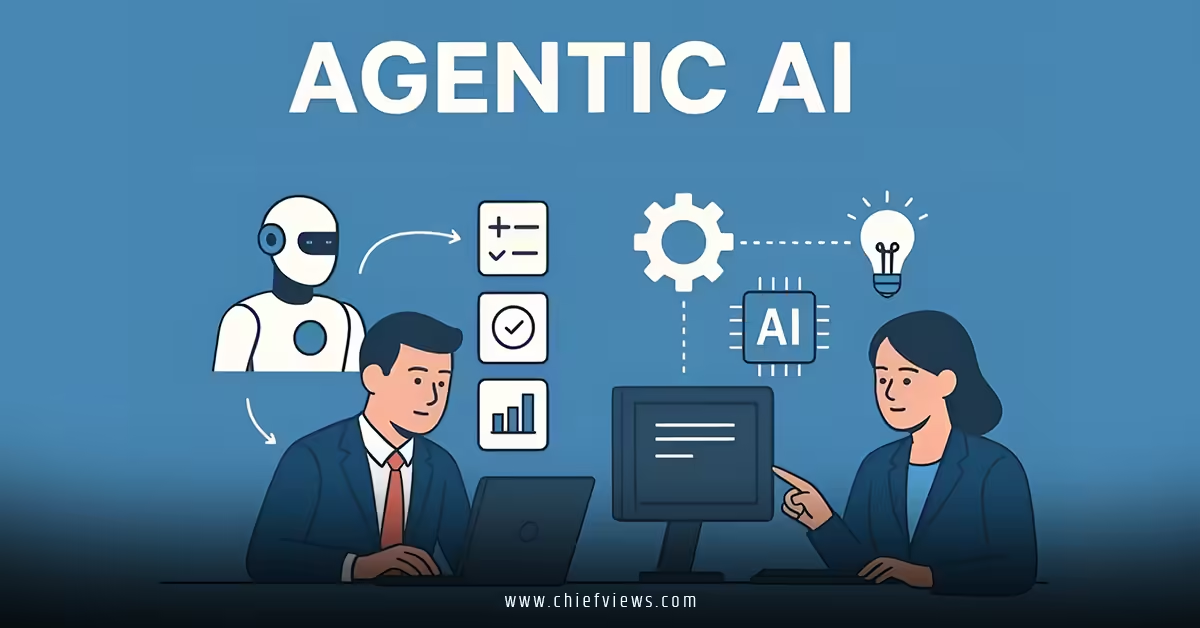
Before diving into strategies, let’s get clear on the basics. Agentic AI refers to autonomous AI systems that perceive their environment, reason through complex goals, plan multi-step actions, and execute them with minimal human oversight. Unlike traditional generative AI (which creates content on demand), agentic systems act proactively—like digital employees that can book meetings, reroute shipments, diagnose IT issues, or optimize supply chains in real time.
Key traits include:
- Autonomy — They pursue goals independently.
- Tool use — They call APIs, access databases, or interact with other software.
- Adaptability — They handle dynamic environments and recover from failures.
- Multi-agent collaboration — Specialized agents team up, often orchestrated like a microservices architecture for AI.
Think of it as upgrading from a helpful calculator to a full project manager that anticipates needs and gets things done.


Why Agentic AI Matters in 2026
The stakes are high. Organizations adopting agentic AI see faster workflows, reduced manual errors, and new revenue opportunities. In logistics, agents dynamically adjust production; in finance, they detect fraud and act instantly; in customer service, multi-agent crews handle end-to-end resolutions.
Yet success hinges on strategy. Poor data foundations, weak orchestration, or missing guardrails lead to chaos. The winners treat agentic AI as core infrastructure—designed thoughtfully, governed rigorously, and scaled deliberately.

Core Agentic AI Implementation Strategies
Implementing agentic AI isn’t about slapping agents on existing processes. It requires rethinking workflows around human-agent collaboration. Here are the most effective strategies drawn from enterprise experiences in 2026.
1. Start with Strategic Alignment and High-Impact Use Cases
Don’t boil the ocean. Anchor your efforts in clear business objectives and measurable ROI.
- Identify pain points where multi-step, decision-heavy processes exist (e.g., incident resolution in IT, pricing optimization in retail).
- Prioritize use cases with quick wins—aim for MVPs that deliver value in months, not years.
- Align stakeholders early: Involve business leaders, IT, security, and compliance to define success metrics.
Pro tip: Launch pilots tied directly to P&L impact. One retail company built a multi-agent pricing system that accelerated market response and cut errors, securing production approval in under four months.
2. Build a Strong Data and Infrastructure Foundation
Agentic systems live or die by data quality and accessibility.
- Unify structured and unstructured data with lakehouses or modern catalogs.
- Enable real-time access via vector databases and feature stores.
- Adopt cloud-native setups with elastic compute for agent workloads.
Without searchable, reusable data, agents hallucinate or stall. Many organizations cite data challenges as their biggest hurdle—fix this first.
3. Design for Multi-Agent Orchestration and Collaboration
Single agents handle simple tasks; complex goals need teams.
- Use orchestrator agents to coordinate specialist agents (e.g., one for analysis, one for execution, one for governance).
- Implement patterns like ReAct (reason + act loops), reflection, planning, and human-in-the-loop.
- Standardize protocols for agent-to-agent communication to avoid silos.
This “microservices approach to AI” enables scalability. In 2026, multi-agent orchestration emerges as the breakthrough for enterprise workflows.
4. Choose the Right Frameworks and Tools
The ecosystem has matured—pick tools that match your needs.
Popular frameworks include:
- LangGraph — Excels at stateful, controllable workflows with graph-based reasoning. Ideal for production reliability and traceability.
- CrewAI — Focuses on role-based multi-agent teams. Great for mimicking human collaboration in project management or creative tasks.
- AutoGen (Microsoft) — Strong for conversational multi-agent systems and enterprise integration.
- Others like LlamaIndex (RAG-heavy), Semantic Kernel, or open-source options round out the top tier.
Start with open-source for flexibility, then layer enterprise features as you scale.
5. Embed Governance, Security, and Observability from Day One
Agentic AI introduces new risks—autonomous actions can go wrong fast.
- Define explicit goals, scopes, and guardrails.
- Implement bias detection, access controls, and ethical boundaries.
- Add monitoring for drift, hallucinations, and cost overruns.
- Use governance agents for validation and human oversight loops.
Treat it like core infrastructure: enforce policies centrally to prevent sprawl.
6. Adopt a Phased, Iterative Roadmap
Big-bang deployments rarely work. Follow a staged approach:
- Foundation (weeks 1–8) — Strengthen data, pick frameworks, train teams on prompting and agent design.
- Prototyping (months 2–4) — Build single-agent MVPs, then evolve to multi-agent.
- Production Pilots (months 4–9) — Deploy with monitoring, iterate based on real feedback.
- Scaling (ongoing) — Expand use cases, optimize costs, and integrate deeper into workflows.
Upskill everyone—turn users into “agent leaders” who supervise and steer.
7. Focus on Human-Agent Symbiosis
The goal isn’t full replacement; it’s amplification. Redesign processes so humans handle creativity and judgment while agents execute routine steps.
This collaborative design creates outsized value.
Common Pitfalls to Avoid in Agentic AI Implementation
- Ignoring costs — Agent calls add up quickly without controls.
- Skipping orchestration — Leads to fragmented, insecure deployments.
- Overlooking testing — Agents need rigorous evaluation loops.
- Waiting too long — Early movers build advantages while others catch up.
Looking Ahead: Agentic AI in Late 2026 and Beyond
By year-end, expect protocol standardization, broader multi-agent ecosystems, and physical AI integration. The market surges toward tens of billions, but disciplined implementers win.
Conclusion
Mastering agentic AI implementation strategies in 2026 means combining strategic focus, robust foundations, smart orchestration, and strong governance. Start small with high-value use cases, iterate relentlessly, and treat agents as evolving team members. Done right, you’ll transform operations and position your organization as an AI leader.
Ready to level up? If you’re figuring out how to modernize tech stack for AI in 2026, integrating agentic capabilities should top your list—it’s the bridge from experimentation to real competitive edge.
Here are three high-authority external links for deeper insights:
- Explore Gartner’s predictions on agentic AI adoption.
- Read Deloitte’s Tech Trends 2026 on agentic AI strategy.
- Check MIT Sloan’s explanation of agentic AI.
FAQs
1. What makes agentic AI different from generative AI?
Agentic AI goes beyond generating content—it plans, decides, and acts autonomously toward goals, often using tools and collaborating with other agents.
2. Which framework should I choose for agentic AI implementation strategies?
It depends: LangGraph for controllable workflows, CrewAI for role-based teams, AutoGen for conversational multi-agents. Evaluate based on your complexity and integration needs.
3. How long does it take to see ROI from agentic AI?
Many see returns in the first year with focused MVPs. Anchor in measurable business outcomes to accelerate value.
4. What are the biggest risks in agentic AI implementation strategies?
Uncontrolled costs, security breaches, lack of governance, and poor data foundations top the list. Build guardrails early.
5. Can small teams implement agentic AI successfully?
Yes—start with open-source frameworks, focus on one high-impact use case, and scale gradually. The key is clear goals and iterative testing.