




Ethical AI Frameworks in HR are the backbone of a fair and responsible future for human resources, ensuring that AI tools enhance rather than undermine employee experiences. Picture AI as a helpful colleague who always does the right thing—now imagine adding strict rules to make sure it stays that way. In this article, we’ll explore how Ethical AI Frameworks in HR can guide organizations toward unbiased, transparent practices, while touching on related advancements like agentic AI in HR and responsible governance 2026.
As AI becomes integral to HR processes, Ethical AI Frameworks in HR provide the guidelines needed to prevent misuse, promote equality, and foster innovation. Have you ever wondered how companies can use AI for hiring without accidentally favoring certain groups? By 2026, these frameworks will be essential, helping HR teams navigate ethical dilemmas with confidence. Let’s dive in and uncover the key elements, benefits, and real-world applications of Ethical AI Frameworks in HR.
What Are Ethical AI Frameworks in HR?
Ethical AI Frameworks in HR are structured guidelines that ensure AI systems in human resources operate fairly, transparently, and accountably. Think of them as the moral compass for your AI tools, directing everything from recruitment algorithms to performance evaluations. These frameworks address issues like bias, privacy, and decision-making integrity, drawing from global standards to create a balanced approach.
For instance, Ethical AI Frameworks in HR might include principles for data handling, such as anonymizing employee information to avoid discrimination. According to the OECD AI Principles, which emphasize human rights in AI development, these frameworks help mitigate risks by requiring regular audits and stakeholder involvement. Why is this crucial? Because without them, AI could amplify existing inequalities, like in resume screening where biases sneak in from historical data.
The Core Principles of Ethical AI in HR
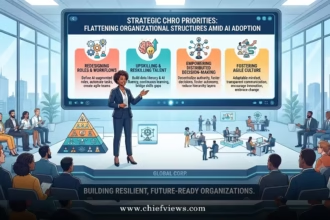
At the heart of Ethical AI Frameworks in HR are foundational principles: fairness, transparency, accountability, and privacy. Fairness ensures AI doesn’t favor one group over another, transparency means explaining how AI makes decisions, accountability holds developers responsible for outcomes, and privacy protects sensitive data.
Let’s break it down further:


- Fairness: This involves testing AI for biases, such as gender or racial disparities in hiring tools.
- Transparency: Users should understand AI processes, like why a candidate was rejected.
- Accountability: Organizations must have mechanisms to address AI errors, including human oversight.
- Privacy: Compliance with laws like GDPR ensures data security.
Ethical AI Frameworks in HR evolve from these basics, adapting to industry needs. For example, a company might use them to design chatbots that handle employee queries without compromising confidentiality.
How Ethical AI Frameworks Evolved
Ethical AI Frameworks in HR didn’t appear overnight; they stem from broader AI ethics movements. Early concerns arose with automated hiring in the 2010s, leading to frameworks like those from the IEEE or Google’s AI principles. By 2026, as AI grows more sophisticated, Ethical AI Frameworks in HR will incorporate advanced elements, linking back to topics like agentic AI in HR and responsible governance 2026, which explores autonomous AI with ethical controls.
Benefits of Implementing Ethical AI Frameworks in HR
Adopting Ethical AI Frameworks in HR isn’t just about compliance—it’s about creating a positive workplace culture. These frameworks can streamline operations while building trust among employees and stakeholders. For one, they reduce legal risks by ensuring AI aligns with regulations, potentially saving companies from costly lawsuits.
Imagine your HR department as a well-tuned engine; Ethical AI Frameworks in HR are the oil that keeps it running smoothly. A study by Deloitte highlights that organizations with strong ethical guidelines see up to 20% higher employee satisfaction, as AI tools become tools for empowerment rather than exclusion. Rhetorical question: Wouldn’t you want your team to feel secure knowing AI decisions are fair?
Enhancing Trust and Employee Engagement
Ethical AI Frameworks in HR boost trust by making AI processes visible and contestable. For example, if an AI recommends promotions, employees can request explanations, fostering openness. This transparency leads to better engagement, with research from Gallup showing that ethical practices correlate with 21% greater productivity.
In practical terms, Ethical AI Frameworks in HR can personalize employee development plans without invading privacy, using anonymized data to suggest career paths. The result? A more motivated workforce that sees AI as an ally.
Driving Business Efficiency and Innovation
Beyond ethics, these frameworks drive efficiency. By standardizing AI use, HR teams can automate routine tasks like onboarding, freeing time for strategic work. McKinsey reports that companies implementing Ethical AI Frameworks in HR could see a 15% reduction in operational costs, all while innovating safely.
But it’s not just about savings—Ethical AI Frameworks in HR encourage creativity. They allow for experimentation with new technologies, ensuring that advancements like those in agentic AI don’t compromise core values.
Challenges in Ethical AI Frameworks in HR
Of course, implementing Ethical AI Frameworks in HR isn’t without hurdles. One major challenge is the complexity of AI systems, which can make it hard to identify and fix biases. Have you ever tried debugging a black-box algorithm? It’s like searching for a needle in a haystack, requiring specialized expertise.
Another issue is resource constraints; smaller businesses might lack the budget for ongoing audits. Additionally, varying global regulations can complicate things, as Ethical AI Frameworks in HR must adapt to different legal environments. Experts from the AI Now Institute warn that without proper support, these frameworks could become burdensome rather than beneficial.
Addressing Bias and Privacy Concerns
Bias is a persistent problem in Ethical AI Frameworks in HR. If training data is skewed, AI might perpetuate stereotypes, such as overlooking diverse candidates in recruitment. To combat this, frameworks recommend diverse datasets and regular testing, turning potential pitfalls into strengths.
Privacy is equally critical. With AI handling sensitive HR data, breaches could erode trust. Ethical AI Frameworks in HR mandate encryption and access controls, drawing from standards like ISO 27001 for data security.
The Role of Regulation and Compliance
By 2026, regulations will play a bigger role in Ethical AI Frameworks in HR, with laws like the EU AI Act enforcing stricter rules. This means companies must stay ahead, integrating compliance into their strategies. For deeper insights into how this ties into autonomous systems, explore our coverage of agentic AI in HR and responsible governance 2026.

Implementing Ethical AI Frameworks in HR: A Step-by-Step Guide
Ready to get started? Implementing Ethical AI Frameworks in HR begins with assessment. First, audit your current AI tools for ethical gaps, then develop policies based on established guidelines.
Here’s a simple guide:
- Conduct an AI Ethics Audit: Review existing systems for biases and risks.
- Adopt a Framework: Choose one like the UNESCO AI Ethics Recommendations and customize it.
- Train Your Team: Educate HR staff on ethical AI practices.
- Integrate Monitoring Tools: Use software for ongoing compliance checks.
- Iterate and Improve: Gather feedback and refine frameworks regularly.
By following these steps, Ethical AI Frameworks in HR can become a seamless part of your operations.
The Future of Ethical AI Frameworks in HR
Looking ahead, Ethical AI Frameworks in HR will evolve with technology, incorporating elements from emerging fields like quantum AI. Trends such as hybrid human-AI teams will dominate, ensuring ethics keep pace with innovation. As we approach 2026, these frameworks will be key to sustainable HR practices.
Emerging Trends and Best Practices
Key trends include AI explainability tools and collaborative governance models. Ethical AI Frameworks in HR will increasingly link with advanced applications, much like those in agentic AI in HR and responsible governance 2026, promoting a holistic approach.
Conclusion
In summary, Ethical AI Frameworks in HR are vital for creating a just and efficient workplace, addressing biases, enhancing trust, and driving innovation. As AI’s role expands, these frameworks ensure we harness its power responsibly, paving the way for a brighter future in HR. So, what’s your next move to integrate them? Embracing them now could transform your organization for the better.
Frequently Asked Questions
What are the main components of Ethical AI Frameworks in HR?
Ethical AI Frameworks in HR focus on fairness, transparency, accountability, and privacy to guide AI use in recruitment and employee management.
How do Ethical AI Frameworks in HR prevent bias?
By requiring diverse data and regular audits, Ethical AI Frameworks in HR help identify and correct biases in AI decisions.
Can small businesses benefit from Ethical AI Frameworks in HR?
Absolutely—Ethical AI Frameworks in HR can be scaled, starting with basic guidelines to build trust without overwhelming resources.
What role do regulations play in Ethical AI Frameworks in HR?
Regulations like the EU AI Act enforce standards, making Ethical AI Frameworks in HR essential for compliance and risk management.
How does Ethical AI Frameworks in HR relate to advanced AI systems?
Ethical AI Frameworks in HR provide the foundation for responsible use in systems like agentic AI, ensuring ethical governance as discussed in related topics.