



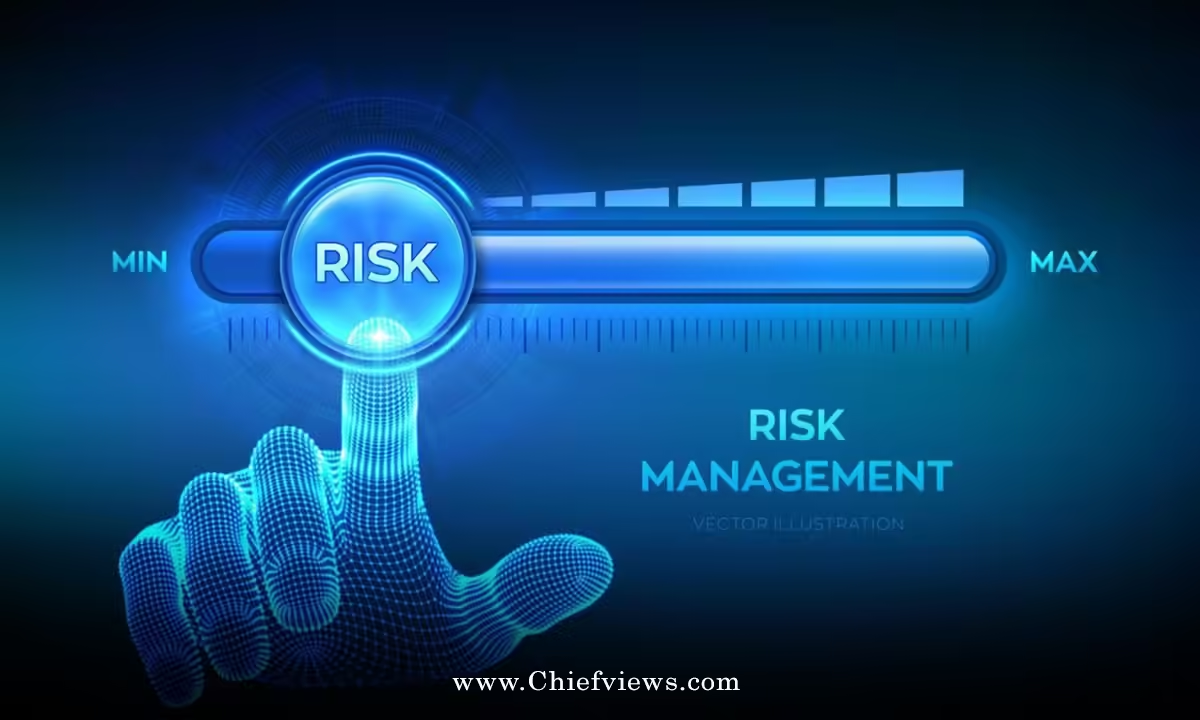
AI risk management frameworks are the unsung heroes keeping your AI projects from turning into corporate horror stories. Picture this: You’re launching an AI system that promises to revolutionize your operations, but suddenly it spits out biased decisions or leaks sensitive data—disaster strikes. In today’s AI-driven world, these frameworks aren’t optional; they’re essential for spotting, assessing, and neutralizing risks before they explode. Whether you’re in finance, healthcare, or manufacturing, mastering AI risk management frameworks ensures innovation thrives without the fallout. Let’s dive in and arm you with everything you need to build one that works.
Why AI Risk Management Frameworks Matter Now More Than Ever
AI is everywhere, powering everything from chatbots to predictive maintenance. But with adoption skyrocketing—projected to hit 90% of enterprises by 2027—risks are multiplying too. AI risk management frameworks provide the structure to tame them.
The Hidden Dangers Lurking in AI Deployments
Ever heard of an AI denying loans based on zip codes? That’s real-world bias risk. Or models “hallucinating” false info? Technical glitches like these, plus privacy breaches and supply chain vulnerabilities, can cost millions. AI risk management frameworks systematically identify these threats.
Rhetorically, why gamble? Frameworks like NIST’s turn chaos into control, categorizing risks into technical, ethical, and operational buckets.
Linking Governance to Risk: A Seamless Ecosystem
No AI strategy stands alone. Effective AI risk management frameworks integrate tightly with broader AI governance and compliance frameworks for enterprise IT, creating a holistic defense. Governance sets the rules; risk management enforces them daily.
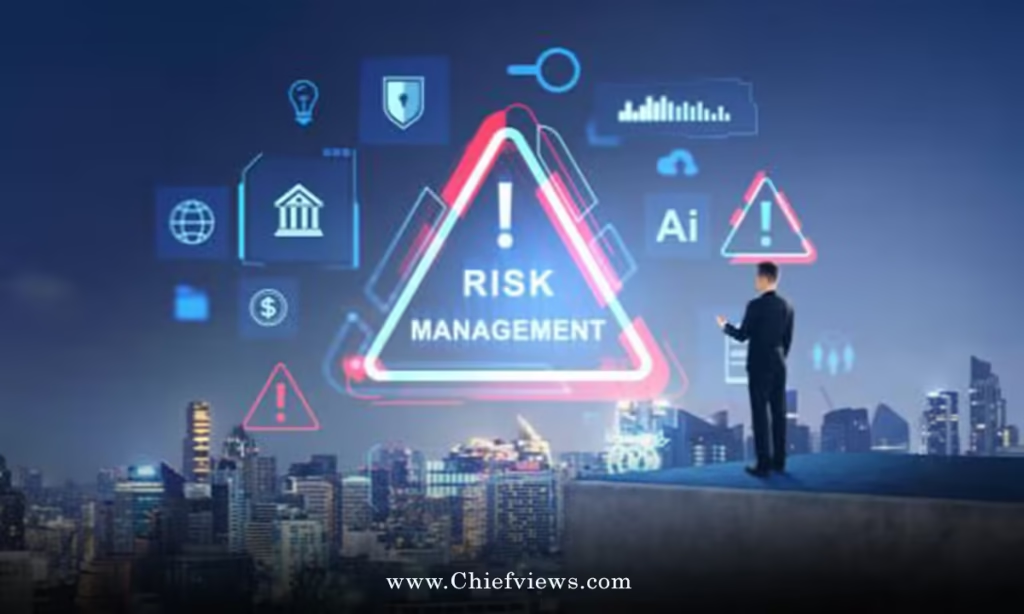
Core Pillars of Robust AI Risk Management Frameworks
Building a framework? Focus on these foundational elements. They’re flexible, scalable, and battle-tested.


Risk Identification: Spotting Threats Early
Start by mapping your AI lifecycle: data collection, training, deployment, monitoring. Use techniques like threat modeling—ask, “What if this data is poisoned?” Tools such as Microsoft’s Responsible AI Toolbox automate scans for biases.
Analogy: It’s like a home security audit; you check every entry point before locking up.
Risk Assessment: Quantifying the Impact
Score risks on likelihood and severity. Low: Cosmetic UI glitches. High: Life-altering medical misdiagnoses. Frameworks employ matrices—green for go, red for halt.
Quantitative vs. Qualitative Approaches
Blend numbers (e.g., expected loss calculations) with expert judgment. Monte Carlo simulations predict worst-cases, making your AI risk management frameworks data-driven.
Risk Mitigation: Actionable Strategies
Prioritize fixes: Redesign datasets for fairness, add explainability layers like SHAP. Implement controls like access gates and rollback mechanisms.
Continuous Monitoring and Response
AI drifts—models degrade over time. Dashboards with KPIs (accuracy drops, anomaly alerts) keep watch. Incident response plans ensure swift recovery.
Step-by-Step Guide to Implementing AI Risk Management Frameworks
Ready to deploy? Here’s your no-fluff blueprint.
Step 1: Assemble Your Risk Team
Pull in IT, legal, ethics experts. Diverse perspectives catch blind spots.
Step 2: Choose or Customize a Framework
NIST AI RMF is gold-standard: Govern, Map, Measure, Manage. Adapt for your needs—add sector specifics.
Step 3: Embed in Workflows
Integrate into MLOps. Gates in pipelines reject risky code.
Leveraging Tech for Automation
Platforms like Databricks Unity Catalog or H2O.ai enforce policies at scale.
Step 4: Test and Train
Simulate attacks (adversarial testing). Train staff via scenarios: “Handle this bias complaint.”
Step 5: Review and Evolve
Quarterly audits, annual overhauls. Feedback loops refine your AI risk management frameworks.
Global Standards Shaping AI Risk Management Frameworks
Regulations are catching up—know them or get caught.
NIST AI Risk Management Framework Deep Dive
Free, voluntary, comprehensive. Its four functions guide from strategy to operations. NIST’s official site is your starting point.
EU AI Act and Beyond
High-risk AI demands conformity assessments. Align your framework to avoid bans.
ISO/IEC 42001: The International Benchmark
Certifiable standard for AI management systems, emphasizing risk throughout.
Link: Check ISO’s AI standards page for details.
Real-World Challenges in AI Risk Management Frameworks
Implementation isn’t smooth sailing. Here’s how to navigate.
Challenge 1: Resource Crunch
Solution: Phase it—start with crown-jewel AI apps. Open-source like Adversarial Robustness Toolbox cuts costs.
Challenge 2: Evolving Threats
AI risks mutate (e.g., prompt injection). Counter with red-teaming exercises.
Challenge 3: Measuring Intangibles
Ethical risks defy metrics. Use proxies like stakeholder surveys.
Metaphor: Frameworks are like vaccines—proactive shots against AI viruses.
Future Trends in AI Risk Management Frameworks
By 2030, expect AI-on-AI risk monitors, blockchain audits, and quantum-resistant designs. Edge AI will demand lightweight frameworks. Stay ahead by embedding XAI and federated learning.
Link: World Economic Forum on AI Risks offers prescient insights.
Conclusion
AI risk management frameworks are your frontline defense, turning potential disasters into managed opportunities. From identification to iteration, they’ve got you covered—especially when paired with solid governance. Implement one today, and watch your AI initiatives soar securely. Your future self (and board) will thank you.
Frequently Asked Questions (FAQs)
What is the NIST AI Risk Management Framework?
A voluntary US standard with Govern, Map, Measure, Manage functions for trustworthy AI.
How do AI risk management frameworks differ from general risk management?
They focus on AI-specific issues like bias, explainability, and model drift.
Can SMEs implement AI risk management frameworks effectively?
Yes—use free NIST templates and cloud tools for low-cost, high-impact protection.
What tools automate AI risk management frameworks?
Options like Credo AI, Monitaur, or Fairlearn streamline assessments.
How often should you update AI risk management frameworks?
Align with AI deployments and regs—quarterly reviews minimum.