




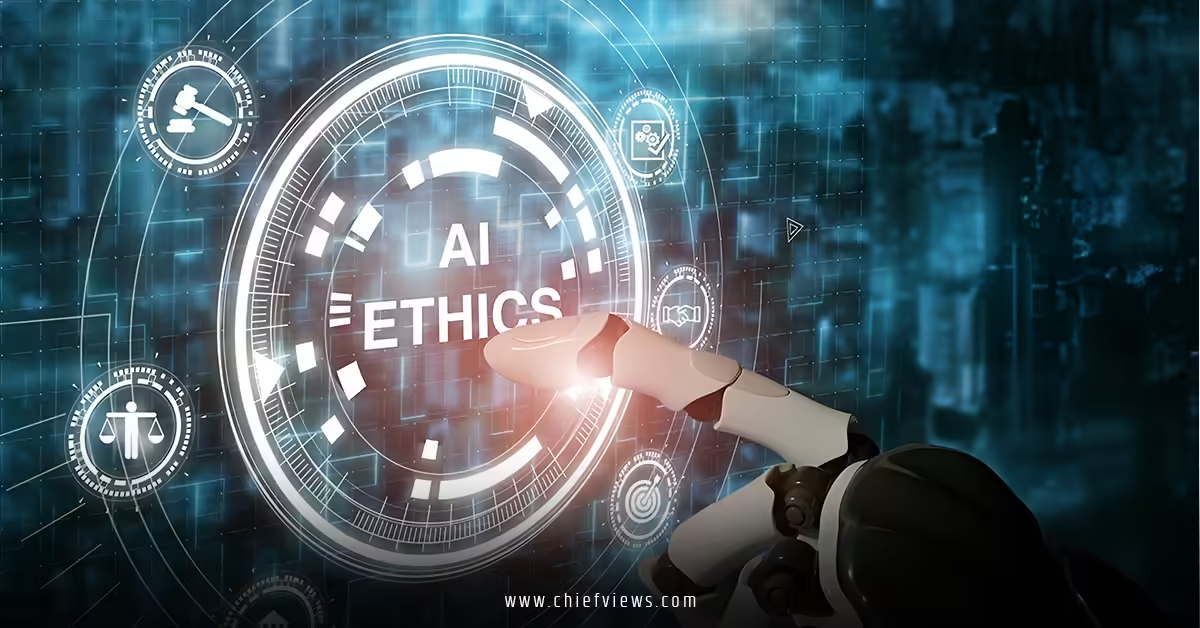
AI ethics training for HR teams 2026 isn’t a nice-to-have workshop—it’s the shield protecting your organization from reputational damage, legal headaches, and eroded employee trust.
In an era where AI is embedded in everything from talent acquisition to performance reviews, HR professionals sit at the epicenter. You’re not just users of these tools; you’re the guardians ensuring they’re fair, transparent, and humane. As regulations tighten—from the EU AI Act’s high-risk classifications for HR systems to U.S. state laws like Colorado’s Artificial Intelligence Act kicking in—AI ethics training for HR teams 2026 becomes non-negotiable. Let’s dive into why this training matters now more than ever, what it should cover, and how to implement it effectively. By the end, you’ll have a clear playbook to build ethical AI practices that align with broader CHRO priorities for continuous upskilling in AI era 2026.
Why AI Ethics Training Is Critical for HR Teams in 2026
Ever wonder why a seemingly neutral algorithm can amplify human prejudices? AI learns from data—and if that data reflects historical biases, the outputs do too. In HR, this hits hard: biased resume screening can tank diversity goals, unfair performance analytics can erode morale, and opaque decision-making can breed distrust.
By 2026, AI adoption in HR has exploded. Tools handle candidate matching, predict turnover, and even draft policies. But with great power comes great scrutiny. SHRM’s 2026 reports highlight shifting AI regulations, ethics, and workforce transformation as top workplace issues. Over 57% of organizations expect to reduce bias in AI hiring tools this year alone. Without proper training, HR teams risk becoming the weak link.
The stakes? Legal compliance is one piece—fines under emerging laws can sting. Reputation is another: A single high-profile bias incident can go viral. And trust? Employees want to know their careers aren’t derailed by black-box decisions. AI ethics training for HR teams 2026 equips you to spot these risks early, intervene thoughtfully, and champion responsible AI use. It’s the bridge between tech excitement and human-centered outcomes.

Key Ethical Challenges HR Teams Face with AI in 2026
Let’s get real about the pitfalls lurking in 2026’s HR tech landscape.
Bias and Fairness in Talent Decisions
AI screening tools might seem objective, but they often perpetuate past inequalities. If training data skews toward certain demographics, the algorithm does too. HR teams must audit for disparate impact—does the tool disadvantage protected groups?
Transparency and Explainability
” The algorithm decided” isn’t an acceptable answer anymore. Employees and regulators demand to know why a candidate was rejected or promoted. Lack of explainability invites suspicion and legal challenges.
Data Privacy and Security
HR handles the most sensitive employee data imaginable. AI tools trained on this data raise GDPR-like concerns, especially with agentic AI automating workflows. Mishandling can lead to breaches and massive fines.
Accountability in AI-Assisted Decisions
Who owns the call when AI recommends a layoff or pay adjustment? HR can’t hide behind tech—human oversight remains essential, but training ensures teams know when to override or question outputs.
These challenges aren’t hypothetical. Reports from Gartner and Deloitte emphasize that governance and trust now guide HR tech decisions, with ethical frameworks like Deloitte’s Trustworthy AI becoming standard.
Core Components of Effective AI Ethics Training for HR Teams 2026
So, what should AI ethics training for HR teams 2026 actually look like? Forget generic online modules. Go practical, role-specific, and ongoing.
1. Foundational AI Literacy with an Ethical Lens
Start with basics: How does AI work? What’s machine learning vs. generative AI? Then pivot to ethics—fairness, accountability, transparency (the FAT framework). SHRM’s AI+HI credentials blend this intersection of artificial and human intelligence.
2. Bias Detection and Mitigation Techniques
Teach hands-on auditing: Review training data sources, run bias tests, and use tools for fairness checks. Include real-world scenarios, like spotting gender bias in job descriptions generated by GenAI.
3. Regulatory Compliance and Governance
Cover key laws: EU AI Act (high-risk for HR), U.S. state acts, and emerging federal guidelines. Train on building internal policies—bias audits, risk assessments, disclosure requirements.
4. Practical Ethical Decision-Making
Use case studies: An AI flags high turnover risk—does it invade privacy? Role-play ethical dilemmas to build judgment muscles.
5. Human-Centric AI Integration
Emphasize oversight: AI augments, never replaces, human empathy in sensitive areas like employee relations or terminations.
Make it engaging: Micro-learning bursts, gamified simulations, and cross-functional workshops with IT and legal.
How to Implement AI Ethics Training in Your HR Team
Ready to roll it out? Here’s a step-by-step approach that ties directly into [CHRO priorities for continuous upskilling in AI era 2026].
- Assess Readiness — Survey your team on current AI use and ethical knowledge gaps.
- Build a Curriculum — Blend internal sessions with external courses like Coursera’s AI Ethics for the Workplace or SHRM’s offerings.
- Make It Ongoing — Quarterly refreshers as regs evolve and tools update.
- Measure Impact — Track metrics: Reduced bias incidents, improved audit scores, higher confidence in ethical AI use.
- Foster Culture — Encourage “ethical curiosity”—safe spaces to question AI outputs.
Start small: Pilot with recruiters, then scale. Partner with vendors prioritizing explainable AI, like those winning awards for responsible tech.
The Bigger Picture: Linking to CHRO Priorities
AI ethics training for HR teams 2026 isn’t isolated—it’s a cornerstone of broader upskilling efforts. CHROs prioritizing continuous learning see ethical fluency as essential for AI-fluent, inclusive workplaces. It supports talent forecasting, human skills cultivation, and inclusive ecosystems outlined in forward-thinking strategies. When HR leads ethically, the entire organization follows.
Conclusion: Lead with Ethics or Fall Behind
In 2026, AI isn’t optional—it’s inevitable. But unchecked, it can undermine everything HR stands for: fairness, trust, and people-first leadership. Investing in AI ethics training for HR teams 2026 turns potential pitfalls into strengths. You protect your people, comply with regs, and build resilient, innovative teams. As part of [CHRO priorities for continuous upskilling in AI era 2026], this training ensures your workforce doesn’t just survive the AI wave—it thrives in it. Start today: Audit one tool, train your team, and watch ethical leadership become your competitive edge.
FAQs
Why is AI ethics training specifically important for HR teams in 2026?
HR handles sensitive people data and high-stakes decisions like hiring and performance. AI ethics training for HR teams 2026 prevents bias amplification, ensures compliance with new laws, and maintains trust in AI-assisted processes.
What regulations should HR teams focus on during AI ethics training in 2026?
Key ones include the EU AI Act (classifying HR AI as high-risk), Colorado’s AI Act, and U.S. state bias audit requirements. Training covers risk assessments, transparency, and accountability.
How does AI ethics training tie into CHRO priorities for continuous upskilling in AI era 2026?
It builds ethical AI fluency as a core skill, supporting lifelong learning ecosystems, human-AI balance, and inclusive practices—key pillars of modern CHRO strategies.
What practical skills should AI ethics training for HR teams 2026 include?
Bias auditing, explainable AI review, ethical decision frameworks, data privacy handling, and scenario-based role-plays for real HR applications.
How can small HR teams afford effective AI ethics training in 2026?
Leverage free/low-cost resources like Coursera specials, SHRM tools, or internal workshops. Start with micro-learning and scale based on impact.