AI integration in workforce planning is transforming how organizations build and manage their teams, isn’t it? Picture this: You’re a HR leader juggling talent shortages, rapid tech changes, and economic curveballs, and suddenly AI steps in like a super-smart assistant, predicting needs before they hit. By 2026, with AI tools evolving at lightning speed, this isn’t just hype—it’s a necessity for staying competitive. As companies blend human insight with machine precision, workforce planning shifts from reactive spreadsheets to proactive, data-driven strategies that align talent with business goals.
Let’s be real, though. AI integration in workforce planning isn’t about robots taking over; it’s about augmenting human potential. Recent reports highlight that 90% of CHROs expect AI to accelerate in their operations, boosting productivity while reshaping jobs. But without thoughtful integration, it could lead to mismatches or even layoffs that backfire. Think of it as upgrading your car’s engine—you get more speed, but you need to retrain the driver to handle it safely.
The Rise of AI Integration in Workforce Planning for 2026
Why all the buzz now? In 2026, AI integration in workforce planning is driven by a perfect storm: AI maturity, skills gaps, and the push for efficiency. Organizations are moving beyond experimentation—2025 was for pilots; 2026 is for full-scale transformation. CEOs are betting big on AI, with 74% feeling their jobs depend on delivering results, so HR teams are under pressure to weave AI into talent strategies.
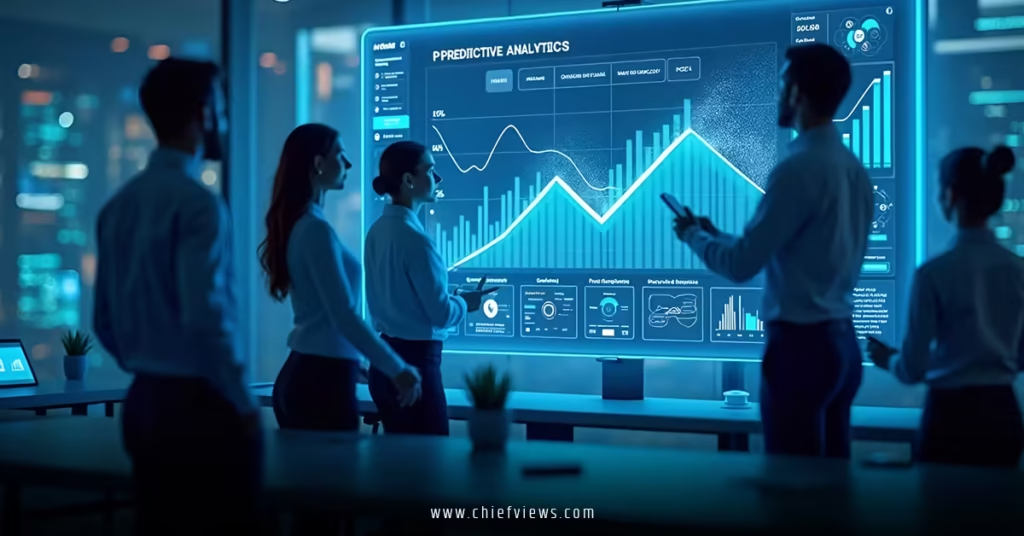
Imagine forecasting talent needs with pinpoint accuracy. AI tools analyze historical data, market trends, and even employee sentiment to predict shortages. For instance, predictive analytics can flag that your engineering team might need 20% more AI-savvy hires by Q3. This isn’t guesswork; it’s like having a crystal ball tuned to your company’s DNA.
Key Drivers Behind AI Integration in Workforce Planning
Several forces are fueling this shift. First, the skills revolution: The World Economic Forum notes that 44% of core skills will change by 2030, accelerated by AI. AI integration in workforce planning helps by mapping current skills against future demands, identifying gaps early.
Second, economic pressures. With uncertain markets, companies need agile workforces. AI enables scenario planning—what if a recession hits? Or AI automates 30% of tasks? Tools like agentic AI simulate outcomes, helping leaders decide on upskilling versus hiring.


Third, employee expectations. Workers want growth, not obsolescence. AI can personalize career paths, suggesting training that aligns with individual strengths and company needs. It’s like Netflix recommending shows, but for your professional life.
How AI Integration in Workforce Planning Enhances Forecasting
Forecasting is where AI shines brightest in workforce planning. Traditional methods rely on static data, but AI integration in workforce planning uses real-time insights for dynamic predictions. By 2026, AI-driven forecasting will be standard, with tools analyzing everything from turnover rates to external labor markets.
Take Johnson & Johnson’s approach: They use AI for “skills inference,” bridging gaps and boosting retention. It’s not just about numbers; it’s about quality. AI spots hidden talents, like a marketer with untapped data skills, redeploying them efficiently.
But here’s a twist: Over-reliance on AI can create “workslop”—low-quality outputs from rushed AI use. Smart integration means combining AI with human oversight for accurate, ethical forecasts.
Tools and Technologies for AI Integration in Workforce Planning
What’s in the toolkit? Cloud-based platforms with AI forecasting, like those from Aspect, offer unified data for real-time scheduling. Predictive HR analytics simulate scenarios, while skills inventories track competencies.
For 2026, expect agentic AI—systems that act autonomously on complex decisions. These “agents” optimize headcount, but they need governance to avoid biases.
Challenges in AI Integration in Workforce Planning
No rose garden here. AI integration in workforce planning faces hurdles like data silos, ethical dilemmas, and resistance. A big one? Bias in algorithms—if training data skews, so do hiring recommendations, perpetuating inequalities.
Employee fear of obsolescence (FOBO) is real. Surveys show anxiety rising as AI transforms jobs. Plus, integration costs: Not every firm has the budget for fancy tools.
Regulatory waves are coming too. By 2026, expect stricter rules on AI transparency, forcing companies to audit systems regularly. It’s like adding seatbelts to that upgraded car—essential for safety.
Overcoming Resistance to AI Integration in Workforce Planning
How to tackle this? Start with change management. Train leaders to champion AI, addressing fears head-on. Pilot programs build buy-in, showing quick wins like reduced hiring time.
Ethical frameworks are key. Embed fairness checks, ensuring AI enhances diversity, not erodes it.
Best Practices for Successful AI Integration in Workforce Planning
Ready to dive in? Best practices for AI integration in workforce planning include starting small: Pick one area, like succession planning, and scale up.
Foster collaboration—HR, IT, and execs must align. At Zapier, AI is a company-wide priority, tracked via surveys.
Measure ROI holistically: Not just cost savings, but engagement and innovation boosts. Use KPIs like time-to-hire or skills gap closure.
And don’t forget the human touch. AI augments, but empathy drives retention.
Case Studies: Real-World AI Integration in Workforce Planning
Look at ADP’s insights: 84% of large orgs see AI streamlining processes without replacing workers. Or PwC’s predictions: AI generalists will emerge, overseeing agents for efficient workflows.
In supply chains, MAU notes AI-native systems as standard, reshaping planning.
Ethical Considerations in AI Integration in Workforce Planning
Ethics aren’t optional. AI integration in workforce planning must prioritize fairness, transparency, and privacy. Monitor for biases, and involve diverse teams in tool development.
As deepfakes rise, verify candidates with hybrid methods. And compensate for digital replicas—employees may demand pay for AI using their likeness.
Future Trends: AI Integration in Workforce Planning Beyond 2026
Peeking ahead, AI integration in workforce planning will see hybrid human-AI teams, with ratios like 10:1 AI-to-human in sales. Skills-based hiring will dominate, and AI will automate restructuring.
Sustainability ties in too—AI optimizes for green practices.
Linking to CHRO Expectations from CEOs for Workforce Planning 2026
This all ties back to broader leadership dynamics. In fact, exploring CHRO expectations from CEOs for workforce planning 2026 reveals how execs demand AI-driven strategies for resilient teams. CHROs push for CEO support in ethical AI adoption, ensuring planning aligns with vision.
In conclusion
AI integration in workforce planning is your ticket to a nimble, innovative future. It balances efficiency with humanity, turning challenges into opportunities. Whether forecasting skills or redesigning roles, embrace it thoughtfully. Leaders, start integrating today—your workforce’s tomorrow depends on it. The key? Partner AI with people for unbeatable results.
FAQs
1. What are the main benefits of AI integration in workforce planning?
AI integration in workforce planning boosts accuracy in forecasting, reduces costs, and enhances employee development by personalizing career paths.
2. How does AI integration in workforce planning address skills gaps?
By analyzing data, AI integration in workforce planning identifies gaps early, recommending upskilling or hiring to keep teams competitive.
3. What challenges come with AI integration in workforce planning?
Key challenges in AI integration in workforce planning include ethical biases, employee resistance, and high implementation costs.
4. How can companies ensure ethical AI integration in workforce planning?
To ensure ethical AI integration in workforce planning, implement bias audits, diverse training data, and transparent governance.
5. What future trends will shape AI integration in workforce planning?
Future trends in AI integration in workforce planning include agentic systems and hybrid teams, extending into sustainable practices.