


AI personalization in retail is flipping the script on shopping—from generic blasts to “just for you” magic that keeps customers hooked and wallets open. Imagine walking into your favorite store, and the app whispers exactly what you need before you even browse. That’s not sci-fi; it’s today’s reality, powered by smart algorithms decoding your every click and whim. In this guide, we’ll dive deep into how AI personalization in retail supercharges loyalty, spikes sales, and outsmarts competitors. Ready to level up?
Why AI Personalization in Retail is the Game-Changer You Can’t Ignore
Retail’s brutal—margins thin, loyalty fickle. Enter AI personalization in retail: it’s not hype; it’s a 25% average sales uplift, per recent stats. Customers crave relevance; 80% ditch brands without it. As a retailer, ignore this, and you’re toast.
Think Netflix, but for sneakers or groceries. Algorithms sift petabytes of data—past buys, browsing history, even weather—to craft tailor-made journeys. Result? Carts fill faster, returns plummet.
The Stats That Demand Action
- Personalization drives 15-20% revenue growth (McKinsey).
- 71% of consumers expect it (Econsultancy).
- Abandoned carts drop 30% with AI recs.
Why now? Post-pandemic, e-comm exploded; by 2026, it’s $8 trillion globally. AI personalization in retail bridges online-offline gaps seamlessly.
How AI Personalization in Retail Works: The Tech Breakdown
Curious under the hood? AI personalization in retail blends machine learning, big data, and real-time processing. No PhD needed—here’s the friendly decode.

Core Technologies Powering It
Machine Learning Models
Recommendation engines like collaborative filtering: “Shoppers like you bought this.” Amazon’s engine? 35% of its sales.
Natural Language Processing (NLP)
Chatbots understand “comfy summer dress under $50″—instant results.
Computer Vision
AR try-ons scan your body for perfect fits, slashing returns 40%.
Edge AI
In-store cameras detect dwell time, triggering personalized shelf displays.
Data Fuels the Fire
First-party data rules (cookies fading). Track:
- Behavioral (views, adds-to-cart).
- Transactional (purchases, frequencies).
- Contextual (location, device).
Unified via CDPs like Segment—clean, compliant, goldmine.
Strategies: Implementing AI Personalization in Retail Like a Pro
Ready to deploy? Here’s your playbook for AI personalization in retail success.
1. Start with Customer Segmentation on Steroids
Ditch demographics. AI clusters micro-segments: “Busy moms loving organic snacks at 7 PM.”
Tools: Google Analytics 4 + BigQuery for clusters.
2. Dynamic Product Recommendations
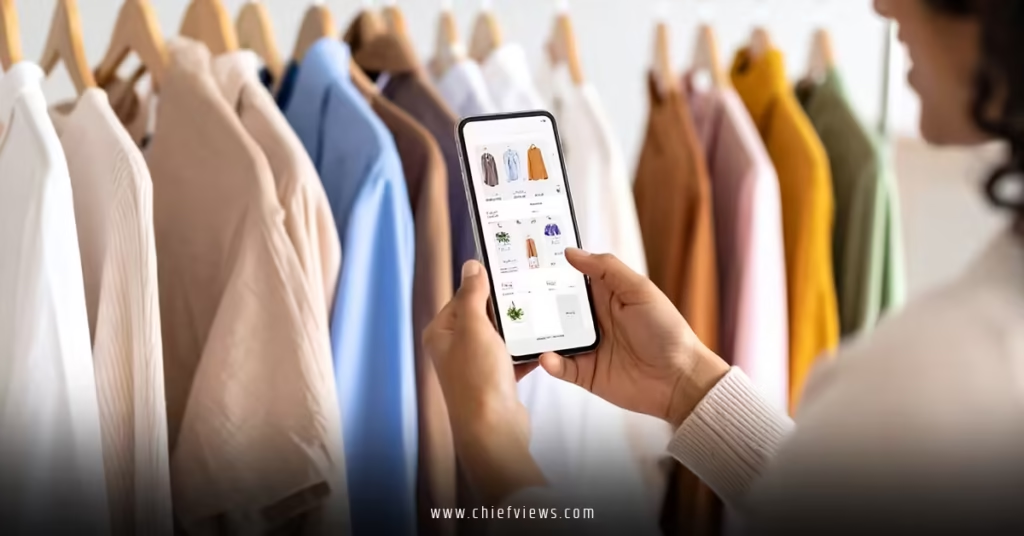
Homepage? Cart? Email? AI swaps in real-time. Shopify’s Kit app does it effortlessly—upsell conversions jump 10%.
Pro Tip: A/B test ruthlessly.
3. Hyper-Personalized Marketing
Emails open rates? 29% higher with AI subjects. Tools like Klaviyo predict best send times.
Journey Mapping
flowchart TD
    A["First Visit"] --> B["Welcome Recs"]
    B --> C["Abandoned Cart Nudge"]
    C --> D["Post-Purchase Upsell"]
    D --> E["Loyalty Rewards"]
Visualize flows for omnichannel bliss.
4. In-Store Personalization Magic
Beacons + AI apps: “Your size 9 Nikes are at aisle 5.” Target’s doing it—foot traffic up 20%.
Real-World Wins: AI Personalization in Retail Case Studies
Proof over promises.
Sephora’s Virtual Artist: AR skin analysis + recs = 11x engagement. Sales? Skyrocketed.
Starbucks Rewards: AI predicts orders—rewrites menu on your app. 26% of US sales from it.
Alibaba’s Singularity: Facial rec + history = 40% basket boosts during Singles’ Day.
For Deeper CIO Strategies: Learn how CIO can drive digital transformation in retail to scale these enterprise-wide.
These aren’t outliers; replicate with off-the-shelf platforms.
Challenges and Fixes for AI Personalization in Retail
Roses have thorns. Here’s how to dodge pitfalls.
Privacy Paranoia
GDPR, CCPA? Bias toward consent. Anonymize data; transparent opt-ins build trust.
Data Quality Drama
Garbage in, garbage out. Clean with AI tools like Talend—accuracy to 95%.
Integration Headaches
Siloed systems? APIs + iPaaS like MuleSoft unify.
Overcoming Table
| Challenge | Solution | Impact |
|---|---|---|
| Poor Data | ETL Pipelines | 30% Accuracy Boost |
| Bias | Diverse Training Data | Fair Recs |
| Scalability | Cloud Auto-Scaling | Handle Black Friday |
Measuring ROI: KPIs for AI Personalization in Retail
Track or fail.
- Conversion Rate: Target 5-10% uplift.
- CLV: 20% growth.
- Engagement: Time on site +20%.
Dashboards: Looker or Power BI.
Future Trends: What’s Next for AI Personalization in Retail
2026 and beyond?
- Generative AI: ChatGPT-like stylists (“Outfit for date night?”).
- Voice Commerce: Alexa suggests based on routines.
- Predictive Emotions: Sentiment AI from wearables.
- Web3 Loyalty: NFT exclusives personalized via blockchain.
Forrester’s AI retail forecast predicts 40% adoption surge.
Tools and Platforms to Kickstart AI Personalization in Retail
No-code wonders:
- Dynamic Yield: Rec engines.
- Optimizely: Experimentation.
- Salesforce Einstein: CRM AI.
Budget? Start free tiers, scale.
Conclusion
AI personalization in retail isn’t optional—it’s your ticket to loyalty lock-in, fat margins, and beating the giants. From recs to AR, implement smart, measure hard, iterate fast. Your customers are waiting for that “wow” moment. Dive in today; tomorrow’s winners are already personalizing.
Frequently Asked Questions (FAQs)
What is AI personalization in retail?
It’s using AI to tailor shopping experiences—recs, offers, journeys—based on individual data.
How much does AI personalization in retail boost sales?
Typically 15-35%, via higher conversions and retention.
What are the best tools for AI personalization in retail?
Dynamic Yield, Klaviyo, Salesforce Einstein—scalable and user-friendly.
Is AI personalization in retail compliant with privacy laws?
Yes, with consent-focused designs and anonymization.
How to get started with AI personalization in retail?
Audit data, pick a tool, pilot recommendations—quick wins in weeks.