


AI Skills Gap Analysis for HR Leaders delivers the practical roadmap you need to stop guessing and start acting on talent realities in the AI era. HR teams sit on mountains of data yet still fly blind on where skills actually stand versus what the business demands.
This changes now.
- Identify real gaps fast: Move from gut feel to data-backed insights on AI capabilities across your workforce.
- Prioritize high-impact skills: Focus on technical fluency, ethical judgment, and human-AI collaboration.
- Drive measurable outcomes: Link skills development directly to business performance and retention.
- Align with bigger goals: Feed directly into CHRO priorities for AI-driven workforce transformation and leadership development in 2026.
Done right, this analysis becomes your strategic weapon.
Why AI Skills Gap Analysis Matters for HR Leaders in 2026
The gap isn’t closing on its own.
82% of U.S. HR professionals see AI as critical, yet most organizations report substantial shortages. Only 9% claim strong enterprise-wide AI expertise. That mismatch kills momentum.
In my experience, HR leaders who run structured skills gap analysis catch problems early. They avoid the classic trap: heavy AI investment with zero return because people can’t actually use the tools.

What usually happens? Teams buy shiny platforms, then watch adoption stall. The fix starts with knowing exactly where you stand today.
AI Skills Gap Analysis for HR Leaders turns vague worries into clear action plans. It reveals not just what’s missing, but how those gaps hit productivity, innovation, and talent retention.
Core Components of Effective AI Skills Gap Analysis
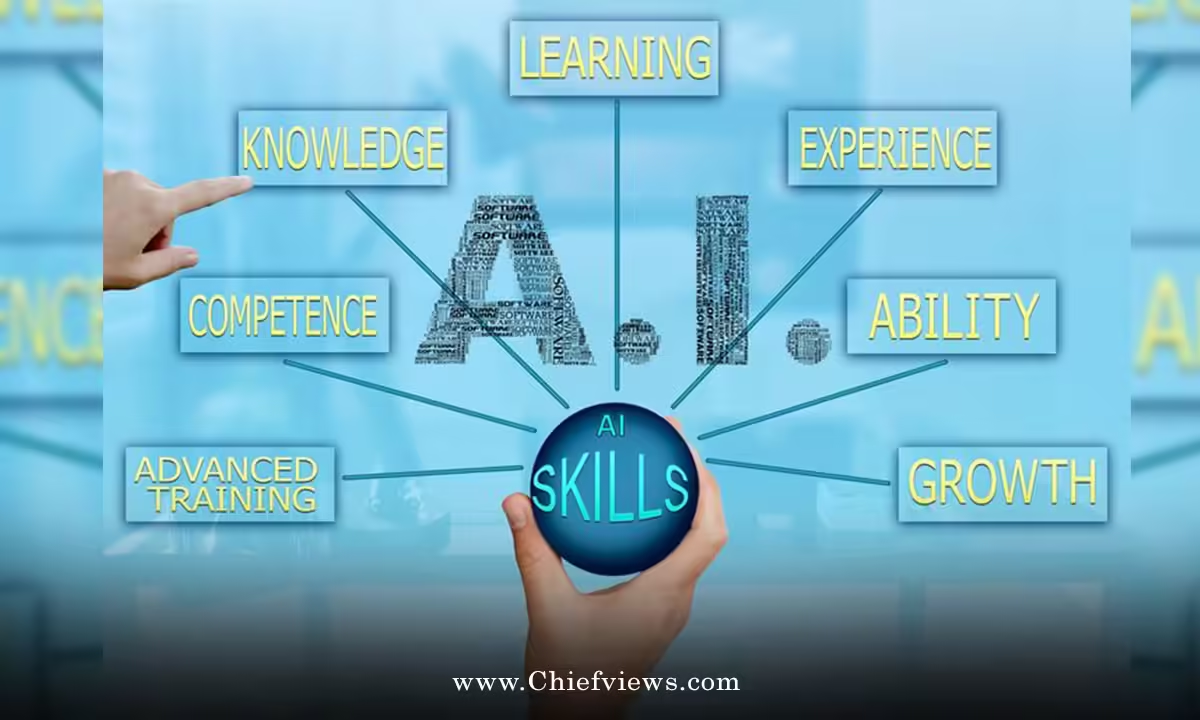
Start with a solid framework. Effective analysis covers three layers:
Technical AI Skills
Prompt engineering, data interpretation, basic machine learning concepts, and tool-specific proficiency.
Human-Centric Skills
Critical thinking, ethical decision-making, change leadership, and the ability to collaborate with AI systems.
Strategic Business Alignment
Understanding how AI impacts role design, workforce planning, and organizational agility.
Deloitte’s 2026 State of AI research shows insufficient worker skills remain the top barrier to integration. HR leaders must own this.
How to Conduct AI Skills Gap Analysis: Step-by-Step Action Plan
Beginners, this doesn’t need to be overwhelming. Follow this sequence:
- Define Success Criteria (Week 1): Work with business leaders to list must-have AI skills for each department and role level. Be specific.
- Inventory Current Capabilities (Weeks 2-4): Use surveys, skills assessments, performance data, and AI-powered tools to map what people actually know and can do.
- Analyze the Delta: Compare current state against future needs. Prioritize gaps by business impact—revenue, risk, efficiency.
- Segment Your Workforce: Break down by role, department, tenure, and readiness level. Not everyone needs the same depth.
- Build Targeted Interventions: Create learning paths, hiring profiles, and internal mobility opportunities to close priority gaps.
- Monitor and Iterate: Set quarterly reviews. Track adoption, skill uptake, and business results.
This process feeds straight into broader CHRO priorities for AI-driven workforce transformation and leadership development in 2026.
Key Skills HR Leaders Must Master
| Skill Category | Specific Competencies | Why It Matters in 2026 | Development Priority |
|---|---|---|---|
| Data & AI Literacy | Interpreting AI outputs, basic analytics | Prevents blind trust in tools | High |
| Ethical AI Governance | Bias detection, privacy compliance | Builds trust and reduces risk | Critical |
| Change Orchestration | Leading human-AI teams | Drives adoption without burnout | High |
| Strategic Workforce Planning | Skills forecasting | Aligns talent with business goals | Medium-High |
| AI-Augmented Decision Making | Blending data with judgment | Improves hiring and performance reviews | High |
Organizations that close these gaps see faster AI ROI and stronger retention.
Common Mistakes HR Leaders Make (And How to Fix Them)
Many skip the “analysis” part and jump to training. Result? Generic programs that miss the mark.
Fix: Always tie development to specific role needs and measurable outcomes.
Another trap: Focusing only on technical skills while ignoring leadership capabilities. Middle managers especially need support here.
Over-reliance on external hiring instead of internal development wastes institutional knowledge. Balance both.
Finally, treating this as a one-time event. Skills evolve weekly. Make analysis continuous.
Measuring Success and Driving Impact
Track completion rates, skill proficiency improvements, AI tool adoption, and business metrics like productivity per employee or time-to-hire for AI-fluent roles.
Link everything back to CHRO priorities for AI-driven workforce transformation and leadership development in 2026 for maximum influence at the executive table.
World Economic Forum Future of Jobs Report offers excellent benchmarks on shifting skill demands.
Deloitte Human Capital Trends 2026 provides frameworks for adaptive learning.
Gartner HR Priorities delivers peer insights worth reviewing.
Key Takeaways
- AI Skills Gap Analysis for HR Leaders moves you from reactive to proactive talent strategy.
- Combine technical and human skills for real competitive advantage.
- Make analysis ongoing, not annual.
- Involve business leaders early for better alignment.
- Focus on high-impact gaps first.
- Measure both capability and business results.
- Use insights to shape leadership development programs.
- Connect individual growth to organizational transformation goals.
AI Skills Gap Analysis for HR Leaders gives you the clarity needed to lead confidently in uncertain times. Start small, stay consistent, and watch your influence grow.
Ready to move? Pull together a cross-functional team this week and map your top three priority gaps. Momentum starts with that first honest assessment.
FAQs
How often should HR leaders perform AI Skills Gap Analysis?
Quarterly at minimum, with continuous monitoring for critical roles. The pace of AI change demands regular updates.
What tools help with AI Skills Gap Analysis for HR Leaders?
AI-powered platforms like skills intelligence systems, assessment tools, and workforce analytics suites deliver the best results when integrated with HR data.
How does AI Skills Gap Analysis connect to CHRO priorities for AI-driven workforce transformation and leadership development in 2026?
It forms the foundation. Accurate gap insights inform targeted leadership programs, role redesign, and overall transformation strategy.