







AI Skills Gap Strategies for 2026 :
The AI skills gap is no longer a future risk. It’s the operational reality most organizations face right now. Companies have the tools. What they lack is enough people who can actually use them to redesign work, not just prompt models.
Here’s the short version leaders need:
- The gap sits between technical AI literacy and the ability to redesign workflows, supervise agents, and apply judgment where machines fall short.
- Entry-level task automation is breaking traditional skill-building ladders, creating experience shortages higher up.
- Winning strategies focus on skills-first architecture, protected learning time, internal mobility, and manager enablement—not one-off training courses.
- CHROs who treat skills as a core work-design lever close the gap faster and protect long-term capability.
By 2026, nearly every major study shows the same pattern. Organizations report high AI adoption, yet only a small percentage translate it into measurable business results. The missing piece is almost always human capability. Korn Ferry research highlights that capability gaps now outweigh pure talent shortages for most leaders, while adaptability ranks as the single most critical workforce skill.
The old model of hiring specialists and running annual training catalogs cannot keep pace. Skills half-lives are shrinking. What counted as advanced AI fluency eighteen months ago is table stakes today.
Why the Gap Keeps Widening
AI agents handle routine analysis, drafting, reconciliation, and basic coding. That removes the traditional practice ground where junior people once built expertise. Deloitte calls this the “broken skills ladder.” Entry-level roles that previously developed judgment and pattern recognition are shrinking or disappearing, while senior roles still require deep experience.

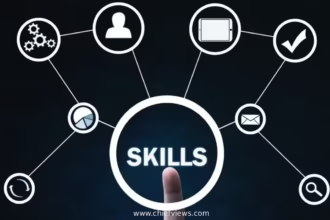
At the same time, demand has shifted. Basic prompting is declining as a premium skill. Building, integrating, governing, and redesigning work around agents is rising. Workers often know they need new capabilities. Employers lag in providing structured, time-protected pathways to develop them.
The result is a classic mismatch: technology advances faster than organizational learning systems.
Core Strategies That Actually Close the Gap in 2026
1. Build a living skills architecture, not another competency model
Map work at the task and capability level. Define what “AI supervision,” “workflow redesign,” “exception handling,” and “judgment under uncertainty” look like in your specific context. Refresh the map quarterly. Link every role to clear learning pathways and internal mobility options. Organizations that treat skills as the unit of planning—not job titles—move people faster into emerging work.
This approach pairs directly with broader workforce redesign. Leaders exploring how CHRO can lead workforce redesign in human machine era find that skills architecture becomes the practical operating system for those changes.
2. Protect time and fund real practice
Classroom sessions and self-paced modules produce limited transfer. The highest-return investments create protected learning hours, project-based practice, simulations, and stretch assignments inside real workflows. Simulation-based approaches have shown stronger skill proficiency gains than traditional methods in multiple settings. Give people time on the job to experiment with agents, fail safely, and refine judgment.
3. Redesign the manager layer first
Middle managers are the make-or-break group. They decide whether agents get used effectively or ignored. Equip them to orchestrate human-agent teams, coach exception handling, and measure collaboration quality. When managers lack these skills, even strong individual training stalls.
4. Create visible internal pathways
People need to see where new skills lead. Map adjacencies between declining and growing work. Build short bridge programs, internal talent marketplaces, and project rotations. When employees can move into higher-value roles using newly built capabilities, engagement and retention rise. When the path is unclear, resistance grows.
5. Separate fluency from building capability
Everyone needs baseline AI literacy and the ability to work with agents. A smaller group needs deeper skills in agent design, data quality, governance, and workflow architecture. Over-investing in deep technical skills for the entire workforce wastes resources. Under-investing in broad fluency leaves most of the organization behind.

Practical Action Plan
Start with diagnosis, not programs.
- Run a rapid skills and task audit on three to five high-impact workflows.
- Identify which capabilities are eroding because of automation and which new ones are required.
- Prioritize two layers: universal fluency + targeted building skills for key roles.
- Launch time-protected pilots with clear outcome metrics (quality of output, speed of exception handling, manager confidence).
- Scale what produces measurable transfer into daily work. Kill what does not.
Measure progress in business language: reduced cycle times, higher decision quality, internal fill rates for AI-influenced roles, and the percentage of employees who can independently redesign a workflow with agents.
Common Mistakes That Keep the Gap Open
Treating training as a one-time event instead of continuous capability building.
Focusing only on technical skills while neglecting judgment, systems thinking, and collaboration with machines.
Leaving managers out of the redesign.
Ignoring the experience gap created when entry-level practice disappears.
Measuring course completions instead of applied skill and workflow outcomes.
Each of these mistakes is fixable once ownership is clear. Skills strategy belongs inside the same conversation as work design and operating model change.
The Payoff When It Works
Organizations that close the gap convert AI capacity into actual performance. They fill more roles internally, move people into higher-value work faster, and reduce the premium they pay for scarce external AI talent. They also protect the human judgment layer that pure automation cannot replace.
The skills gap is not primarily a technology problem. It is a work and learning system problem. The companies solving it treat skills development as core infrastructure—just as important as the models and platforms themselves.
Key Takeaways
- Map skills and tasks continuously; treat the map as a living operating tool.
- Protect time for practice and simulation; passive learning transfers poorly.
- Enable managers as the primary lever for adoption and judgment development.
- Create clear internal pathways so new skills lead to real opportunity.
- Separate broad fluency from deep building capability and resource accordingly.
- Measure applied outcomes, not training volume.
- Connect skills strategy tightly to work redesign for compounding results.
The organizations that treat the AI skills gap as a strategic work-design challenge rather than a training checklist will pull ahead in 2026 and beyond. The practical next step is straightforward: pick one critical workflow, audit the tasks and required capabilities, and design a protected practice path for the people who own it. Everything else scales from proven results.
FAQs
What is the most effective way to close the AI skills gap in 2026?
The highest-return approach combines a living skills architecture with protected practice time inside real workflows. Focus first on manager enablement and clear internal mobility pathways so new capabilities translate into actual role changes rather than remaining theoretical knowledge.
How does the AI skills gap connect to broader workforce redesign?
Closing the skills gap only sticks when it is treated as part of work redesign. Organizations that link skills strategy to task-level role redesign—exactly the approach covered in how CHRO can lead workforce redesign in human machine era—see faster adoption and better retention of newly built capabilities.
Should companies prioritize hiring AI specialists or upskilling existing employees?
Most organizations get better results by heavily prioritizing internal upskilling and redeployment for the majority of roles, while selectively hiring for scarce deep technical or agent-architecture skills. Over-reliance on external hiring drives up costs and leaves institutional knowledge underused.

