


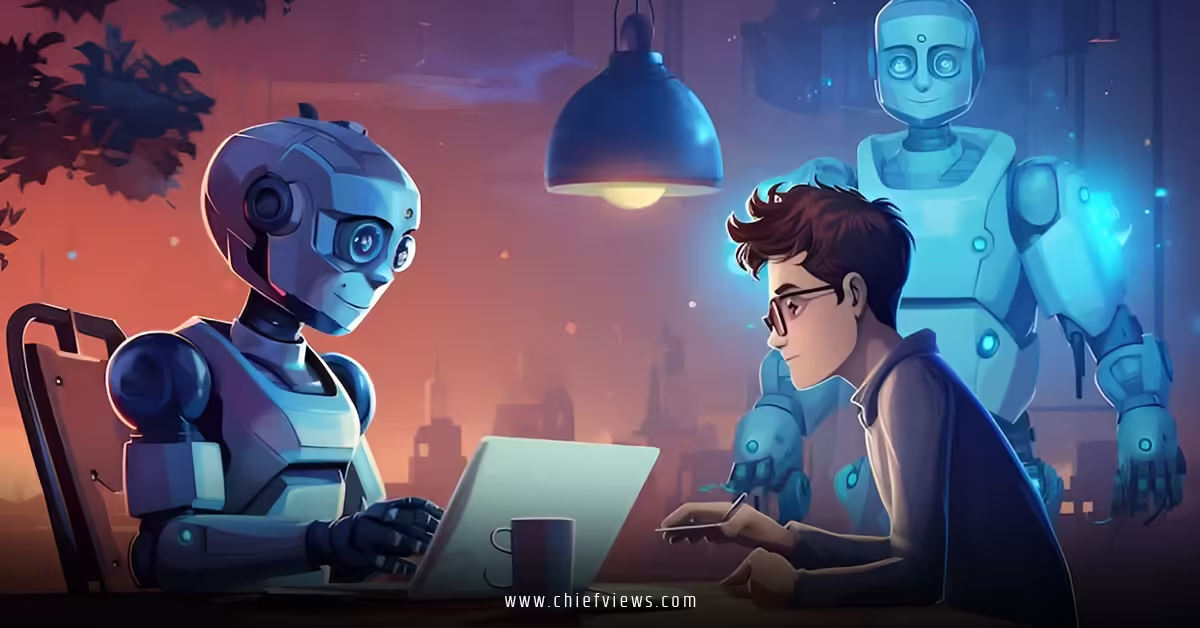
AI upskilling strategies for employees are no longer optional—they’re the rocket fuel propelling teams into a future where artificial intelligence isn’t just a tool, but a daily collaborator. Imagine your workforce confidently wielding AI like a seasoned artisan handles their craft, boosting productivity and sparking innovation. But here’s the kicker: with AI evolving at breakneck speed in 2025, many employees feel left in the dust. That’s where smart, targeted upskilling comes in, turning potential anxiety into excitement and skill gaps into strengths.
As we dive deeper, you’ll see how these strategies not only bridge the AI divide but also empower everyone from entry-level staff to executives. And if you’re wondering about the bigger picture, check out how CHROs are leading workforce upskilling for digital transformation 2025 for insights on leadership’s role in this shift.
Why AI Upskilling Strategies for Employees Matter in 2025
Let’s cut to the chase: AI is reshaping jobs faster than ever. Have you noticed how generative AI tools are handling routine tasks, freeing humans for creative, strategic work? Yet, a massive skills gap looms. Reports show that over 90% of enterprises face critical AI shortages, with demand outpacing supply by ratios as high as 3:1 in key roles.
Rhetorical question: What happens if your team isn’t ready? Abandoned projects, stalled innovation, and lost competitiveness. On the flip side, companies prioritizing AI upskilling see productivity jumps of up to 40%, higher engagement, and better retention. Employees crave this too—many express eagerness for training that makes AI an ally, not a threat.
The Growing AI Skills Gap: Key Statistics Driving AI Upskilling Strategies for Employees
Numbers don’t lie. In 2025:
- 77% of employers plan to upskill for AI, while nearly half aim to reskill displaced roles.
- 94% of leaders pinpoint AI as the top in-demand skill, but only a fraction feel their workforce is prepared.
- Skills like prompt engineering, AI ethics, and data literacy are in short supply, with gaps risking trillions in economic losses.
This isn’t abstract—it’s your team’s reality. Upskilling flips the script, augmenting human potential rather than replacing it.

Core AI Upskilling Strategies for Employees
Effective strategies aren’t one-size-fits-all; they’re tailored, engaging, and ongoing. Think of it as building a muscle: consistent, varied workouts yield the best results.
First off, start with assessment. Map current skills against future needs using AI-powered tools to identify gaps precisely. No guesswork—just data-driven plans.
Personalized Learning Paths: A Cornerstone of AI Upskilling Strategies for Employees
Gone are blanket trainings. Modern approaches use AI itself to customize paths. Platforms recommend courses based on roles, strengths, and goals. For a marketer? Focus on AI for content generation. For analysts? Dive into data interpretation with machine learning.
Analogy: It’s like a GPS rerouting in real-time—efficient and motivating. This personalization boosts completion rates and real-world application.
Hands-On and Role-Specific Training
Theory is fine, but practice wins. Incorporate simulations, projects, and experimentation. Encourage “playtime” with tools like ChatGPT or Gemini, where mistakes are learning opportunities.
Role-specific? Crucial. Sales teams learn AI for lead scoring; HR pros master ethical AI in recruiting. This relevance makes training stick.
Building a Culture of Continuous Learning
Upskilling thrives in supportive environments. Leaders model it—share your AI wins and fails. Tie learning to career growth, perhaps with badges or promotions.
Foster communities: Internal forums, mentorships, or AI clubs where employees swap tips. Gamification adds fun—points for completing modules or solving AI challenges.
Top Tools and Programs for AI Upskilling Strategies for Employees
The ecosystem is rich. Blend free resources with structured programs.
- Online platforms like Coursera, Udemy, or Google’s Grow with Google offer AI essentials, from basics to advanced certifications.
- Company favorites: IBM’s tailored programs, PwC’s gamified PowerUp, or AWS collaborations for cloud-AI skills.
- Emerging: Micro-credentials and bite-sized learning via apps, perfect for busy schedules.
Mix internal workshops with external partnerships for fresh perspectives.
Integrating AI Ethics and Soft Skills
AI isn’t just technical. Embed ethics—bias detection, responsible use—to build trust. Pair with soft skills: critical thinking to question AI outputs, adaptability for evolving tech.
Why? AI excels at data crunching; humans shine in judgment and creativity. Upskilling here creates well-rounded pros.
Real-World Examples of Successful AI Upskilling Strategies for Employees
Actions inspire. PwC’s global initiatives gamify AI literacy, reaching thousands with engaging curricula.
IBM customizes paths, blending strategy with hands-on gen AI tools.
KPMG’s GenAI 101 empowers broad adoption. Even retailers like IKEA roll out staff training for practical AI use.
Common thread? Leadership commitment, employee input, and measurable outcomes—like faster insights or higher satisfaction.
Overcoming Common Challenges in AI Upskilling Strategies for Employees
Resistance? Normal. Address fears head-on: AI augments, not replaces. Budget woes? Start small with pilots proving ROI.
Time constraints? Microlearning—10-minute daily sessions. Measurement? Track adoption, productivity, and feedback.
Solutions: Transparent communication, incentives, and celebrating quick wins.
Measuring Success in Your AI Upskilling Strategies for Employees
Don’t fly blind. Metrics include:
- Completion and engagement rates.
- Skill application in projects.
- Business impacts: Efficiency gains, innovation spikes.
- Employee surveys on confidence and job satisfaction.
Tools like analytics dashboards make this seamless.
The Future of AI Upskilling Strategies for Employees
Looking ahead, expect more AI-driven personalization, VR simulations, and lifelong learning mandates. Hybrid skills—tech plus human—will dominate.
As CHROs orchestrate broader transformations (see how CHROs are leading workforce upskilling for digital transformation 2025), employee-focused strategies ensure no one gets left behind.
Conclusion
AI upskilling strategies for employees are your blueprint for thriving in an AI-powered world. From personalized paths and hands-on practice to cultural shifts and ethical focus, these approaches close gaps, spark growth, and future-proof your team.
Don’t wait for the gap to widen—invest now. Empower your people, and watch as AI becomes a superpower, not a hurdle. Your organization—and your employees—will thank you.
FAQs
What are the most effective AI upskilling strategies for employees in non-tech roles?
Focus on AI literacy basics, prompt engineering, and role-specific applications—like using AI for content or customer service—to make training relevant and boost daily productivity.
How can companies address resistance in AI upskilling strategies for employees?
Communicate benefits transparently, involve employees in program design, and highlight AI as an augmenter. Start with low-pressure experimentation to build confidence.
Why is personalization key in AI upskilling strategies for employees?
One-size-fits-all fails; tailored paths align with individual roles and goals, increasing engagement, retention, and real-world skill application.
What role do leaders play in successful AI upskilling strategies for employees?
Leaders model adoption, provide resources, and tie upskilling to growth. Their buy-in creates a supportive culture essential for widespread success.
How do AI upskilling strategies for employees tie into broader digital transformation?
They complement leadership efforts, as seen in how CHROs are leading workforce upskilling for digital transformation 2025, ensuring AI skills support organizational goals.