



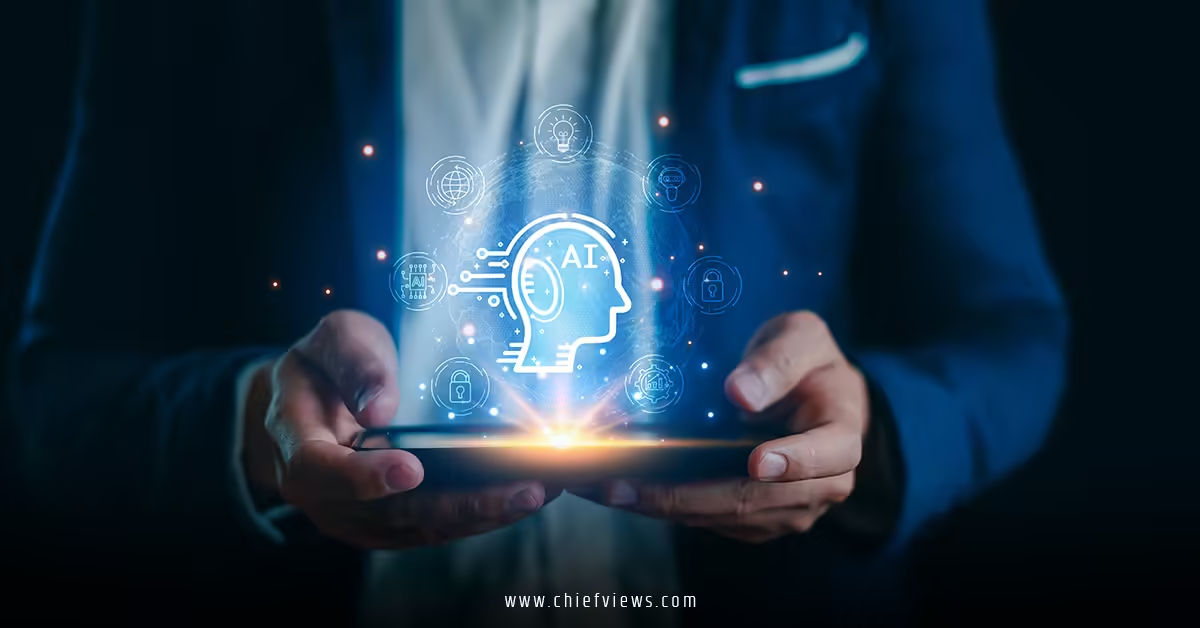
AI upskilling strategies for HR leaders in 2026 have become non-negotiable. You’re not just keeping up with technology anymore—you’re leading the charge in a workplace where AI agents handle routine tasks, predict talent needs, and even shape employee experiences. As we sit here in February 2026, the pressure is real: Gartner reports that AI skill gaps block objectives for 81% of organizations, while CHROs rank harnessing AI and redesigning work among their top priorities. If you’re an HR leader feeling the squeeze, you’re in good company. The good news? Targeted upskilling turns this challenge into your biggest advantage.
This article breaks down practical, actionable AI upskilling strategies for HR leaders in 2026 that align directly with broader CHRO priorities for AI impact on workforce and culture in 2026. We’ll cover essential skills, smart learning approaches, real-world application, and how to avoid common pitfalls—all while keeping humans at the center.
Why AI Upskilling Is a Top Priority for HR Leaders Right Now
Picture this: AI isn’t coming for your job—it’s coming for the boring parts of it. But only if you know how to direct it. In 2026, HR leaders face exploding demands. Organizations scramble to build AI fluency across the board, yet many HR teams lag. SHRM highlights five game-changing AI skills every HR pro needs, while Forbes notes AI fluency has become a baseline enterprise skill, with job postings requiring it up over 70%.
The stakes are high. Without strong AI capabilities in HR, you can’t effectively govern tools in hiring, personalize learning, or redesign workflows for human-AI teams. This ties straight back to CHRO priorities for AI impact on workforce and culture in 2026—upskilling isn’t optional; it’s how you prevent culture atrophy and unlock productivity gains.
Ask yourself: Are you using AI to free up time for strategic work, or are you still drowning in admin? The difference lies in deliberate skill-building.

Core AI Skills HR Leaders Must Master in 2026
Let’s get specific. Here’s what the experts say you need in your toolkit.


1. AI Fluency and Prompt Engineering Basics
You don’t need to code, but you must speak AI’s language. Prompt engineering—crafting clear, effective instructions for tools like generative AI—is foundational. HR leaders use this daily: drafting job descriptions, generating performance feedback templates, or querying data for insights.
Start simple: Learn to iterate prompts for better outputs. “Write a job description for a marketing coordinator” becomes “Write an inclusive, skills-focused job description for a marketing coordinator emphasizing creativity, data analysis, and remote collaboration, aligned with our company values of innovation and empathy.”
2. Data Literacy and People Analytics Powered by AI
AI thrives on data. HR pros now interpret AI-generated insights from talent dashboards, predict turnover risks, or spot bias in recruitment algorithms. Data literacy means asking the right questions: What assumptions does this model make? How reliable is the output?
Tools like AI-enhanced HCM platforms deliver proactive recommendations—use them to move from reactive to predictive HR.
3. Ethical AI Governance and Bias Mitigation
This is huge. As AI integrates into hiring, performance, and learning, HR owns the guardrails. Understand algorithmic ethics, regulatory compliance (think EU AI Act implications), and how to audit for fairness.
CHROs prioritize this to build trust—employees won’t embrace AI if they fear unfairness.
4. Strategic Human-AI Collaboration and Work Redesign
Think like a process architect. Identify tasks for humans (empathy, complex judgment) versus AI (automation, pattern spotting). This skill directly supports CHRO priorities for AI impact on workforce and culture in 2026 by reshaping roles without displacement fears.
5. Change Leadership in an AI Era
Soft skills amplify tech ones. Lead through uncertainty, foster psychological safety for experimentation, and communicate transparently about AI’s role.
These five—drawn from SHRM, Gartner, and Forbes insights—form your 2026 foundation.
Effective Upskilling Strategies Tailored for Busy HR Leaders
Theory is nice, but execution matters. Here’s how to build these skills efficiently.
Adopt Role-Specific, Bite-Sized Learning Paths
Generic courses waste time. Go targeted: Coursera or LinkedIn Learning modules on “AI for HR Professionals” or “Prompt Engineering for Business Leaders.” Many organizations now offer internal “AI academies” with role-specific tracks.
Micro-learning wins—15-minute daily sessions beat week-long bootcamps.
Leverage Hands-On Experimentation and Pilot Programs
The best learning happens in practice. Launch small pilots: Use AI to summarize exit interviews, then refine prompts based on results. Create “AI sandbox” sessions where HR teams experiment safely.
Track wins—e.g., reducing resume screening time by 40%—to build momentum.
Partner with IT and External Experts
Cross-functional collaboration accelerates progress. Co-create governance frameworks with tech teams. Bring in external trainers or use platforms like Galileo for AI-native learning.
Build Continuous Learning Habits
Make it cultural. Dedicate “AI Fridays” for sharing experiments. Recognize “AI champions” who teach others. Tie upskilling to performance goals—many companies now assess AI fluency in reviews.
Organizations investing in upskilling see 2.5x better AI outcomes, per Gartner.
Measuring Success and Overcoming Common Roadblocks
How do you know it’s working? Track metrics like:
- Adoption rates of AI tools in HR processes
- Time saved on routine tasks (reinvested in strategy)
- Employee feedback on AI’s impact
- Reduction in bias incidents or improved diversity metrics
Common pitfalls? Overloading with tech without context—always tie back to business value. Resistance from fear—counter with transparent communication and success stories.
Another trap: Ignoring ethics. Prioritize governance early to avoid costly missteps.
Tying It All Back to Broader Organizational Impact
Mastering AI upskilling strategies for HR leaders in 2026 positions you as a strategic partner, not just an executor. You drive the human-AI handshake Gartner describes—redesigning work, embedding culture, and mobilizing leaders amid uncertainty. This directly advances CHRO priorities for AI impact on workforce and culture in 2026, turning potential disruption into sustainable advantage.
The future rewards those who invest in themselves first.
Ready to level up? Start small today: Pick one skill, experiment with a tool, and share what you learn. Your team—and your career—will thank you.
For deeper insights, explore Gartner’s Top HR Trends for 2026, SHRM’s AI Skills Guide, and Forbes on AI in HR.
FAQs
What are the most important AI upskilling strategies for HR leaders in 2026?
Focus on role-specific learning, hands-on pilots, ethical governance training, and continuous habits like prompt engineering and data literacy. These align with CHRO priorities for AI impact on workforce and culture in 2026 to build human-AI readiness.
How can HR leaders measure the ROI of their AI upskilling efforts in 2026?
Track tool adoption, time savings on tasks, improved decision quality via analytics, and employee sentiment toward AI. Organizations with strong upskilling see significantly higher AI returns.
Why is ethical AI knowledge a key part of AI upskilling strategies for HR leaders in 2026?
HR owns bias mitigation and compliance in people processes. Ethical oversight builds trust, prevents legal risks, and supports inclusive cultures—central to CHRO priorities for AI impact on workforce and culture in 2026.
Should HR leaders prioritize technical AI skills or soft skills in their 2026 upskilling?
Both—technical fluency (prompts, data) enables execution, while change leadership and critical thinking ensure adoption. The blend creates strategic impact.
How do AI upskilling strategies for HR leaders in 2026 support overall workforce redesign?
By mastering human-AI collaboration, HR leaders redesign roles, workflows, and learning—directly advancing CHRO priorities for AI impact on workforce and culture in 2026 for resilient, high-performing teams.