





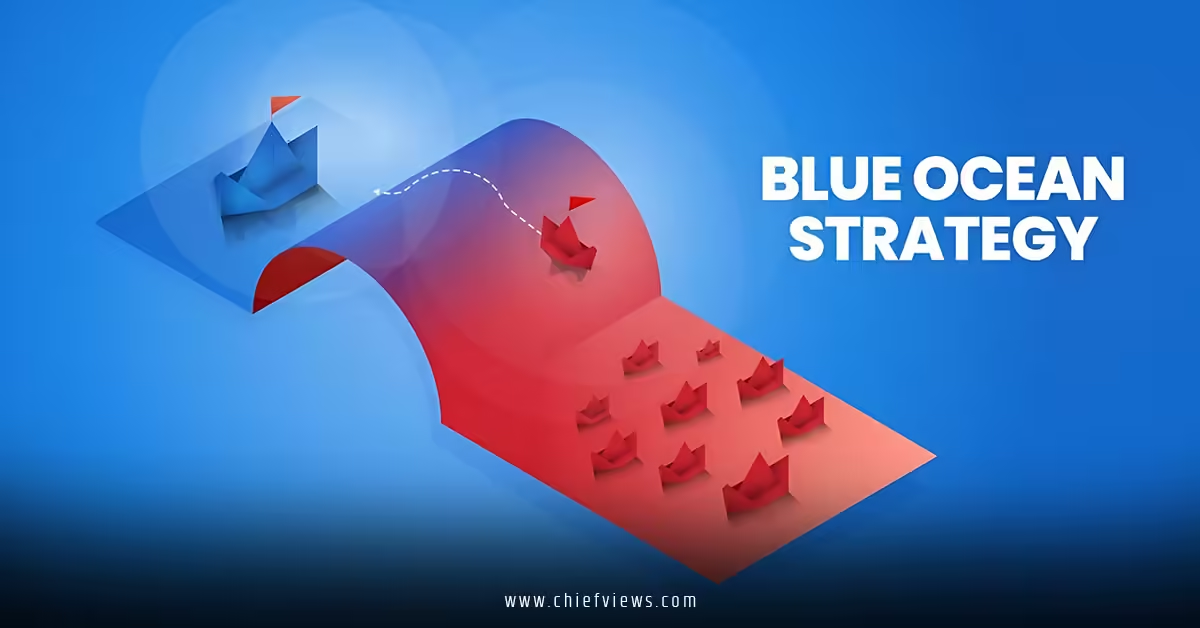
Blue Ocean Strategy examples show how innovative companies escape brutal competition and create entirely new markets. Think about it: Why battle sharks in a blood-red ocean when you can sail into vast, calm blue waters teeming with untapped demand? That’s the magic of Blue Ocean Strategy, a concept that flips traditional business thinking on its head. Instead of fighting over shrinking profits, savvy leaders eliminate, reduce, raise, and create factors to unlock new value. In this article, we’ll explore standout Blue Ocean Strategy examples from trailblazers like Cirque du Soleil, Netflix, and Tesla. These real-world stories reveal how this approach drives explosive growth—and how you can apply it too. If you’re curious about broader tools, check out our guide on competitive advantage frameworks used by successful CEOs.
Understanding Blue Ocean Strategy: Red vs. Blue Oceans
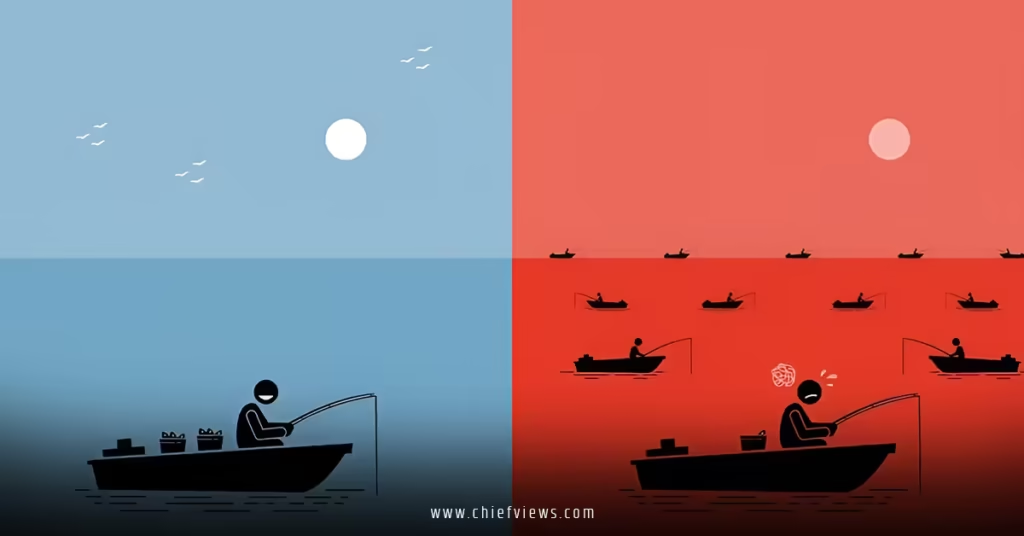
Ever feel like your industry is a shark tank? That’s a red ocean—crowded, cutthroat, with everyone slashing prices to survive. Blue Ocean Strategy, pioneered by W. Chan Kim and Renée Mauborgne, urges you to stop competing and start creating.
The core tool? The ERRC Grid: Eliminate what the industry takes for granted, Reduce over-delivered elements, Raise under-delivered ones, and Create never-before-seen features. This value innovation lowers costs while boosting buyer appeal. Result? A blue ocean of uncontested space. Blue Ocean Strategy examples prove it’s not theory—it’s a roadmap for dominance.
Why does it work? It targets non-customers, reconstructs boundaries, and makes rivals irrelevant. Rhetorically, wouldn’t you rather invent the game than play someone else’s?
Iconic Blue Ocean Strategy Examples That Redefined Industries
Let’s dive into timeless Blue Ocean Strategy examples that turned declining or saturated markets into goldmines.



Cirque du Soleil: Reinventing Entertainment
Traditional circuses were fading—animal acts controversial, star performers pricey, fun but childish. Enter Cirque du Soleil in 1984. They eliminated animals and stars (cutting costs), reduced thrills and humor, raised artistic themes and production quality, and created unique storytelling with music and dance
Suddenly, adults and corporates flocked, paying theater-level prices for circus-like wonder. Revenue exploded 22-fold in a decade, entertaining over 150 million in 300+ cities. A classic among Blue Ocean Strategy examples, it blended circus and theater into a new category.
Nintendo Wii: Gaming for Everyone
In the mid-2000s, gaming was a red ocean of graphic wars between Sony and Microsoft. Nintendo zigged with the Wii: Simple motion controls, family-friendly fun, affordable price.
They eliminated complex graphics, reduced hardcore features, raised accessibility and social play, created fitness integration (Wii Fit). Non-gamers—families, seniors—poured in. The Wii outsold rivals combined at launch. Pure Blue Ocean Strategy examples in action: Expand the market, don’t steal share.
Yellow Tail Wine: Making Wine Fun and Approachable
Wine was intimidating—snobby experts, aging processes, complex labels. Australian Casella Wines launched Yellow Tail in 2001: Easy-drinking, fun branding, low price.
Eliminated aging and prestige, reduced variety and tannins, raised sweetness and accessibility, created kangaroo labels and bold flavors. It tapped casual drinkers (beer/spirit fans), becoming the fastest-growing U.S. wine brand ever. Blue Ocean Strategy examples like this show how simplifying unlocks massive demand.
Modern Blue Ocean Strategy Examples in Tech and Beyond
Fast-forward to today—Blue Ocean Strategy examples continue thriving amid digital disruption.
Netflix: From DVDs to Streaming Dominance
Blockbuster ruled rentals, but Netflix mailed DVDs conveniently. Then, spotting broadband rise, they pivoted to streaming—unlimited, on-demand, no late fees.
Eliminated physical stores and fees, reduced selection limits, raised personalization (algorithms), created original content later. They made cable irrelevant initially, then originals like House of Cards locked in subscribers. Multiple blue oceans: Streaming, then exclusives. A standout in Blue Ocean Strategy examples for iterative shifts.
Tesla: Electrifying the Auto Industry
Cars were gas-guzzling, boring commodities. Elon Musk’s Tesla raised performance and tech (autopilot, over-air updates), created sustainability appeal and direct sales, eliminated dealerships and fossil fuels.
Early luxury EVs drew aspirational buyers, scaling to mass-market. Tesla didn’t compete with Ford—they created the premium EV category. Among Blue Ocean Strategy examples, it highlights challenging functional-emotional appeals.
Marvel Studios: From Comics to Cinematic Universe
Marvel was bankrupt in 1999. New CEO Peter Cuneo pivoted to films, licensing characters but controlling production.
They created interconnected universes (MCU), raised storytelling depth, eliminated standalone risks via shared worlds. From bankruptcy to Disney’s $4B acquisition—blockbusters galore. Blue Ocean Strategy examples in entertainment show pivots can resurrect brands.
Apple’s iTunes: Legalizing Digital Music
Piracy ravaged music in the 2000s. Apple created iTunes: Legal, per-song downloads, seamless iPod integration.
Eliminated physical CDs, reduced album mandates, raised convenience and quality, created ecosystem lock-in. It turned pirates into payers, revolutionizing distribution. Timeless Blue Ocean Strategy examples of value innovation.
Emerging Blue Ocean Strategy Examples in Recent Years
Even in 2025, fresh Blue Ocean Strategy examples emerge.
Meta’s metaverse push (despite challenges) aims at virtual social worlds. Beyond Meat created plant-based “meat” for flexitarians, tapping health/environment concerns without alienating carnivores.
These Blue Ocean Strategy examples remind us: Oceans turn red eventually—innovate continuously.
How to Apply Blue Ocean Strategy: Lessons from These Examples
Spot patterns in Blue Ocean Strategy examples? Challenge assumptions. Use the Strategy Canvas to plot your industry’s factors, then diverge.
Ask: What do we eliminate (like Cirque’s animals)? Reduce (Netflix’s fees)? Raise (Tesla’s tech)? Create (Wii’s motion)?
Involve teams, focus on non-customers. It’s risky—requires bold leadership—but rewards are huge. Tie it back: This is one of the powerful competitive advantage frameworks used by successful CEOs.
For tools, visit the official Blue Ocean Strategy site, Harvard Business Review’s classic article, and INSEAD insights.
Conclusion
Blue Ocean Strategy examples—from Cirque du Soleil’s artistic revolution to Tesla’s electric disruption—prove that escaping competition fuels legendary success. These companies didn’t win by being better; they won by being different, creating demand where none existed. In a world of red oceans, dare to chart blue ones. Assess your industry today: What can you eliminate, reduce, raise, create? Your breakthrough awaits—dive in and make the competition irrelevant.
FAQs
What is one of the most famous Blue Ocean Strategy examples?
Cirque du Soleil stands out among Blue Ocean Strategy examples for reinventing circus as sophisticated theater, appealing to adults and commanding premium prices.
How did Netflix apply Blue Ocean Strategy in its early days?
Netflix created streaming as a blue ocean, eliminating physical rentals and late fees while raising convenience—classic Blue Ocean Strategy examples of value innovation.
Is Tesla a good example of Blue Ocean Strategy?
Yes, Tesla pioneered premium electric vehicles with advanced tech and sustainability, making traditional autos less relevant in Blue Ocean Strategy examples.
Can small businesses use Blue Ocean Strategy like these examples?
Absolutely—Blue Ocean Strategy examples show it’s about mindset. Start with ERRC on your niche to uncover untapped demand.
Why do Blue Ocean Strategy examples often involve eliminating industry standards?
Eliminating taken-for-granted factors cuts costs and clears space for creation, as seen in many Blue Ocean Strategy examples like Yellow Tail simplifying wine.