






Breaking down organizational silos in 2026 has become a survival imperative rather than a nice-to-have initiative. Imagine your company as a high-performance orchestra: each section—strings, brass, percussion—excels individually, but without a conductor synchronizing them, the music turns into chaos. That’s exactly what happens when departments operate in isolation. In 2026, with AI accelerating workflows, geopolitical shifts demanding agility, and customers expecting seamless experiences, those invisible walls between teams are costing organizations dearly in speed, innovation, and revenue.
The good news? Forward-thinking leaders are actively dismantling these barriers. According to insights from McKinsey’s State of Organizations 2026 report, a significant portion of executives cite breaking down silos as a critical organizational challenge, alongside AI adoption and change management. Companies that succeed in breaking down organizational silos in 2026 aren’t just tweaking processes—they’re reimagining how work flows across the entire enterprise. And at the heart of this transformation often lies strong CEO accountability over functional silos 2026, where the top leader owns the enterprise-wide alignment.
What Are Organizational Silos and Why Do They Persist in 2026?
Organizational silos occur when departments or teams function as independent units, hoarding information, pursuing conflicting priorities, and rarely collaborating. Think marketing running campaigns without input from product, or finance enforcing strict budgets that stifle innovation in engineering. These divides aren’t new, but they’ve intensified in 2026.
Why? Rapid digital transformation has created more tools, more data sources, and more specialized roles. Hybrid and remote work can reduce casual cross-team interactions. Plus, legacy incentive structures still reward functional excellence over collective success. The result: duplicated efforts, delayed decisions, and frustrated employees who feel their work doesn’t connect to the bigger picture.
In 2026, silos manifest in new ways too. Data silos plague marketing and sales teams, preventing a unified customer view. Knowledge silos in L&D hinder cross-functional upskilling. Even AI experiments often stay trapped within IT or specific business units instead of scaling enterprise-wide.
The Real Costs of Ignoring Silos in 2026
Don’t underestimate the damage. When silos persist, customer experiences fracture—one team promises fast delivery while another struggles with inventory visibility. Innovation slows because ideas don’t cross-pollinate. Productivity suffers from redundant work; one McKinsey example highlighted companies duplicating decisions across functions and wasting thousands of hours on manual reporting.



Employee morale takes a hit too. High-performers crave impact, not isolation. Turnover rises when people feel siloed in roles that limit growth. And in a year where talent competition remains fierce, losing people to more collaborative competitors hurts.
Worst of all? Competitive disadvantage. Nimble startups and digitally native players move faster because they never built silos in the first place. Established organizations that cling to old structures risk being outmaneuvered.
Why 2026 Is the Tipping Point for Breaking Down Organizational Silos
Several forces converge to make breaking down organizational silos in 2026 non-negotiable:
- AI and automation demand integration. AI agents need clean, shared data flows to deliver value. Siloed data leads to biased or incomplete insights.
- Unified data strategies rise. Surveys show more companies adopting single sources of truth, with 50% consolidating data to align teams.
- Customer-centricity rules. Seamless journeys require end-to-end ownership, not handoffs between departments.
- Leadership evolution. Trends point to flatter structures, broader spans of control, and leaders who connect dots across silos rather than manage within them.
This is where CEO accountability over functional silos 2026 becomes crucial. CEOs who model enterprise-first thinking set the tone for the entire organization.
Proven Strategies for Breaking Down Organizational Silos in 2026
Ready to take action? Here are practical, battle-tested approaches drawn from what’s working right now.
1. Establish Shared Goals and Incentives
Ditch purely functional KPIs. Create enterprise-level objectives that every department contributes to—customer lifetime value, time-to-market, or net promoter score. Tie executive bonuses to these shared outcomes. When success depends on collaboration, silos lose their appeal.
2. Build Cross-Functional Teams and Rituals
Form persistent squads around key outcomes, not just temporary projects. Implement regular cross-functional ceremonies: joint planning sessions, all-hands demos, or “fusion” meetings where teams share roadmaps. Tools like Asana or similar platforms help maintain visibility across boundaries.
3. Invest in Unified Technology and Data Platforms
Break data silos first—it’s often the easiest win. Adopt integration platforms that create a single source of truth. In HR, consolidated workforce intelligence platforms fuse metrics, sentiment, and skills data. In marketing, unified customer data platforms align sales, service, and advertising efforts.
4. Foster Transparent Communication and Culture
Encourage “first team” mentality at the leadership level. Leaders should see themselves as enterprise stewards first, functional heads second. Promote psychological safety so people share ideas without fear of turf wars. Recognition programs that spotlight cross-team wins reinforce the behavior.
5. Leverage L&D for Connection
Learning and development teams play a starring role in 2026. Design mixed-function workshops, emotional intelligence training, and experiences that build empathy across departments. Personality assessments like Emergenetics help teams understand diverse thinking styles, reducing friction.
6. Start with Pilot Projects and Measure Progress
Don’t boil the ocean. Pick high-visibility areas—customer onboarding or product launches—and pilot cross-functional ways of working. Track metrics like decision speed, duplication reduction, and employee engagement. Quick wins build momentum.
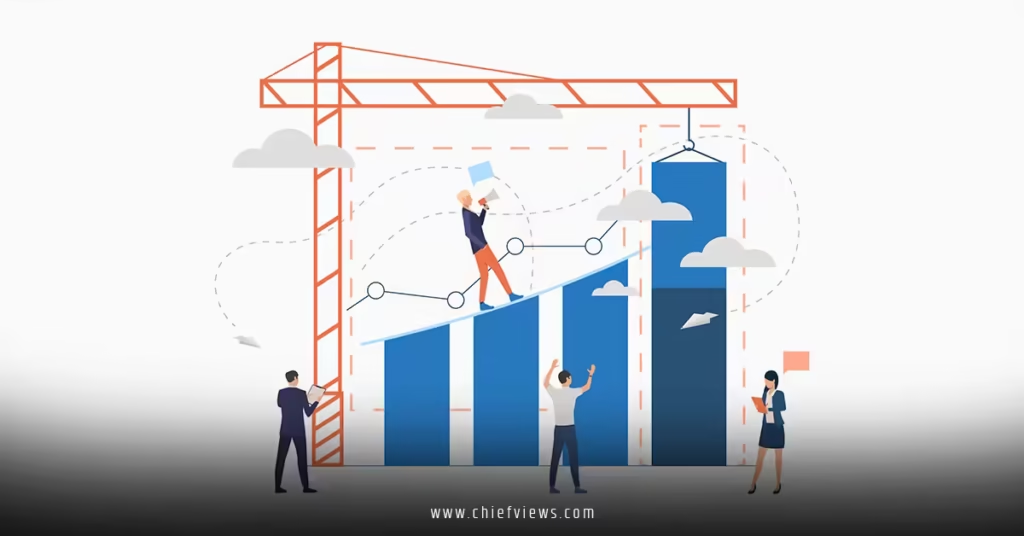
Real-World Wins from Breaking Down Organizational Silos in 2026
Companies embracing these shifts see results. Organizations consolidating data report immediate alignment between sales and marketing—when a lead disqualifies, nurture campaigns stop automatically. L&D-led initiatives boost collaboration scores and innovation output. Firms flattening structures with AI-assisted workflows cut meeting overload and accelerate execution.
These aren’t hypotheticals; they’re happening now in forward-leaning companies that treat breaking down organizational silos in 2026 as a strategic priority.
Overcoming Common Roadblocks
Expect resistance. Long-time leaders may defend their domains. Measuring cross-functional impact feels subjective compared to departmental targets. Change fatigue is real.
Counter it with clear communication, visible executive sponsorship, and early successes. Remember: most employees want to collaborate—they just need structures that make it possible.
Conclusion
Breaking down organizational silos in 2026 isn’t optional—it’s the foundation for agility, innovation, and sustained performance in an AI-driven world. By aligning around shared goals, unifying data and tools, fostering transparent cultures, and empowering cross-functional work, organizations unlock levels of collaboration that silos once blocked. The most successful leaders recognize this starts at the top, with strong CEO accountability over functional silos 2026 driving the change. If your company still feels like separate fiefdoms rowing in different directions, now is the time to build bridges. Start small, stay consistent, and watch how quickly unity transforms your results. The future belongs to the connected, not the compartmentalized.
FAQs on Breaking Down Organizational Silos in 2026
What causes organizational silos to form in the first place?
Silos often emerge from specialization, legacy structures, misaligned incentives, and limited communication channels. In 2026, rapid tech adoption and remote work exacerbate the issue by creating more isolated data and knowledge pockets.
How does breaking down organizational silos in 2026 impact AI adoption?
AI thrives on integrated data and cross-functional workflows. Silos create fragmented inputs, leading to poor insights. Organizations that break silos see faster, more effective AI value realization.
What role does leadership play in breaking down organizational silos in 2026?
Leadership—especially CEO-level—is essential. When executives model enterprise accountability and tie rewards to shared outcomes, it cascades through the organization, as highlighted in discussions around CEO accountability over functional silos 2026.
Can small or mid-sized companies benefit from breaking down organizational silos in 2026?
Yes—silos hurt any size organization by slowing decisions and wasting resources. Smaller companies often break silos faster due to flatter structures and closer leadership visibility.
What tools help most with breaking down organizational silos in 2026?
Collaboration platforms for visibility, integration tools for unified data, and L&D programs for cultural connection top the list. Choose solutions that enable real-time sharing and cross-team workflows.