




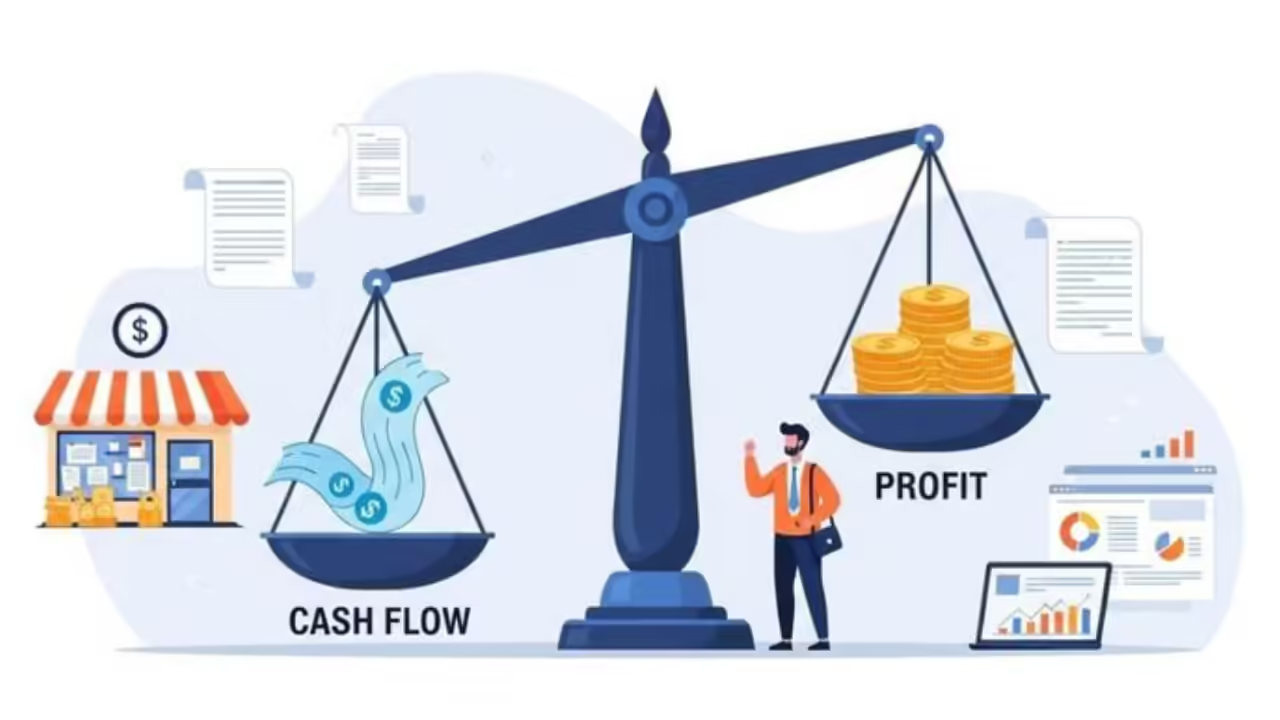
Cash flow optimization strategies separate thriving companies from those barely hanging on. Revenue might look solid on paper, yet cash keeps vanishing into slow receivables, bloated inventory, or sloppy spending. In 2026, with persistent uncertainty and tighter margins, getting this right isn’t optional.
- What it covers: Accelerating inflows, controlling outflows, shortening the cash conversion cycle, and freeing trapped working capital.
- Why it matters: Strong optimization builds resilience, funds growth without heavy borrowing, and gives CFOs breathing room during shocks.
- The edge: Teams mastering these tactics often cut cash gaps dramatically while improving supplier and customer relationships.
- 2026 reality: AI tools and real-time data make these strategies more precise and proactive than ever.
Here’s the thing. Cash flow problems rarely announce themselves loudly. They creep up until payroll feels tight.
Why Cash Flow Optimization Strategies Matter More Than Ever
Volatility hasn’t disappeared. Supply chains still snag. Customers stretch payments. Interest rates punish weak liquidity.
Effective cash flow optimization strategies turn defense into offense. They compress your cash conversion cycle (CCC) — the time between spending cash and getting it back. Shorter cycles mean more agility.
Rhetorical question: How much growth are you leaving on the table because cash is tied up?


Core Pillars of Cash Flow Optimization Strategies
Focus hits these four areas hardest:
- Receivables acceleration: Get paid faster without alienating customers.
- Payables management: Hold cash longer while keeping suppliers happy.
- Inventory discipline: Avoid tying money in stock that sits too long.
- Expense control: Ruthless prioritization of every outflow.
Layer data driven forecasting and cash management for CFOs on top, and these pillars become truly powerful.
Step-by-Step Action Plan for Cash Flow Optimization Strategies
Implement this sequence if you’re starting or refining your approach:
- Calculate your baseline CCC
Measure Days Sales Outstanding (DSO), Days Inventory Outstanding (DIO), and Days Payable Outstanding (DPO). Know your starting point. - Tighten receivables
Invoice immediately. Automate reminders. Offer early payment discounts. Review credit policies quarterly. - Optimize payables strategically
Negotiate longer terms with key suppliers. Take discounts only when they truly help cash position. Avoid late fees. - Slim down inventory
Adopt just-in-time practices where possible. Use demand forecasting to prevent overstock. - Cut non-essential spend
Review subscriptions and vendors ruthlessly. Implement approval workflows for bigger expenses. - Build and monitor reserves
Target 3-6 months of operating cash. Track weekly. - Review and iterate
Monthly cross-functional meetings to spot leaks early.
What usually happens is teams nail steps 1-3 then stall. Push through the full cycle. Results compound fast.
Cash Flow Optimization Strategies: Quick Comparison Table
| Strategy | Traditional Approach | Optimized 2026 Approach | Expected Cash Impact |
|---|---|---|---|
| Receivables | Net-30, manual follow-up | Automated invoicing + discounts | Reduce DSO by 10-20 days |
| Payables | Pay early to keep suppliers happy | Negotiated terms + supply chain finance | Extend DPO by 15+ days |
| Inventory | Forecast-based bulk buys | Demand-driven / JIT | Cut DIO by 15-30 days |
| Expense Management | Annual budget reviews | Real-time controls + AI flagging | Free 5-15% of operating cash |
| Overall CCC | 60-90+ days | 30-45 days target | Millions in unlocked liquidity |
Real numbers vary by industry, but these ranges reflect common outcomes from mid-market implementations.
Common Mistakes & How to Fix Them
Avoid these traps:
- Chasing revenue at any cost: Big sales with terrible payment terms. Fix: Build minimum credit standards into sales processes.
- Ignoring small leaks: Dozens of unused software tools. Fix: Quarterly zero-based expense reviews.
- Poor supplier coordination: Adversarial negotiations that damage relationships. Fix: Explore win-win supply chain finance options.
- Set-it-and-forget-it forecasting: Static models that miss shifts. Fix: Integrate rolling forecasts with real-time data.
- No visibility: Siloed departments. Fix: Shared dashboards across finance, sales, and operations.
The kicker? Most mistakes come from good intentions executed poorly. Fix the process, not the people.
For stronger foundations, explore proven data driven forecasting and cash management for CFOs approaches that supercharge these tactics.

Advanced Cash Flow Optimization Strategies for 2026
Go beyond basics with:
- Dynamic discounting platforms
- AI-powered anomaly detection in spending
- Supply chain finance programs
- Customer payment behavior scoring
Mid-market winners combine automation with human oversight.
Measuring What Works
Track these KPIs monthly:
- Cash conversion cycle trend
- Operating cash flow ratio
- Free cash flow generation
- Idle cash percentage
- Forecast accuracy
Adjust aggressively when numbers drift.
Key Takeaways
- Cash flow optimization strategies focus on shortening the full cash cycle from outflow to inflow.
- Small, consistent improvements in DSO, DIO, and DPO deliver outsized liquidity gains.
- Automation and real-time data separate good programs from great ones.
- Cross-functional alignment beats siloed efforts every time.
- Supplier relationships improve when you optimize collaboratively.
- Regular CCC measurement keeps the system honest.
- Conservative cash buffers protect against volatility.
- Start with quick wins in receivables and expenses for fast momentum.
Nail these strategies and cash becomes a growth engine instead of a constant worry.
Ready to act? Grab your latest financials and calculate your current CCC today. Pick the longest lever — usually receivables or inventory — and attack it first. Momentum builds quickly.
FAQs on Cash Flow Optimization Strategies
How quickly can cash flow optimization strategies show results?
Many teams see measurable improvements in 30-60 days by tightening receivables and reviewing expenses. Full CCC compression often takes 3-6 months.
What role does technology play in modern cash flow optimization strategies?
It automates tracking, flags risks early, and improves forecasting accuracy. The best setups blend tools with smart processes rather than replacing judgment entirely.
Can small and mid-sized companies compete with enterprise cash flow optimization strategies?
Absolutely. Focus on high-impact basics first — automation, better terms, and visibility — before scaling to advanced finance programs. Consistent execution often beats complex setups.