




CHRO role in organizational culture and resilience sits at the heart of what keeps companies standing when markets shake, tech disrupts, or crises hit. These leaders don’t just handle hiring and payroll anymore. They shape the invisible forces that determine whether teams crumble or bounce back stronger.
In 2026, the best CHROs act as architects of adaptability. They build environments where people feel safe enough to innovate and tough enough to weather storms. Here’s why it matters now more than ever.
- CHROs translate business goals into daily behaviors that stick during uncertainty.
- They drive culture as a competitive edge, not a nice-to-have poster on the wall.
- Resilience becomes the outcome when leaders invest in psychological safety, clear purpose, and real development.
- Organizations with strong people strategies see better retention and faster recovery from setbacks.
The kicker? Many companies still treat culture as an afterthought until the damage shows up in turnover numbers or missed targets.
What CHROs Actually Do in Culture and Resilience
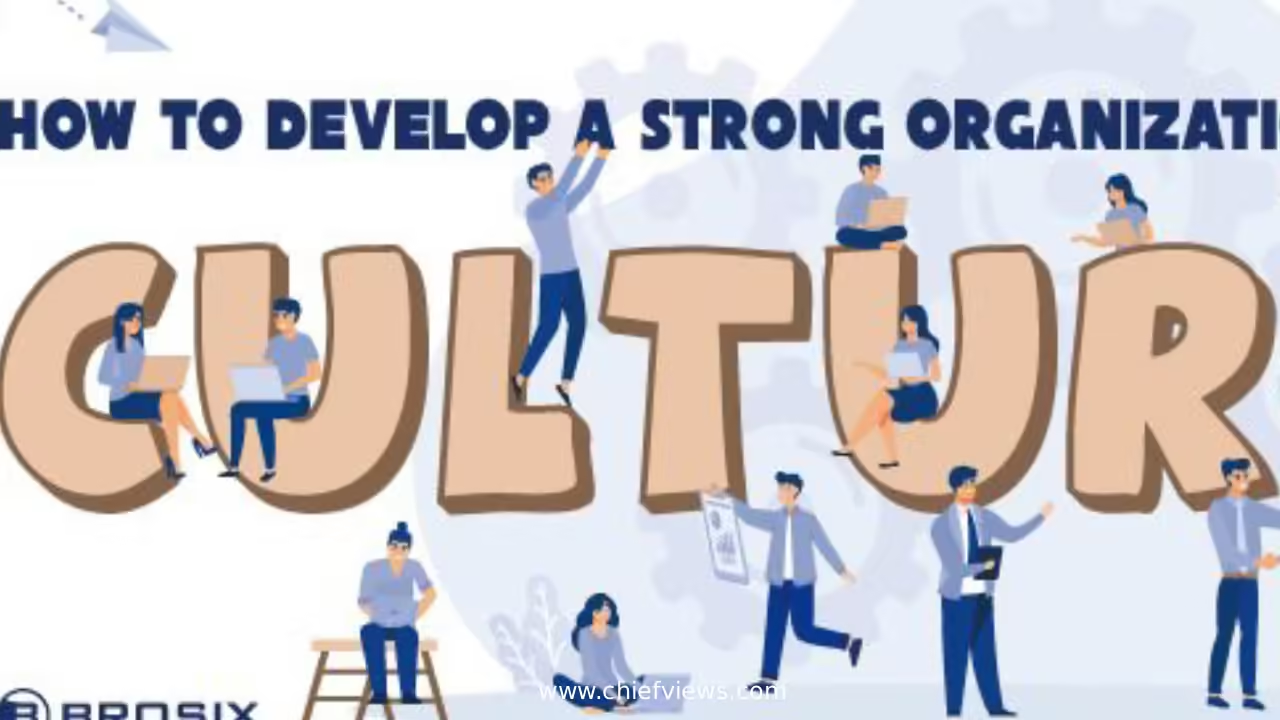
Look, culture isn’t some fluffy HR initiative. It’s the operating system of your business. CHROs own its maintenance and upgrades.
They diagnose problems before they spread. They spot when trust erodes or burnout creeps in. In my experience, what usually happens is leadership talks a big game about values, but the CHRO makes sure those values survive real pressure.
Resilience enters the picture when CHROs prepare people for volatility. Economic swings, AI shifts, hybrid work friction—none of it stops. Strong CHROs build antifragile teams that get better through challenges.


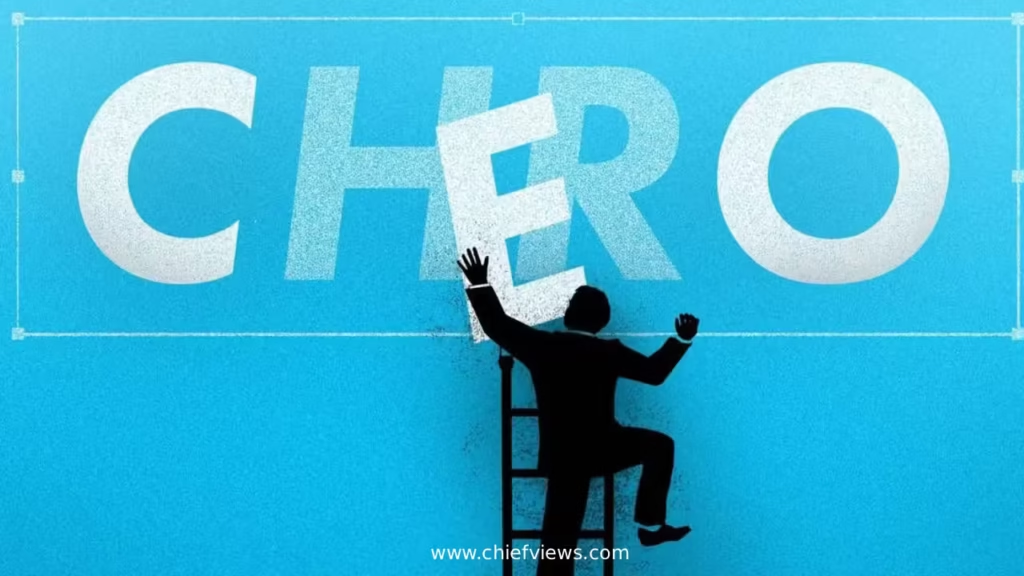
CHRO role in organizational culture and resilience means leading from the C-suite with data-backed people strategies. They influence everything from onboarding rituals to crisis response plans.
Building Blocks of a Resilient Culture
Effective CHROs focus on three pillars:
- Psychological safety — People speak up without fear.
- Shared purpose — Everyone knows why the work matters.
- Adaptive skills — Training that actually sticks when pressure rises.
Gartner research shows organizations that embed culture into daily work can see up to a 34% increase in employee performance. That’s not theory. That’s measurable impact.
How the CHRO Role in Organizational Culture and Resilience Drives Business Outcomes
Skip the buzzwords. Here’s what happens when CHROs get this right.
Teams stay engaged during change. Gallup data consistently links strong culture connection to dramatically lower burnout and higher retention. Employees who feel tied to their organization’s culture report being far less likely to job hunt.
Innovation flows better. When people trust the system, they take smart risks. Resilience means the organization absorbs shocks—like supply chain breaks or talent shortages—without losing momentum.
CHRO role in organizational culture and resilience directly ties to profitability. High-engagement environments deliver better results. Period.
Comparison: Traditional HR vs. Strategic CHRO Impact
| Aspect | Traditional HR Focus | Strategic CHRO Approach (2026) | Business Impact |
|---|---|---|---|
| Culture Management | Events and policies | Daily behavior alignment & values integration | Higher engagement, lower voluntary turnover |
| Resilience Building | Basic EAP programs | Proactive skill-building & psychological safety | Faster recovery from crises |
| Leadership Development | Compliance training | Adaptive leadership for uncertainty | Better change navigation |
| Measurement | Headcount & satisfaction scores | Culture health metrics tied to performance | Clear ROI on people investments |
This table shows the shift. Modern CHROs connect dots between people practices and bottom-line results.
Step-by-Step Action Plan for Building Stronger Culture and Resilience
Beginners and intermediate leaders, start here. Don’t boil the ocean.
Step 1: Assess current reality. Run anonymous pulse surveys. Ask tough questions about trust and support during tough times. Listen without defensiveness.
Step 2: Define non-negotiable values. Work with leadership to identify 3-5 behaviors that matter most. Make them specific. “We own outcomes” beats vague slogans every time.
Step 3: Align hiring and promotion. Vet candidates for cultural fit and resilience traits. What happened is, past performance alone doesn’t predict success in volatile environments.
Step 4: Invest in manager capability. Frontline leaders make or break culture. Train them on feedback, recognition, and spotting burnout early.
Step 5: Create recovery mechanisms. Build rituals for after high-pressure periods. Debriefs. Rest. Learning loops. This prevents exhaustion from becoming the norm.
Step 6: Measure and adjust. Track leading indicators like engagement scores alongside lagging ones like turnover. Review quarterly.
What would I do if I stepped into a new organization tomorrow? Start with that assessment and quick wins in manager support. Momentum builds fast from there.
Common Mistakes & How to Fix Them
Even seasoned pros trip here.
Mistake 1: Treating culture as a campaign. One-off workshops fade fast. Fix: Integrate values into performance reviews and decision-making frameworks.
Mistake 2: Ignoring middle managers. They translate strategy to reality. Fix: Give them tools and accountability for team climate.
Mistake 3: Focusing only on engagement scores. Happy doesn’t always mean resilient. Fix: Measure adaptability and psychological safety specifically.
Mistake 4: Going it alone. CHROs can’t own culture solo. Fix: Partner tightly with the CEO and business unit leaders. Shared ownership wins.
Mistake 5: Over-relying on perks. Free snacks don’t build grit. Fix: Prioritize purpose, growth, and fair processes.
The metaphor that fits? Culture is like the root system of a tree. You can’t see it, but it determines whether the whole thing stands tall in the storm or topples.
CHRO Role in Organizational Culture and Resilience: Leadership Development Focus
Leadership pipelines matter hugely. CHROs who develop managers skilled in empathetic yet decisive leadership create ripple effects.
Explore proven approaches to leadership development from SHRM for frameworks that actually scale.
Resilient organizations have leaders who model vulnerability and accountability. They admit mistakes publicly. They celebrate learning from failure.
Common Pitfalls in Measuring Progress
Many CHROs chase vanity metrics. Real progress shows in how quickly teams regroup after missed quarters or major pivots.
Tie culture initiatives to business KPIs. Retention during restructuring. Innovation output. Customer satisfaction scores.
For deeper insights on workforce strategy, check Deloitte’s research on human capital trends.
Key Takeaways
- CHRO role in organizational culture and resilience has evolved into a core strategic function that drives adaptability.
- Strong cultures deliver measurable performance lifts and faster crisis recovery.
- Focus on psychological safety, clear purpose, and manager capability as foundational elements.
- Avoid flashy programs—embed behaviors into daily operations instead.
- Regular assessment and adjustment beat one-time initiatives.
- Shared ownership across leadership beats HR owning it alone.
- Measure what matters: behaviors, adaptability, and business outcomes.
- Start small, iterate fast, and scale what works in your context.
The organizations that thrive in 2026 won’t be the biggest or richest. They’ll be the ones with cultures tough enough to flex and people resilient enough to lead through ambiguity.
Ready to strengthen yours? Audit one team this week. Gather honest feedback. Pick one behavior to reinforce. Small moves compound when the CHRO role in organizational culture and resilience gets the attention it deserves.
FAQs
How does the CHRO role in organizational culture and resilience differ from traditional HR duties?
Modern CHROs operate as strategic partners who proactively shape behaviors and prepare for disruption, rather than simply administering policies and transactions.
What skills should aspiring CHROs develop for culture and resilience work?
Focus on data interpretation, change navigation, empathetic leadership, and the ability to connect people practices directly to business strategy.
Can small organizations benefit from focusing on CHRO role in organizational culture and resilience?
Absolutely. Even without a formal CHRO title, the founder or people leader who prioritizes these areas builds stronger teams that scale more effectively and recover faster from setbacks.