





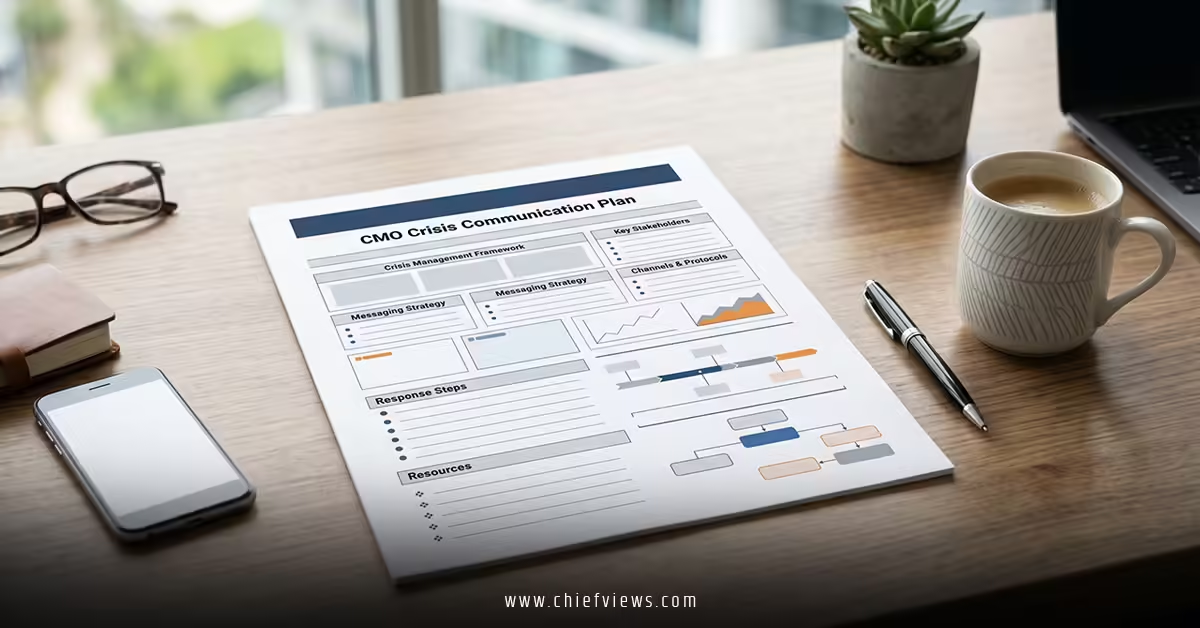
CMO crisis communication plan template is your frontline defense when disaster strikes and your brand’s reputation hangs in the balance. In today’s hyper-connected world, a single misstep can spiral into a full-blown PR nightmare within hours. Smart CMOs know that preparation beats panic every time.
Here’s what a solid crisis communication plan delivers:
- Rapid response framework that cuts decision-making time from hours to minutes
- Clear role assignments so everyone knows exactly what to do when chaos hits
- Pre-approved messaging templates that maintain brand voice under pressure
- Stakeholder communication protocols that keep key audiences informed and aligned
- Reputation recovery strategies that turn crisis into opportunity
The difference between brands that survive crises and those that don’t? They had a plan.
What Is a CMO Crisis Communication Plan Template?
Think of it as your communication fire drill. A CMO crisis communication plan template is a comprehensive document that outlines exactly how your organization will respond when things go sideways. It’s not just about damage control—it’s about maintaining trust, protecting your brand equity, and sometimes even emerging stronger than before.
This isn’t some dusty document that sits in a drawer. It’s a living, breathing playbook that gets updated regularly and tested through simulations. The best templates include everything from initial threat assessment protocols to long-term reputation recovery strategies.
Why CMOs specifically need this tool:
Marketing leaders sit at the intersection of brand perception and business results. When crisis hits, you’re not just managing communications—you’re protecting revenue, customer relationships, and market position. The Federal Emergency Management Agency emphasizes that effective crisis communication can reduce recovery time by up to 40%.



The Anatomy of an Effective Crisis Communication Plan
Core Components That Actually Work
Every robust CMO crisis communication plan template needs these essential elements:
Crisis Classification System Your plan should categorize potential crises by severity and type. Minor social media complaints require different responses than product recalls or executive scandals. Create a simple color-coded system—green for minor issues, yellow for moderate concerns, red for major crises.
Decision-Making Authority Who has the final say on messaging? This needs to be crystal clear before chaos erupts. Typically, it’s a three-tier system: communications team handles green alerts, CMO approves yellow responses, and CEO gets involved for red-level crises.
Stakeholder Mapping Not all audiences need the same message at the same time. Your template should include:
- Customers and prospects
- Employees and their families
- Investors and board members
- Media contacts
- Regulatory bodies
- Community leaders
Crisis Communication Response Framework
The First 60 Minutes: Your Golden Hour
When crisis strikes, the first hour determines whether you’re controlling the narrative or chasing it. Here’s your minute-by-minute playbook:
Minutes 1-15: Assessment and Assembly
- Activate crisis team through predetermined communication channels
- Gather initial facts (stick to verified information only)
- Assess potential impact and classify crisis level
Minutes 15-30: Initial Response Strategy
- Determine key messages for each stakeholder group
- Identify appropriate communication channels
- Draft holding statement if immediate public response needed
Minutes 30-60: Execute Initial Communications
- Deploy holding statement to media and social channels
- Notify internal stakeholders (employees, board, key partners)
- Monitor social media and news outlets for developing coverage
The Crisis & Emergency Risk Communication guidelines from the CDC stress that early, accurate communication builds credibility that pays dividends throughout the crisis lifecycle.
Essential Templates for Your Crisis Communication Arsenal
Internal Communication Templates
Executive Alert Template
CRISIS ALERT - [Classification Level]
Situation: [Brief description]
Impact: [Potential business/reputation consequences]
Response: [Initial actions taken]
Next Steps: [Immediate priorities]
Timeline: [Key milestones and deadlines]
Employee Notification Template Your team needs to hear from you before they hear from Twitter. Keep it factual, reassuring, and action-oriented. Include what happened, what you’re doing about it, and how it affects them specifically.
External Communication Templates
Media Statement Framework
- Acknowledge the situation without admitting fault
- Express appropriate concern for affected parties
- Outline immediate actions being taken
- Commit to transparency and updates
- Provide clear contact for follow-up
Social Media Response Templates Pre-craft responses for common scenarios. You can’t predict every crisis, but you can prepare for patterns. Product issues, service outages, and customer complaints follow predictable arcs.
Stakeholder-Specific Messaging Strategies
Customer Communications: Trust Through Transparency
Customers want three things during a crisis: honesty about what happened, clarity about how it affects them, and confidence that you’re fixing it. Your CMO crisis communication plan template should include specific messaging for different customer segments.
B2B customers need detailed impact assessments and mitigation plans. They’re making business decisions based on your crisis response.
B2C customers want emotional reassurance along with practical information. They’re deciding whether they still trust your brand.
Investor Relations: Protecting Market Confidence
Financial stakeholders need data-driven communication that demonstrates crisis management competence. Your template should include:
- Impact on operations and financial performance
- Risk mitigation measures already in place
- Timeline for resolution and normal operations
- Long-term strategic implications
The Securities and Exchange Commission requires publicly traded companies to disclose material information that could affect stock price, making investor communication a legal obligation, not just good practice.
Digital Crisis Management in 2026
Social Media Monitoring and Response
Social platforms move faster than traditional media. Your CMO crisis communication plan template needs real-time monitoring protocols and rapid response capabilities.
Platform-Specific Strategies Each platform has its own communication norms:
- LinkedIn: Professional, solution-focused messaging
- Twitter/X: Quick acknowledgment and redirection to official statements
- Instagram: Visual storytelling that humanizes your response
- TikTok: Authentic, behind-the-scenes crisis management (when appropriate)
AI and Automation in Crisis Response
Smart CMOs leverage technology for crisis monitoring and initial response. Automated systems can flag potential issues hours before they explode and deploy holding responses while human teams mobilize.
However, authentic crisis communication still requires human judgment. Use automation for monitoring and initial triage, but keep human voices front and center for actual crisis communication.

Implementation Strategy: Making Your Plan Actionable
Team Training and Simulation Exercises
A plan that nobody knows how to use is worse than no plan at all. Quarterly crisis simulations keep your team sharp and reveal gaps in your template.
Simulation Scenarios to Practice:
- Product recall announcement
- Executive departure under controversy
- Data breach disclosure
- Negative viral social media incident
- Supply chain disruption
Regular Plan Updates and Maintenance
Your CMO crisis communication plan template should evolve with your business. Review and update quarterly, incorporating lessons learned from actual incidents and industry best practices.
Key Update Triggers:
- Leadership changes
- New product launches
- Market expansion
- Regulatory changes
- Previous crisis learnings
Crisis Communication Metrics and Evaluation
| Metric Category | Key Indicators | Measurement Timeline |
|---|---|---|
| Response Speed | Time to first public statement | Within 1 hour |
| Message Reach | Social media impressions, media coverage | 24-48 hours |
| Sentiment Analysis | Positive/negative mention ratio | Weekly during crisis |
| Stakeholder Confidence | Customer retention, stock price stability | 30-90 days post-crisis |
| Long-term Impact | Brand perception surveys, market share | 6-12 months |
Common Crisis Communication Mistakes (And How to Avoid Them)
The “No Comment” Trap
Saying nothing sends the wrong message. It suggests you either don’t care or you’re hiding something worse. Always have a holding statement ready, even if it’s just acknowledging awareness and promising updates.
Better approach: “We’re aware of the situation and are investigating thoroughly. We’ll provide updates as we learn more.”
Over-Apologizing Without Substance
Empty apologies without action plans feel hollow. If you’re going to apologize, make it meaningful by including specific steps you’re taking to address the issue.
Inconsistent Messaging Across Channels
When different spokespeople give different versions of your response, credibility evaporates fast. Your CMO crisis communication plan template should include message discipline protocols.
Waiting for Perfect Information
You’ll never have complete information during a crisis. Communicate what you know while acknowledging what you’re still investigating.
Step-by-Step Crisis Communication Action Plan
Phase 1: Crisis Detection and Assessment (0-30 minutes)
- Identify the crisis source – Monitor social media, news outlets, customer service channels
- Assemble core crisis team – CMO, legal counsel, operations lead, communications director
- Assess severity level using your predetermined classification system
- Gather verified facts – Distinguish between confirmed information and speculation
- Evaluate potential impact on different stakeholder groups
Phase 2: Initial Response Deployment (30 minutes – 2 hours)
- Craft holding statement using pre-approved messaging frameworks
- Deploy internal communications to employees and key stakeholders
- Release public statement across appropriate channels
- Begin stakeholder outreach to high-priority audiences
- Initiate media monitoring for response and additional developments
Phase 3: Sustained Communication Management (2+ hours ongoing)
- Monitor public response and adjust messaging as needed
- Provide regular updates based on predetermined timeline
- Engage with stakeholders through direct communication when appropriate
- Document lessons learned for future plan improvements
- Plan transition from crisis mode to normal operations communication
Advanced Crisis Communication Tactics
Turning Crisis into Opportunity
The best crisis responses don’t just minimize damage—they actually strengthen stakeholder relationships. Johnson & Johnson’s Tylenol recall response in the 1980s became a case study in how transparent, decisive action can rebuild trust faster than ever before.
Opportunity Identification Framework:
- Can this crisis demonstrate our values in action?
- Does our response showcase operational excellence?
- Can we emerge as an industry leader in responsibility?
- Will stakeholders respect our transparency and decisiveness?
Crisis Communication for Different Business Models
B2B SaaS Companies: Focus on operational continuity and data security E-commerce Brands: Prioritize customer experience and order fulfillment Manufacturing: Emphasize safety protocols and quality control Professional Services: Highlight expertise and client confidentiality
Key Takeaways
- Speed beats perfection – Rapid, honest communication outperforms delayed perfect statements
- Preparation prevents panic – Regular simulation exercises keep teams crisis-ready
- Stakeholder-specific messaging ensures relevant, effective communication for each audience
- Digital-first response acknowledges that social media often breaks news faster than traditional outlets
- Recovery planning should begin during crisis response, not after it ends
- Legal review integration prevents communication that creates additional liability
- Measurement and learning from each crisis improves future response effectiveness
- Leadership visibility during crisis builds stakeholder confidence in organizational competence
Conclusion
A well-crafted CMO crisis communication plan template isn’t just insurance against disaster—it’s a competitive advantage that demonstrates organizational maturity and stakeholder focus. The brands that thrive after crisis are those that prepared before it hit.
Start building your crisis communication framework today. Begin with stakeholder mapping, develop your classification system, and create those essential message templates. Then test it through realistic simulations.
Remember: every crisis is different, but your response framework should be consistent. When stakeholders see organized, transparent, and decisive communication during your worst moments, they’ll trust you even more during your best ones.
The question isn’t whether you’ll face a crisis. It’s whether you’ll be ready when it arrives.
Frequently Asked Questions
Q: How often should I update my CMO crisis communication plan template?
A: Review quarterly and update after any significant business change, leadership transition, or actual crisis experience. Your CMO crisis communication plan template should evolve with your organization.
Q: Who should be on the core crisis communication team?
A: Typically includes the CMO, legal counsel, operations leader, communications director, and a C-suite representative with decision-making authority. Keep the core team small for speed.
Q: What’s the biggest mistake CMOs make in crisis communication?
A: Waiting too long to respond while trying to craft the perfect message. Speed and transparency beat perfection every time in crisis communication.
Q: How do I prepare crisis communication for global audiences?
A: Develop region-specific messaging that considers cultural sensitivities, local regulations, and time zone differences. Assign regional communication leads who understand local stakeholder expectations.
Q: Should social media responses be part of my crisis communication plan?
A: Absolutely. Social platforms often break crisis news first and require immediate response. Include platform-specific messaging guidelines in your CMO crisis communication plan template.