




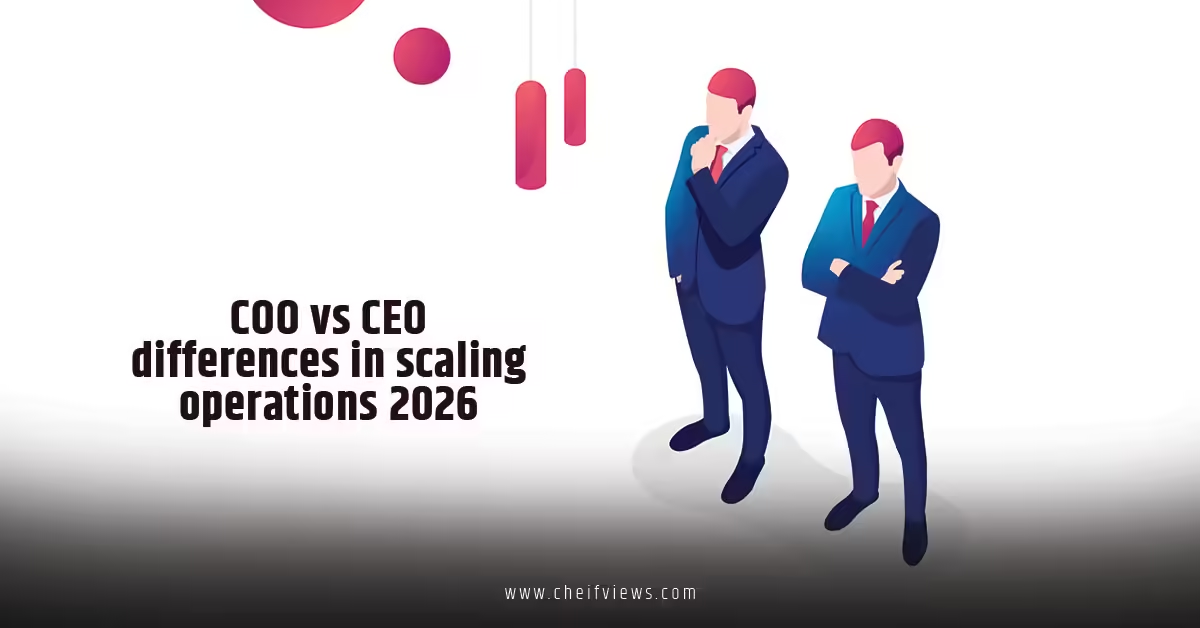
COO vs CEO differences in scaling operations 2026 hit different when your company actually starts growing fast. The CEO stares at the horizon, painting the vision and chasing capital. The COO builds the engine that doesn’t blow up under pressure. In 2026, with AI agents handling routine workflows and hybrid work baked in, that split matters more than ever for US companies scaling from startup chaos to sustainable growth.
Here’s the quick breakdown:
- CEO owns the “what” and “why” — strategy, fundraising, market positioning, and big bets.
- COO owns the “how” — turning vision into repeatable processes, hitting efficiency targets, and keeping the lights on during hypergrowth.
- The gap widens in scaling because one bad hire or process failure can torch margins or talent.
- Companies that nail this duo move faster without breaking.
- In 2026, COOs increasingly drive AI integration and operational resilience while CEOs focus outward.
This matters because blurred lines kill momentum. Founders who try wearing both hats too long usually hit a wall around $10M–$50M ARR.
What Changed for COO vs CEO Differences in Scaling Operations 2026
The game shifted. Boards now want COOs who speak AI fluently and can orchestrate automation, not just squeeze costs. Fewer traditional COO roles exist as companies experiment with co-CEOs or fold ops into other C-suite spots.
CEOs spend more time on external pressures: regulation, talent wars in key markets, and capital allocation in uncertain times. COOs handle the internal firehose — supply chain shocks, remote team coordination, and scaling systems that actually deliver ROI on tech investments.
Think of the CEO as the ship’s captain charting the course through storms. The COO is the chief engineer keeping the hull intact and engines at full throttle. One wrong move and the whole thing lists.
Have you ever watched a founder drown in Slack threads while investors wait for the next update? That’s the signal. Time to separate the roles.


Core Differences: COO vs CEO in Practice
| Aspect | CEO Focus (2026) | COO Focus (2026) | Scaling Impact |
|---|---|---|---|
| Primary Orientation | External: Vision, investors, market | Internal: Execution, processes, people | Prevents founder burnout |
| Key Decisions | Strategy, M&A, pricing models, culture | Ops efficiency, tech stack, team structure | Enables 3-5x growth without chaos |
| Metrics Owned | Revenue growth, valuation, market share | Gross margin, throughput, employee retention | Directly hits profitability |
| Time Horizon | 12-36 months | 3-12 months | Balances speed and sustainability |
| AI/Tech Role | Identifies opportunities | Implements, governs, measures ROI | Critical for competitive edge |
| Reporting | Board of Directors | CEO | Clear accountability |
This table isn’t theory. It’s what plays out when companies push past early traction.
How Roles Shift During Different Scaling Phases
Early Stage (Pre-PMF to $5M ARR): CEO does it all. Ops live in spreadsheets and hustle. No dedicated COO yet.
Growth Stage ($5M–$50M): COO enters. They build the machine — hiring systems, OKR frameworks, customer success playbooks. CEO steps back to raise the next round and refine positioning.
Scale Stage ($50M+): COO owns operational maturity. They integrate AI for forecasting, automate compliance, and create repeatable playbooks for new markets. CEO doubles down on partnerships and innovation bets.
In my experience, the handoff feels awkward at first. Founders resist letting go. What usually happens is the COO proves value by killing one major bottleneck — like onboarding that used to take 45 days now down to 12.

Step-by-Step Action Plan for Beginners
Ready to sort this out? Here’s exactly what I’d do:
- Audit your current load. Track your week. If you’re spending over 40% on ops minutiae, flag it.
- Define non-negotiables. Write a one-page role split. CEO: vision, capital, external. COO: delivery, efficiency, internal alignment.
- Hire for complementarity. Look for a COO who thrives on structure where you thrive on ambiguity. Test with a 90-day project.
- Build the rhythm. Weekly syncs. Quarterly offsites. Clear escalation paths.
- Measure the partnership. Track joint KPIs like time-to-decision and operational margin improvement.
- Scale the model. As you grow, extend this clarity to other C-suite roles.
Follow this and you avoid the classic trap of duplicated effort or dropped balls.
Common Mistakes & How to Fix Them
Mistake 1: Vague role definitions. Everyone steps on toes. Fix: Document decisions and review quarterly.
Mistake 2: CEO micromanaging ops. Kills COO credibility. Fix: Set “no-fly zones” and stick to them.
Mistake 3: Promoting the best operator without leadership seasoning. Technical skill ≠ people leadership. Fix: Vet for cross-functional influence.
Mistake 4: Ignoring 2026 realities. No AI fluency. Fix: Prioritize candidates who’ve scaled automation or built resilient supply chains.
Mistake 5: Waiting too long. Founder fatigue sets in. Fix: Bring in fractional COO support first to test the waters.
COO vs CEO Differences in Scaling Operations 2026: Real-World Edge
US companies that clarify these roles early capture market share faster. They retain talent better because people know who owns what. They deploy capital smarter.
One fresh analogy: The CEO is the architect sketching the skyscraper. The COO is the general contractor making sure the foundation holds when the cranes arrive and the floors stack up fast.
Key Takeaways
- CEO drives direction; COO builds the repeatable engine that powers scaling.
- In 2026, successful COOs master AI implementation and operational agility.
- Clear boundaries prevent burnout and accelerate growth.
- The right split lets CEOs focus on big swings while ops stay rock-solid.
- Start documenting roles now, even before hiring.
- Measure success by margins, speed, and team energy — not just titles.
- This partnership becomes your unfair advantage in competitive markets.
- Revisit the split every 18–24 months as the company evolves.
Nail COO vs CEO differences in scaling operations 2026 and your company doesn’t just grow — it compounds cleanly. The next step? Grab your leadership team, map your current realities against this framework, and close the gaps this quarter. Momentum waits for no one.
FAQs
How do COO vs CEO differences in scaling operations 2026 affect hiring decisions?
They dictate who you bring in first. Early on, prioritize a COO who can systematize chaos. Later, seek strategic operators who understand AI governance and can free the CEO for external work.
Can a small US company succeed without a dedicated COO?
Yes — many do in the beginning. But once complexity spikes (multiple products, remote teams, compliance demands), trying to combine roles slows everything down. Fractional help bridges the gap effectively.
What skills matter most for COO vs CEO differences in scaling operations 2026?
CEOs need vision, storytelling, and capital markets intuition. COOs need process design, people leadership, tech fluency, and relentless execution focus. The best pairs amplify each other’s strengths.