





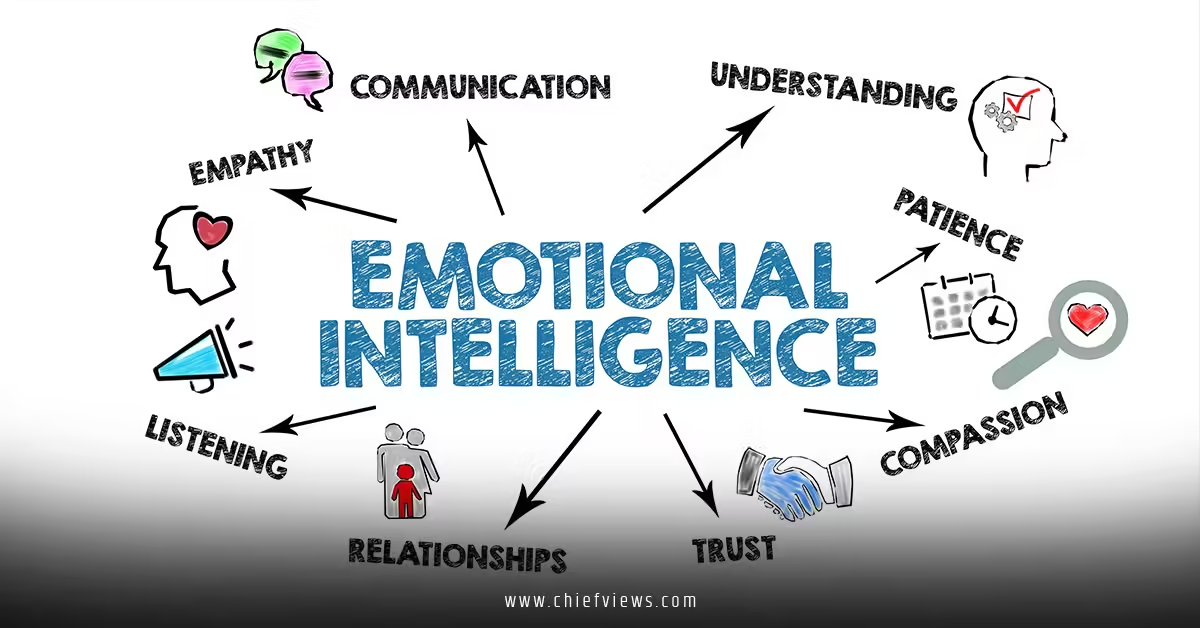
Emotional intelligence in leadership is no longer a nice-to-have—it’s the secret weapon that separates great leaders from merely good ones. In a world where technical skills can be learned and strategies can be copied, emotional intelligence in leadership allows you to connect deeply with people, navigate conflict gracefully, and inspire teams to achieve extraordinary results. Why do some leaders build loyal, high-performing cultures while others struggle with turnover and disengagement? More often than not, it boils down to their mastery of emotional intelligence in leadership.
Today’s workplaces are more complex than ever—remote teams, generational differences, rapid change, and constant pressure demand leaders who can read the room, manage their own reactions, and bring out the best in others. Emotional intelligence in leadership isn’t about being “soft”; it’s about being smart with emotions to drive harder results. Let’s explore what this really means, why it matters, and how you can develop it to become a more effective leader.
What Exactly Is Emotional Intelligence in Leadership?
Emotional intelligence (EI or EQ) is the ability to recognize, understand, manage, and influence your own emotions and those of others. When applied to leadership, emotional intelligence in leadership becomes the bridge between strategy and human execution. Daniel Goleman, who popularized the concept in the 1990s, identified five key components that remain the gold standard today.
Great leaders don’t just issue orders—they tune into the emotional undercurrents that drive performance. Think of emotional intelligence in leadership as the operating system running beneath every decision, conversation, and crisis. Without it, even the sharpest intellect can fail to inspire or retain talent.
The Five Core Components of Emotional Intelligence in Leadership
Understanding the building blocks helps you see how emotional intelligence in leadership plays out in real scenarios.



1. Self-Awareness: The Foundation of Emotional Intelligence in Leadership
Self-awareness is knowing your emotions, triggers, strengths, and blind spots in real time. Leaders with strong self-awareness recognize when stress makes them short-tempered or when confidence slips into arrogance.
Imagine delivering tough feedback while unaware that your frustration is leaking through—your message gets lost. Leaders who practice emotional intelligence in leadership pause, reflect, and adjust. They seek honest feedback and journal reactions to build this muscle. Self-awareness prevents derailing behaviors and earns respect because people trust leaders who know themselves.
2. Self-Regulation: Staying Steady Under Pressure
Self-regulation means controlling impulsive reactions and channeling emotions productively. In leadership, this looks like staying calm during a market crash, admitting mistakes without defensiveness, or choosing thoughtful responses over knee-jerk emails.
Leaders lacking self-regulation create fear-based cultures. Those who master it model composure, fostering psychological safety. Emotional intelligence in leadership shines brightest here—when everyone else panics, the emotionally intelligent leader remains the anchor.
3. Motivation: Driving Yourself and Others Forward
This component is about intrinsic drive—a passion for the work that goes beyond money or status. Leaders high in motivational emotional intelligence in leadership set ambitious goals, bounce back from setbacks, and infect teams with optimism.
They frame challenges as opportunities and celebrate progress. This intrinsic fire keeps organizations resilient during tough stretches. Without it, leadership feels transactional; with it, people give discretionary effort.
4. Empathy: The Human Connection in Emotional Intelligence in Leadership
Empathy is understanding others’ feelings and perspectives, then responding appropriately. In leadership, this means listening without judgment, recognizing diverse needs, and tailoring communication.
An empathetic leader notices when a star performer is burning out and offers support before productivity drops. Emotional intelligence in leadership requires cognitive empathy (understanding thoughts) and emotional empathy (feeling with others) balanced carefully to avoid compassion fatigue. Empathy builds inclusion, loyalty, and innovation—people share bold ideas when they feel seen.
5. Social Skills: Building Networks and Influence
Social skills involve managing relationships, communicating clearly, resolving conflict, and inspiring collaboration. Leaders with refined social skills excel at giving feedback, negotiating win-win outcomes, and rallying teams around shared vision.
They’re master storytellers who make complex strategies relatable. Emotional intelligence in leadership culminates here—turning individual competencies into collective success.
Why Emotional Intelligence in Leadership Drives Better Business Outcomes
Research consistently shows that emotional intelligence in leadership correlates with stronger performance. Teams led by high-EQ leaders report higher engagement, lower turnover, and greater innovation. Companies with emotionally intelligent cultures weather crises better and adapt faster.
Consider this: technical skills may get you promoted to leadership, but emotional intelligence in leadership keeps you there. Studies from Harvard Business Review and McKinsey reveal that EQ accounts for nearly 90% of what sets high performers apart in senior roles. It’s especially critical now as hybrid work and AI reshape how we connect.
Emotional intelligence in leadership also ties directly to broader success factors. In fact, it ranks among the best leadership qualities for successful CEOs, enabling executives to build trust at scale and steer organizations through uncertainty.

Real-World Examples of Emotional Intelligence in Leadership
Satya Nadella’s transformation of Microsoft offers a masterclass. When he became CEO, the culture was cutthroat and stagnant. Nadella prioritized empathy—listening tours, encouraging curiosity, and modeling vulnerability. The result? Microsoft’s market value soared, innovation flourished, and employee satisfaction skyrocketed.
Jacinda Ardern demonstrated emotional intelligence in leadership during New Zealand’s crises. Her empathetic yet decisive communication united the nation and earned global respect. These leaders prove that emotional intelligence in leadership isn’t theoretical—it delivers tangible results.
The Benefits of Strengthening Emotional Intelligence in Leadership
- Higher Team Performance: Emotionally intelligent leaders unlock discretionary effort and creativity.
- Better Conflict Resolution: They de-escalate tensions and turn disagreements into growth opportunities.
- Stronger Talent Retention: People stay for leaders who make them feel valued.
- Enhanced Decision-Making: By managing bias and considering human impact, decisions land better.
- Greater Resilience: High-EQ leaders model adaptability during change.
How to Develop Emotional Intelligence in Leadership
Building emotional intelligence in leadership is a lifelong practice, not a one-time course. Here are practical steps:
- Practice Mindfulness: Daily meditation or breathing exercises heighten self-awareness.
- Seek 360-Degree Feedback: Anonymous input reveals blind spots.
- Journal Emotions: Track triggers and responses to spot patterns.
- Active Listening Drills: In conversations, paraphrase what you hear before responding.
- Empathy Exercises: Regularly ask, “How might this person be feeling right now?”
- Read Fiction: Stories build perspective-taking skills.
- Work with a Coach: Professional guidance accelerates growth.
Start small—one new habit per month compounds powerfully. Emotional intelligence in leadership grows through deliberate practice, reflection, and courage.
Common Pitfalls That Undermine Emotional Intelligence in Leadership
Even well-intentioned leaders stumble. Avoid these traps:
- Mistaking agreeableness for empathy
- Suppressing emotions instead of regulating them
- Over-relying on authority rather than influence
- Ignoring cultural differences in emotional expression
- Neglecting self-care, leading to burnout
Awareness of these pitfalls is itself an act of emotional intelligence in leadership.
Emotional Intelligence in Leadership Across Different Contexts
In startups, emotional intelligence in leadership helps founders inspire early teams with limited resources. In large corporations, it enables executives to align diverse stakeholders. In non-profits, it fuels mission-driven passion. Regardless of industry or size, emotional intelligence in leadership remains the universal multiplier.
Women leaders often score higher on empathy and social skills, yet face stereotypes that punish emotional expression. True emotional intelligence in leadership transcends gender—it’s about balance and authenticity.
The Future of Emotional Intelligence in Leadership
As AI handles analytical tasks, human skills like emotional intelligence in leadership will become even more valuable. Leaders who blend EQ with technology—using data insights while prioritizing human needs—will dominate.
Organizations investing in EQ training now are future-proofing their leadership pipelines. Emotional intelligence in leadership isn’t a trend; it’s the next evolution of effective management.
Conclusion: Make Emotional Intelligence in Leadership Your Competitive Edge
Emotional intelligence in leadership transforms good leaders into exceptional ones who build thriving cultures, navigate complexity, and deliver sustainable results. By mastering self-awareness, self-regulation, motivation, empathy, and social skills, you create environments where people flourish and organizations excel.
Whether you’re leading a small team or an entire enterprise, prioritizing emotional intelligence in leadership pays lifelong dividends. Start today—reflect on a recent interaction, seek feedback, and commit to one growth practice. The ripple effects will surprise you. Your team, your organization, and your legacy deserve nothing less.
FAQs
1. What is emotional intelligence in leadership?
Emotional intelligence in leadership is the ability to understand and manage your own emotions while recognizing and influencing the emotions of others to guide teams effectively.
2. Why is emotional intelligence in leadership important for success?
Emotional intelligence in leadership drives engagement, retention, innovation, and resilience—outcomes that directly impact organizational performance and long-term success.
3. How can I improve emotional intelligence in leadership?
Improve emotional intelligence in leadership through mindfulness, 360-degree feedback, active listening, empathy exercises, and working with a coach.
4. Is emotional intelligence in leadership more important than IQ?
In senior roles, emotional intelligence in leadership often matters more than IQ, accounting for up to 90% of what differentiates top performers.
5. How does emotional intelligence in leadership differ from regular management skills?
While traditional management focuses on processes and results, emotional intelligence in leadership emphasizes human connection, influence, and creating psychological safety.