




How COOs optimize supply chain with AI automation comes down to turning reactive chaos into proactive control. They deploy predictive models that spot disruptions days ahead, automate routine decisions, and free teams to tackle strategic problems. In 2026, this isn’t optional. It’s how leaders cut costs, build resilience, and stay competitive in volatile markets.
- Predictive demand forecasting slashes stockouts and overstock by analyzing patterns across sales, weather, and market signals.
- Real-time visibility and risk management flags supplier issues or logistics snags before they cascade.
- Autonomous execution handles routing, inventory rebalancing, and even basic procurement through agentic AI systems.
- Cost and efficiency gains deliver 5-20% logistics savings and 20-30% inventory reductions for mature adopters.
- Why it matters: Supply chains face constant shocks. AI gives COOs the speed and foresight to respond faster than competitors.
The kicker? You don’t need a massive overhaul to start seeing results. Smart, phased implementation beats big-bang projects every time.
The Real Impact on Operations
Supply chains generate mountains of data. Most COOs used to drown in it. Now they harness AI to make sense of it instantly. Machine learning crunches variables from supplier performance to geopolitical events. The result? Fewer surprises.
Take demand forecasting. Traditional methods miss nuances. AI models improve accuracy dramatically, often 20-50% better in real deployments. That directly hits the bottom line by trimming excess inventory sitting in warehouses.
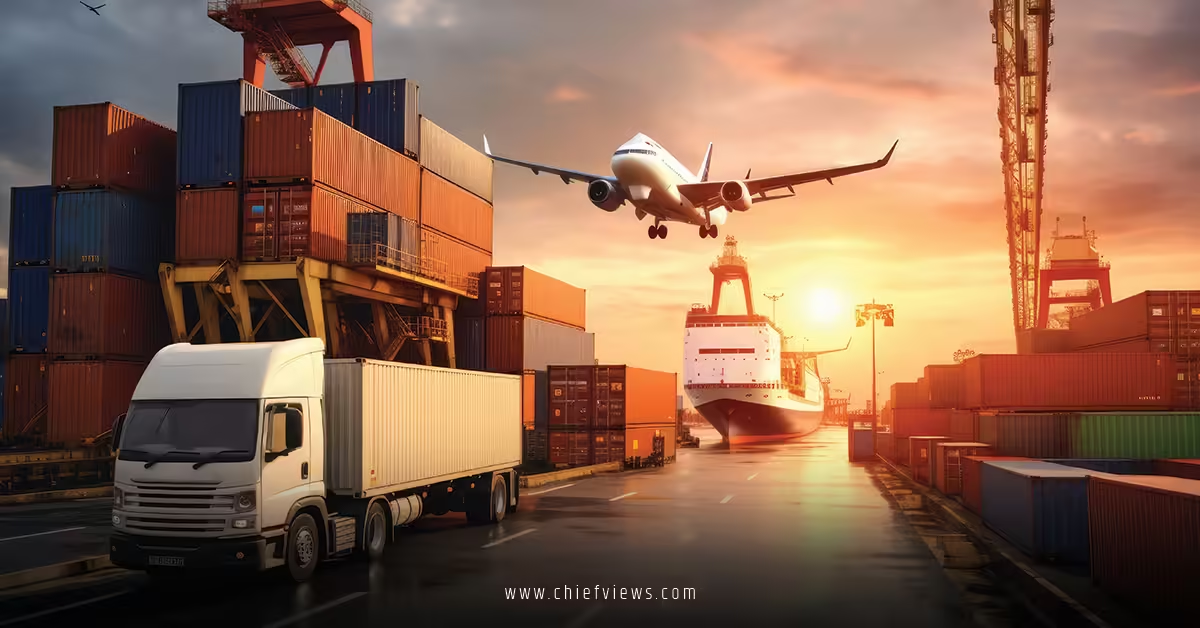
Logistics optimization follows. Algorithms juggle routes, fuel prices, traffic, and carrier availability in real time. One major operator saw substantial fuel and distance reductions through AI routing. COOs love this because it scales across global networks without proportional headcount increases.
How COOs optimize supply chain with AI automation also shines in risk management. Systems scan for weak links in supplier networks, predict delays from port congestion, or flag quality issues early. Lenovo built its Supply Chain Intelligence platform to consolidate data and use AI for real-time risk spotting and resolution. It turned fragmented information into actionable intelligence.

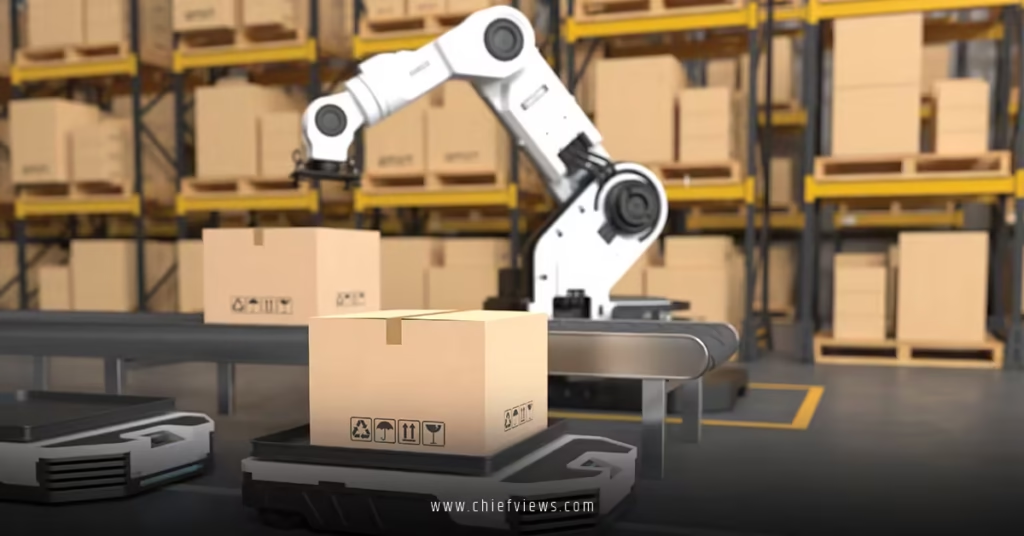
Warehousing gets smarter too. Robots guided by computer vision handle picking and sorting with high accuracy. DHL’s deployments of collaborative bots boosted sorting capacity significantly while maintaining precision.
Key Technologies Driving Change
COOs focus on practical tools, not hype.
Predictive analytics and machine learning: Core for forecasting and maintenance. They spot patterns humans miss.
Generative AI: Excels at document processing, scenario planning, and natural language queries. Leaders use it to summarize reports or simulate “what-if” disruptions.
Agentic AI: The game-changer in 2026. These autonomous agents handle end-to-end tasks like reordering stock or rerouting shipments within defined rules. They escalate only when needed.
IoT and digital twins: Sensors feed live data into virtual models of the entire chain. COOs run simulations before making physical changes.
Integration matters most. Successful implementations connect these to existing ERP and TMS systems rather than building silos.
How COOs Optimize Supply Chain with AI Automation: A Step-by-Step Action Plan
Beginners and intermediates can follow this practical roadmap. Start small. Scale fast.
- Assess and Prioritize: Map your current pain points. High inventory carrying costs? Frequent stockouts? Supplier delays? Rank them by business impact. Audit data quality—AI fails without clean inputs.
- Build Foundations: Clean and integrate data sources. Many COOs start here. Poor data kills projects. Invest in governance early.
- Pilot One High-Impact Area: Pick demand forecasting or route optimization. Set clear KPIs like forecast accuracy or on-time delivery. Run for 3-6 months. Measure everything.
- Select Partners and Tools: Evaluate platforms from established players like Blue Yonder, Kinaxis, or cloud providers with strong supply chain modules. Test integration capabilities.
- Train and Change Manage: Involve teams from day one. Focus on augmentation—AI handles drudgery so people focus on exceptions and strategy. Upskill planners on interpreting outputs.
- Scale and Monitor: Expand winning pilots. Implement continuous monitoring with human oversight. Agentic systems need guardrails.
- Iterate with Governance: Establish AI ethics, bias checks, and compliance. Review ROI quarterly.
What I’d do if stepping into a new role? I’d run a quick maturity assessment first, then launch two parallel pilots—one in planning, one in execution—to build momentum and internal proof.
Comparison of Traditional vs. AI-Driven Supply Chain Approaches
| Aspect | Traditional Approach | AI Automation Approach | Expected Gains (Mature) |
|---|---|---|---|
| Demand Forecasting | Manual, historical averages | ML models with real-time signals | 20-50% better accuracy |
| Inventory Management | Periodic reviews, safety stock buffers | Dynamic optimization, predictive rebalancing | 20-35% reduction |
| Logistics Routing | Static schedules, dispatcher judgment | Real-time optimization with variables | 5-20% cost cut, faster delivery |
| Risk Detection | Reactive, after disruption | Predictive alerts from multi-source data | Faster resolution, fewer impacts |
| Exception Handling | Manual triage | Agentic AI handles routine, escalates complex | 60%+ autonomous decisions |
| Document Processing | Labor-intensive | Gen AI auto-generates and validates | Up to 60% time reduction |
This table highlights why COOs shift aggressively. The gap widens every quarter.
Common Mistakes & How to Fix Them
Even seasoned leaders trip up. Here’s what usually happens.
Mistake 1: Boiling the ocean. Trying every use case at once. Fix: Start narrow. Prove value in one area, then expand.
Mistake 2: Ignoring data quality. Fancy models on garbage data produce garbage. Fix: Dedicate resources to cleansing and integration first. Lenovo succeeded by unifying data architecture early.
Mistake 3: Underestimating change management. Tech deploys, but people resist. Fix: Involve operators early. Train on collaboration, not replacement.
Mistake 4: No clear governance. Shadow AI pops up uncontrolled. Fix: Set policies, audit regularly, and measure beyond simple ROI—include resilience metrics.
Mistake 5: Expecting instant perfection. Models drift. Fix: Build feedback loops and regular retraining.
The fix is always the same: Treat AI as a journey requiring executive sponsorship, cross-functional buy-in, and relentless focus on business outcomes.
Real-World Wins from Leaders
DHL stands out. Their AI initiatives in routing, warehousing, and document handling deliver measurable efficiency and sustainability gains. One routing optimization effort cut distance and emissions significantly.
Lenovo’s Supply Chain Intelligence platform integrates data across the enterprise. It predicts issues and suggests fixes in real time, building resilience against global shocks.
These aren’t outliers. Companies with mature AI supply chains report higher profitability.
For deeper reading on implementation frameworks, check Gartner’s supply chain AI roadmap. Explore McKinsey’s insights on gen AI in operations. And review Deloitte’s take on modern supply chain AI.
Key Takeaways
- How COOs optimize supply chain with AI automation starts with clear priorities and clean data.
- Predictive capabilities turn uncertainty into foresight.
- Agentic systems drive autonomous operations while humans steer strategy.
- Phased pilots deliver quick wins and build confidence.
- Human-AI collaboration beats full replacement—focus on augmentation.
- Governance prevents risks around bias, security, and drift.
- Measurable ROI appears in cost savings, service levels, and resilience.
- Continuous iteration keeps the edge as technology evolves.
Here’s the thing: Supply chains will keep getting more complex. AI automation levels the playing field for those who act decisively.
Ready to move? Audit one process this week. Identify where delays or excess costs hide. Then explore a targeted pilot. The organizations pulling ahead aren’t waiting for perfect conditions—they’re building them.
FAQs
How do COOs optimize supply chain with AI automation without massive upfront investment?
Start with cloud-based tools and focused pilots in high-pain areas like forecasting or routing. Many platforms offer modular implementations that integrate with existing systems, delivering returns within months.
What skills do teams need when adopting AI for supply chain?
Planners should learn to interpret AI recommendations, manage exceptions, and provide feedback. Data literacy and domain knowledge matter more than coding. COOs often invest in targeted upskilling rather than hiring entirely new roles.
How COOs optimize supply chain with AI automation while managing risks like data privacy?
Implement strong governance from the start—choose compliant platforms, anonymize sensitive data where possible, and maintain human oversight for critical decisions. Regular audits and clear policies keep things secure and ethical.