




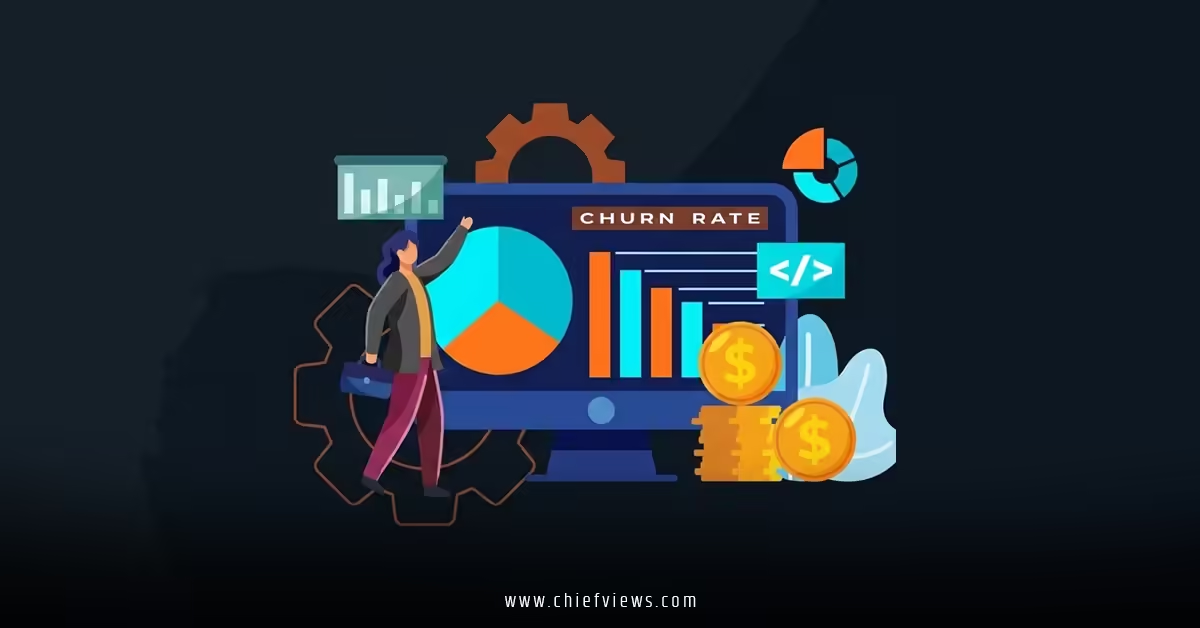
How to reduce churn in SaaS in 2026 isn’t just a nice-to-have—it’s the difference between thriving and merely surviving in today’s hyper-competitive landscape. Picture this: you’ve poured blood, sweat, and countless marketing dollars into acquiring customers, only to watch them slip away quietly after a few months. Frustrating, right? But here’s the good news: with smarter strategies, proactive moves, and a laser focus on value delivery, you can flip the script. Churn rates are stubborn, but they’re not unbeatable. In fact, even a modest drop in churn can supercharge your revenue growth exponentially.
In 2026, SaaS companies face evolving challenges—rising customer expectations fueled by AI advancements, tighter budgets, and more options than ever. Average annual churn hovers around 3.8% to 5% for B2B SaaS, with some segments pushing higher for SMBs. The top performers? They’re keeping it under 3%. So, how do you join them? Let’s dive deep into actionable, up-to-date ways to tackle how to reduce churn in SaaS in 2026 head-on.
Understanding Churn: Why It Happens and Why 2026 Is Different
Before we jump into fixes, let’s get real about the enemy. Churn isn’t random—it’s a symptom. Customers leave when they don’t see ongoing value, when onboarding feels like a slog, or when a competitor swoops in with a shinier promise.
In 2026, new culprits emerge. Economic pressures make buyers scrutinize every subscription. AI tools promise hyper-personalization, so generic experiences stand out like a sore thumb. Plus, with more AI-native products, users expect smarter, adaptive software that anticipates needs.
Voluntary churn (they choose to leave) often ties to poor perceived ROI, while involuntary churn (payment failures) sneaks up quietly. The fix? Treat churn as preventable through data, empathy, and relentless focus on outcomes.

How to Reduce Churn in SaaS in 2026: Core Strategies That Actually Work
Let’s get practical. These aren’t fluffy ideas—they’re battle-tested approaches adapted for today’s realities.
Nail Onboarding: The First 90 Days Are Make-or-Break
Ever heard the saying, “The first impression is the last impression”? In SaaS, the first 14-90 days decide everything. Most churn hits early because users never hit that “aha” moment.
In 2026, make onboarding personalized and interactive. Use in-app guides, checklists, and role-based paths. For example, segment users by job title or use case—marketers get different flows than developers.
Pro tip: Track the “retention point”—the feature combo that predicts long-term stickiness. Guide users there fast with proactive nudges. Companies doing this see massive drops in early churn. Imagine turning confused sign-ups into delighted advocates overnight. That’s the power of stellar onboarding in how to reduce churn in SaaS in 2026.
Leverage AI and Predictive Analytics for Proactive Intervention
AI isn’t hype anymore—it’s your churn-killing secret weapon. In 2026, predictive tools analyze usage patterns, sentiment, and health scores to flag at-risk customers weeks before they leave.
Tools with AI-driven churn prediction achieve up to 25% reductions in high-performing cases. Set up alerts for declining logins, feature drop-offs, or negative sentiment in support tickets. Then, trigger personalized outreach: a custom email, a success manager call, or an in-app tip.
Think of it like a doctor spotting symptoms early. Why wait for the patient to flatline? Use AI to intervene with context-aware recommendations, boosting engagement and loyalty.
Build Customer Health Scores and Monitor Usage in Real Time
No crystal ball? Build one. Customer health scores combine quantitative (usage frequency, feature adoption) and qualitative (NPS responses, support interactions) data.
In 2026, real-time monitoring is non-negotiable. Set triggers for red flags—like usage plateaus—and automate responses. Low engagement? Send a value-reinforcing email series. High potential? Pitch an expansion.
This data-driven approach turns reactive firefighting into proactive nurturing. It’s one of the smartest ways to master how to reduce churn in SaaS in 2026.
Gather and Act on Customer Feedback Relentlessly
Customers don’t churn without reasons—they just don’t always tell you upfront. Close the loop with regular feedback.
Use in-app surveys, post-interaction NPS, and exit interviews. But don’t stop at collecting—act fast. Share wins from feedback (“You asked for X, we built it!”) to build trust.
In 2026, blend feedback with usage data for deeper insights. Ask open-ended questions: “What’s one thing holding you back?” Then, prioritize fixes that impact retention most.
Personalize Experiences and Drive Feature Adoption
Generic blasts are out. Personalization is in—big time. Tailor communications, recommendations, and even UI elements based on behavior.
Push underused features with targeted tutorials or success stories. Celebrate milestones to reinforce value.
Analogy: Treat your product like a personal trainer. It adapts to the user’s goals, not a one-size-fits-all routine. This keeps engagement high and churn low.
Strengthen Customer Success and Executive Relationships
Don’t leave retention to chance. Invest in dedicated customer success teams that run Quarterly Business Reviews (QBRs) or Executive Business Reviews (EBRs).
Tie your product’s value to the customer’s KPIs. Involve multiple stakeholders to avoid “champion churn” when one contact leaves.
Proactive check-ins show you care. In tough times, this loyalty pays dividends.
Optimize Pricing, Contracts, and Cancellation Flows
Pricing misalignments cause churn. Offer flexible plans, but push annual contracts for stability— they often lower churn significantly.
For cancellations, use “save” flows: ask why, offer alternatives, or pause subscriptions. Many users reconsider.
In 2026, experiment with outcome-based pricing where fees tie to results—aligning incentives perfectly.
Foster Community and Continuous Education
Build a community forum or user group. Customers help each other, feel belonging, and stick around longer.
Provide ongoing education: webinars, tip newsletters, or knowledge bases. Educated users extract more value.
Advanced Tactics for 2026: Staying Ahead of the Curve
- AI-Powered Personalization at Scale — Use generative AI for custom content and support.
- Outcome-Focused Selling — Shift from features to results customers achieve.
- Reduce Involuntary Churn — Automate dunning for failed payments.
- Segment Ruthlessly — Tailor strategies by customer type (enterprise vs. SMB).
Conclusion: Take Action Now to Master How to Reduce Churn in SaaS in 2026
Reducing churn isn’t a one-time project—it’s an ongoing obsession. By obsessing over onboarding, leveraging AI for predictions, personalizing relentlessly, and listening deeply, you turn customers into lifelong partners. Start small: audit your onboarding this week, set up a basic health score, and reach out to at-risk accounts. The payoff? Healthier revenue, happier customers, and a business built to last.
You’ve got this. Now go make 2026 the year churn becomes your competitor’s problem.
For more on retention metrics, check out Baremetrics on reducing SaaS churn. Learn about benchmarks from Vena Solutions SaaS churn report. Explore AI tools at G2’s AI in churn reduction insights.
FAQs
What is the average churn rate in SaaS in 2026, and why does it matter for how to reduce churn in SaaS in 2026?
Average annual churn sits around 3.8-5% for B2B SaaS. High churn kills growth since replacing lost customers costs 5-25x more than retaining them. Mastering how to reduce churn in SaaS in 2026 directly boosts profitability.
How quickly can I see results from strategies on how to reduce churn in SaaS in 2026?
Many see drops in 3-6 months by fixing onboarding and adding proactive interventions. Early wins often come from the first 90 days—focus there for fastest impact in how to reduce churn in SaaS in 2026.
Does AI really help with how to reduce churn in SaaS in 2026?
Absolutely. AI predicts risks with high accuracy and enables personalized outreach, leading to reductions up to 25%. It’s a game-changer for proactive retention in how to reduce churn in SaaS in 2026.
What’s the biggest mistake companies make when trying to reduce churn in SaaS in 2026?
Being reactive instead of proactive. Waiting for cancellations means it’s often too late—shift to prevention through data and engagement.
How does onboarding impact how to reduce churn in SaaS in 2026?
It’s huge. Poor onboarding causes early churn. Personalized, value-focused onboarding gets users to “aha” moments fast, slashing early attrition dramatically.