



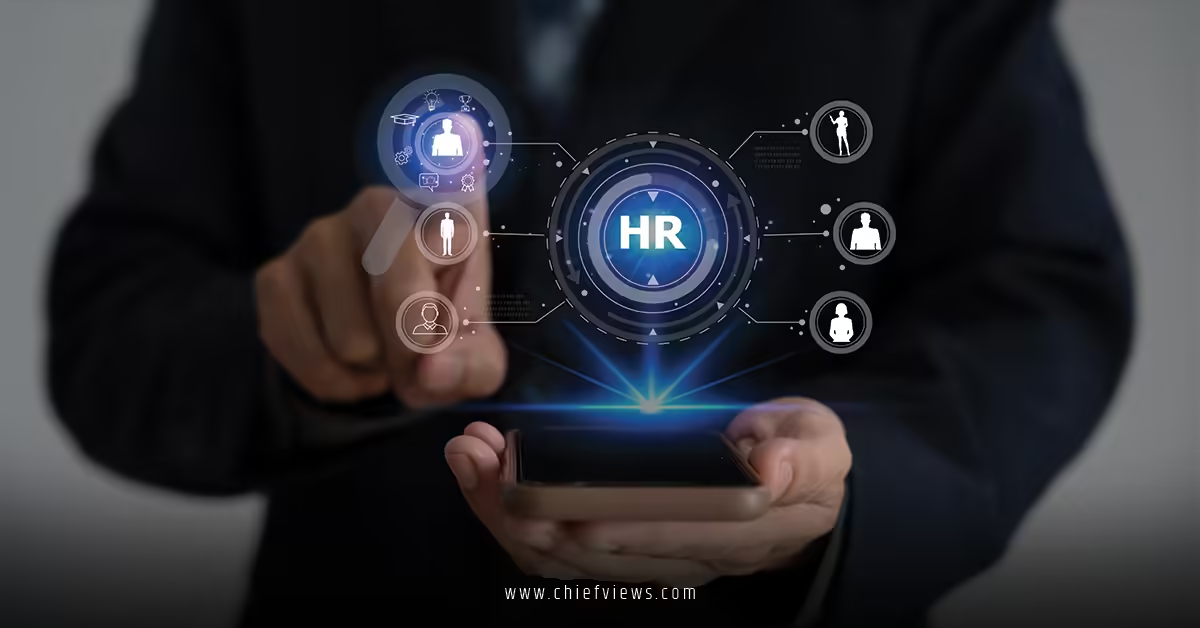
HR digital transformation for SMEs is no longer a “nice-to-have”—it’s quickly becoming a key driver of growth, productivity, and employee retention. If you’re running a small or medium-sized business, you’ve probably felt the pain of manual HR: endless spreadsheets, paper contracts, clunky payroll processes, and scattered communication. These things might work when you’re tiny, but they start to slow everything down as you grow.
You may already be investing in sales tech, marketing tools, or operations software, yet HR still lags behind. That gap can cost you good hires, damage your culture, and even expose you to compliance risk—especially in structured markets like Singapore. In this article, we’re going to be taking a look at HR digital transformation for SMEs, and how you can use it to streamline HR, support growth, and link directly into your Chief Human Resources Officer AI HR tech integration strategy. If you would like to find out more, feel free to read on.
Pic – CC0 License
What HR Digital Transformation Really Means For SMEs
Let’s strip away the buzzwords. HR digital transformation for SMEs simply means using modern, integrated technology to manage the full employee lifecycle—from hiring to offboarding—in a smarter, faster, and more reliable way.
Instead of:
- Paper forms for leave and claims
- Standalone Excel sheets for payroll and attendance
- Manual reminders for performance reviews
- Ad hoc emails and chats for onboarding
You move towards:


- A central HRIS (Human Resource Information System)
- Automated payroll and compliance tracking
- Structured performance management tools
- Digital onboarding and self-service portals
For Singapore SMEs, this also helps with handling CPF contributions, statutory leave, and fair employment practices more confidently. You take what used to be a messy back-office process and turn it into a clear, trackable system.
Why Small Businesses Should Care About HR Tech Early
We often hear owners say, “We’re still small, we’ll fix HR later.” The problem is, by the time you get to 30–50 employees, the cracks are already showing.
Here’s why starting HR digital transformation early makes sense:
- You reduce admin load
Less time spent on manual payroll, leave approvals, and chasing documents. - You improve hiring and retention
A smooth candidate and employee experience sends a strong signal about your professionalism. - You avoid compliance headaches
Digital systems help you stay aligned with labour regulations and keep proper records. - You get real data, not just gut feel
With basic analytics, you can see trends in turnover, absenteeism, and performance.
When you combine HR digital transformation with a broader people strategy, you’re setting the stage for Chief Human Resources Officer AI HR tech integration later on. You’re building the foundation that makes advanced tools actually useful.
Key Building Blocks Of HR Digital Transformation For SMEs
HR digital transformation for SMEs doesn’t happen in one big leap. It’s a set of smart moves across a few core areas:
1. A Central HR System (HRIS)
This is your hub. It should handle:
- Employee records
- Contracts and documents
- Leave and attendance
- Basic reporting
Look for cloud-based solutions that are built with SMEs in mind and adapt to Singapore payroll and compliance needs. Platforms reviewed on sites like G2’s HR software category can give you a sense of what’s common and trusted.
2. Digital Payroll And Compliance
Payroll is where errors hurt the most. A modern payroll system helps you:
- Automate salary calculations
- Handle CPF and other contributions
- Keep digital payslips and reports
- Align with local regulations
Many solutions listed by the Infocomm Media Development Authority’s digital solutions directory are designed specifically for SMEs in Singapore and can integrate with other tools.
3. Performance And Engagement Tools
Even in a small team, performance reviews and engagement matter. Simple digital tools can help you:
- Set clear goals
- Schedule regular check-ins
- Gather feedback and pulse surveys
- Track progress over time
These tools feed into your future people analytics capability, which is an important part of any Chief Human Resources Officer AI HR tech integration plan.
Connecting Digital HR To Your Growth Strategy
HR digital transformation shouldn’t be a tech project sitting in isolation. It should be directly tied to how you plan to grow your business.
Ask yourself:
- Are we planning to expand headcount quickly?
- Are we entering new markets or adding new shifts?
- Are we facing increasing turnover or burnout?
Your answers should shape where you focus first. If hiring is your biggest challenge, prioritise recruitment and onboarding tools. If retention and productivity are more pressing, focus on performance and engagement.
As you grow, your HR leader—or the person wearing the HR hat today—will naturally move into a more strategic role. That’s where linking into Chief Human Resources Officer AI HR tech integration becomes powerful. You’re not just managing admin; you’re enabling smarter decisions about people and structure.
For more strategic context, it can be useful to read perspectives like McKinsey’s insights on people and organisational performance. Even if you’re an SME, the principles around data-driven HR apply.
A Simple Roadmap For SMEs Starting HR Digital Transformation
Let’s keep this practical. Here’s a straightforward way to approach HR digital transformation for SMEs:
- Map your current HR processes
From job posting to exit interviews, write down each step and tool you use now. - Identify the biggest pain points
Is it payroll? Hiring? Tracking leave? Performance reviews? Choose the top three. - Select a foundation system first
Invest in a solid HRIS/payroll platform that can grow with you and integrate with other tools. - Add targeted modules over time
Once the foundation is stable, add recruitment, performance, engagement, or learning tools as needed. - Set basic metrics to track
Examples: time-to-hire, turnover rate, absenteeism, engagement scores, or manager feedback. - Prepare for future AI integration
As your data becomes more structured, you’ll be ready to explore AI-powered analytics, hiring support, and prediction tools that plug into your Chief Human Resources Officer AI HR tech integration roadmap.
You don’t have to do this all at once. The goal is steady movement towards more clarity, less manual work, and better insight into your people.
Common Mistakes SMEs Make With HR Tech
We’ve seen a few recurring mistakes when SMEs start their HR digital transformation:
- Buying too many tools too fast
Multiple systems that don’t talk to each other create more chaos, not less. - Ignoring change management
Even small teams need time and training to get comfortable with new systems. - Leaving data scattered
If you don’t centralise key data, future analytics and AI tools will be harder to use. - Focusing only on cost, not value
The cheapest tool isn’t always the best fit. Think about long-term support and integration.
Avoiding these pitfalls helps you build a clean, scalable HR tech stack that supports your people instead of confusing them.
Bringing HR Digital Transformation And CHRO Strategy Together
HR Digital Transformation for SMEs We hope that you have found this article enlightening in some way and that HR digital transformation for SMEs now feels like a realistic next step rather than a distant concept. As you modernise your HR systems, you’re not just removing friction—you’re laying the foundation for a more strategic HR function.
Over time, this journey naturally connects to your broader Chief Human Resources Officer AI HR tech integration ambitions. With reliable data, integrated tools, and clear processes, your HR leader can use AI-powered insights to help you make sharper decisions about hiring, performance, and workforce planning. If you approach digital transformation one step at a time, you’ll quickly see how smarter HR can translate into a stronger, more resilient business.