










Hybrid cloud models for enterprises have become the go-to architecture in 2026, blending the best of on-premises control with the explosive scalability of public clouds. If you’re a CIO navigating digital transformation, this isn’t just another trend—it’s the practical reality for most large organizations today. Picture your IT infrastructure as a high-performance sports car: the private/on-prem part gives you precise handling and security, while the public cloud turbocharges acceleration when you need to overtake the competition. In this comprehensive guide, we’ll explore why hybrid cloud models for enterprises dominate, how they fit into broader strategies like the CIO cloud migration strategy for enterprises, and actionable steps to make them work for your business.
Why Hybrid Cloud Models for Enterprises Are Dominating in 2026
Let’s cut to the chase: enterprises aren’t going all-in on public cloud anymore. According to Gartner, an astonishing 90% of organizations will adopt a hybrid cloud approach by 2027, with many already there in 2025-2026. Public cloud spending is skyrocketing to $723 billion in 2025, but the real story is how enterprises are mixing environments to balance agility, cost, and compliance.
Why the surge? Legacy systems, data sovereignty laws, and AI workloads demand flexibility. You can’t just lift-and-shift everything—sensitive financial data or healthcare records often stay private, while bursty AI training or seasonal e-commerce spikes burst into AWS or Azure. This isn’t compromise; it’s smart engineering. Hybrid cloud models for enterprises deliver the “right workload in the right place” philosophy, avoiding the pitfalls of pure public (cost overruns) or pure private (limited scale).
Core Components of Hybrid Cloud Models for Enterprises
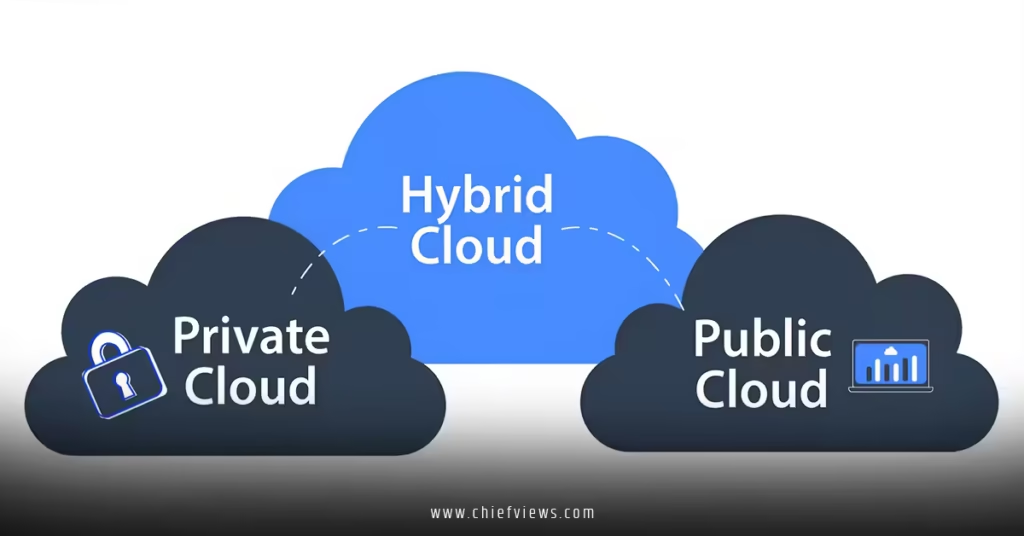
At its heart, a hybrid cloud combines private cloud (or on-premises) with public cloud resources, connected via orchestration layers for seamless management. Key building blocks include:
Private Cloud or On-Premises Foundation
This is your secure fortress—controlled environments for mission-critical apps. Tools like VMware, OpenStack, or HPE GreenLake provide the base.



Public Cloud Integration
AWS, Azure, Google Cloud—these deliver elasticity. Integration happens through APIs, VPNs, or dedicated links for low-latency.
Orchestration and Management Layer
The magic glue: Kubernetes, Terraform, or platforms like Azure Arc make workloads portable. Think of it as air traffic control directing planes between airports.
Data Synchronization and Connectivity
Tools ensure data flows securely. This is critical—Gartner highlights data sync across hybrid environments as the top GenAI challenge in 2025-2026.
Key Benefits of Hybrid Cloud Models for Enterprises
Hybrid isn’t just buzz—it’s delivering real ROI. Here’s what enterprises gain:
Unmatched Flexibility and Scalability
Run steady workloads privately, burst to public for peaks. Cloud bursting during Black Friday sales? Done seamlessly.
Enhanced Security and Compliance
Keep regulated data on-prem while using public for dev/test. Frameworks like AWS’s Data Residency Lens help meet sovereignty rules.
Cost Optimization
Pay only for what you use publicly, while avoiding over-provisioning on-prem. Many report 20-40% savings through smart placement.
Business Continuity and Disaster Recovery
Redundant setups across environments minimize downtime. If one provider hiccups, failover keeps operations humming.
AI and Innovation Acceleration
Hybrid supports edge computing for low-latency AI inference, while public clouds handle heavy training. This is huge for 2026’s AI boom.
Hybrid vs Multi-Cloud: Clearing Up the Confusion for Enterprises
People often mix these up, but they’re distinct:
- Hybrid cloud mixes private/on-prem with one or more public clouds.
- Multi-cloud uses multiple public clouds (no on-prem required), focusing on avoiding vendor lock-in.
Hybrid offers stronger control and compliance; multi-cloud maximizes best-of-breed services. Many enterprises run hybrid multi-cloud—on-prem plus AWS + Azure—for ultimate flexibility.
Which wins? Hybrid models for enterprises edge out in regulated industries (finance, healthcare), while multi-cloud shines for pure innovation plays.
Challenges in Implementing Hybrid Cloud Models for Enterprises
No rose without thorns. Common hurdles include:
Operational Complexity
Managing two worlds means dual monitoring, patching, and skills. Solution? Unified platforms like HPE or IBM tools.
Security and Governance Risks
Data moving between environments invites vulnerabilities. Zero-trust and encryption are non-negotiable.
Cost Overruns and Visibility
Without FinOps, bills explode. Regular audits and tagging help.
Skill Gaps
Teams need hybrid expertise. Training or partners bridge this.
Interoperability Issues
Legacy apps resist. Refactor strategically.
Step-by-Step Guide to Building Hybrid Cloud Models for Enterprises
Ready to implement? Follow this roadmap:
1. Assess and Strategize
Map workloads: What stays private? What bursts public? Align with business goals.
2. Choose Providers and Architecture
Pick compatible public clouds. Design for portability (Kubernetes helps).
3. Secure the Foundations
Implement identity federation, encryption, and compliance tools.
4. Migrate Incrementally
Start with non-critical apps. Use lift-and-shift, then refactor.
5. Automate and Orchestrate
Deploy CI/CD, monitoring, and auto-scaling.
6. Monitor, Optimize, Iterate
Use dashboards for cost/performance. Adjust quarterly.
This phased approach minimizes risk—exactly how successful CIOs execute their CIO cloud migration strategy for enterprises.
Real-World Success Stories of Hybrid Cloud Models for Enterprises
Take JPMorgan Chase: They use hybrid for secure banking cores on-prem while leveraging public for AI/ML. Netflix? Hybrid elements help scale globally. These giants prove hybrid drives innovation without chaos.
Future Outlook: Hybrid Cloud Models for Enterprises in 2026 and Beyond
Edge computing, sovereign clouds, and AI-driven orchestration will supercharge hybrid. Sustainability pressures favor efficient hybrid placements too. By 2027-2028, expect near-universal adoption.
In conclusion
hybrid cloud models for enterprises aren’t optional—they’re essential for thriving in 2026’s digital landscape. They offer the perfect balance of control, scale, and innovation, seamlessly extending strategies like the CIO cloud migration strategy for enterprises. If you’re still debating, start small: assess one workload today. The future is hybrid—don’t get left behind.
FAQs
What are the main differences between hybrid cloud models for enterprises and multi-cloud?
Hybrid cloud models for enterprises combine on-premises/private with public cloud(s), focusing on control and compliance, while multi-cloud uses multiple public providers for best-of-breed and anti-lock-in benefits.
How do hybrid cloud models for enterprises support AI workloads?
They enable secure on-prem data processing with public cloud scalability for training, plus edge for low-latency inference—perfect for GenAI in 2026.
What is the biggest challenge when adopting hybrid cloud models for enterprises?
Operational complexity and data synchronization across environments top the list, but unified management platforms solve this effectively.
Are hybrid cloud models for enterprises cost-effective compared to full public cloud?
Yes—many enterprises save 20-40% by keeping steady workloads private and bursting to public only when needed, avoiding over-provisioning.
How does a CIO integrate hybrid cloud models for enterprises into overall migration?
They align hybrid as the target state in the CIO cloud migration strategy for enterprises, starting with assessment and phased workload placement.


