




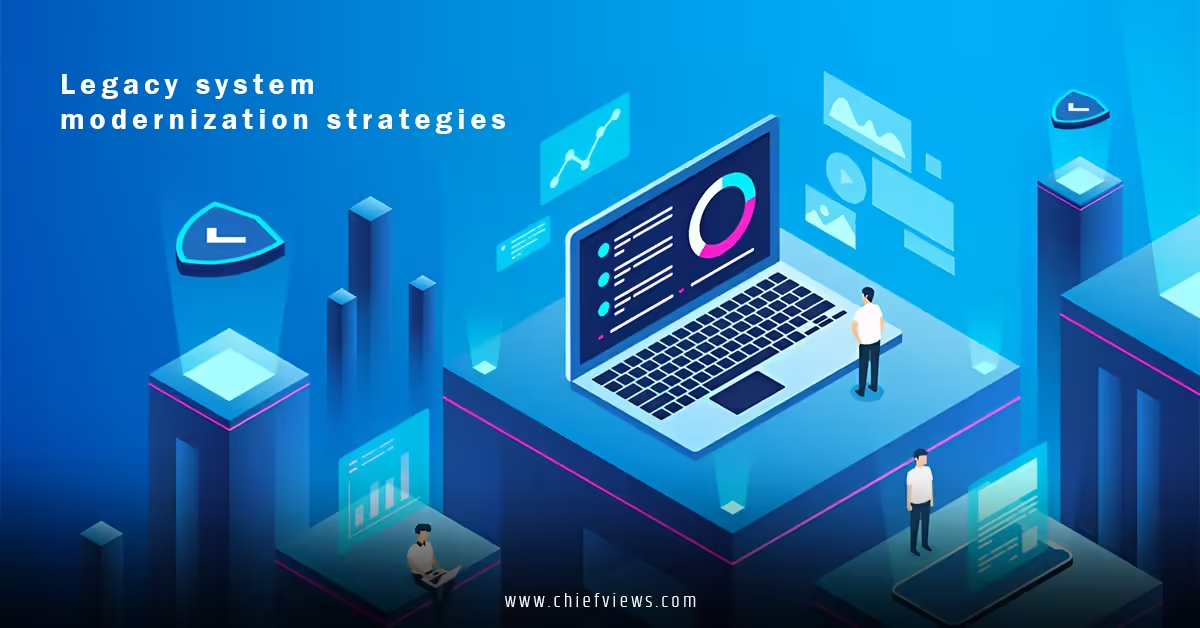
Legacy system modernization strategies for CIOs have become the cornerstone of successful digital transformation in 2026. With 70% of enterprise IT budgets still tied up in maintaining aging infrastructure, smart CIOs are finally breaking free from the “if it ain’t broke, don’t fix it” mentality that’s been bleeding their organizations dry.
Here’s the reality check: your legacy systems aren’t just old—they’re expensive, risky, and holding your business hostage.
What Legacy System Modernization Really Means
- Strategic replacement of outdated technology infrastructure with modern, scalable solutions
- Process optimization that aligns IT capabilities with current business objectives
- Risk mitigation through improved security, compliance, and disaster recovery
- Cost reduction by eliminating maintenance overhead and vendor lock-in
- Innovation enablement through cloud-native architectures and API-first design
The kicker? Most CIOs approach this like changing the engine while the car is moving at 70 mph. No wonder 60% of modernization projects fail or go over budget.
Why Legacy Systems Are Bleeding Your Budget
Let’s talk numbers. The average enterprise spends 80% of its IT budget on maintenance. That leaves just 20% for innovation.
Your mainframe from 1995 might still process payroll, but here’s what it’s really costing you:
Hidden Costs That Add Up Fast:
- Specialized talent that commands premium salaries (and is retiring)
- Extended downtime during maintenance windows
- Security vulnerabilities that increase with age
- Integration nightmares that slow every new project
- Vendor support that gets more expensive each year
I’ve seen organizations spending $2 million annually just to keep a 20-year-old ERP system running. That’s enough to fund a complete cloud migration—twice.
The Strategic Framework: 6 Modernization Approaches for CIOs
1. Lift and Shift (Rehosting)
Move applications to cloud infrastructure without changing code.
Best for: Stable applications with minimal customization needs Timeline: 3-6 months Risk level: Low Investment: $50,000-$200,000 per application
2. Replatforming (Lift, Tinker, and Shift)
Minimal code changes to optimize for cloud environments.
Best for: Applications that need better performance but work well functionally Timeline: 6-12 months
Risk level: Medium Investment: $100,000-$500,000 per application
3. Refactoring (Re-architecting)
Restructure applications for cloud-native features.
Best for: Core business applications with growth potential Timeline: 12-18 months Risk level: High Investment: $500,000-$2 million per application
4. Rebuilding
Complete rewrite using modern technologies and practices.
Best for: Mission-critical systems that are completely obsolete Timeline: 18-36 months Risk level: Very high Investment: $1-5 million per application
5. Replacing
Swap legacy systems for commercial off-the-shelf (COTS) solutions.
Best for: Non-differentiating business functions Timeline: 6-18 months Risk level: Medium Investment: $200,000-$1 million including licensing
6. Retiring
Eliminate redundant or obsolete systems entirely.
Best for: Shadow IT and duplicate functionality Timeline: 1-6 months Risk level: Low Investment: Minimal (mostly planning and data migration)
Modernization Strategy Comparison Table
| Strategy | Time to Value | Technical Risk | Business Risk | Best Use Case |
|---|---|---|---|---|
| Lift and Shift | Fast (3-6 mo) | Low | Low | Quick cloud adoption |
| Replatforming | Medium (6-12 mo) | Medium | Low | Performance optimization |
| Refactoring | Slow (12-18 mo) | High | Medium | Future-proofing core apps |
| Rebuilding | Very Slow (18-36 mo) | Very High | High | Complete transformation |
| Replacing | Medium (6-18 mo) | Medium | Medium | Standardization |
| Retiring | Fast (1-6 mo) | Low | Low | Cost reduction |
Your Step-by-Step Legacy System Modernization Action Plan
Phase 1: Discovery and Assessment (Month 1-2)
- Inventory everything. Yes, everything. Including that Access database Jim from Accounting built in 2003.
- Document dependencies. Map how systems talk to each other. You’ll be surprised.
- Assess business value. Which systems actually drive revenue or competitive advantage?
- Evaluate technical debt. Security vulnerabilities, performance bottlenecks, integration challenges.
- Calculate total cost of ownership. Include hidden costs like specialized training and vendor support.
Phase 2: Strategic Planning (Month 2-3)
- Define success metrics.What does “modernized” look like for your organization?
- Prioritize by impact. Focus on high-value, low-risk wins first.
- Choose your modernization approach for each system using the framework above.
- Plan the roadmap.Sequence projects to minimize business disruption.
- Secure executive buy-in. Present business case with clear ROI projections.
Phase 3: Pilot Implementation (Month 4-9)
- Start small. Pick a non-critical system for your first modernization project.
- Establish governance. Create clear roles, responsibilities, and decision-making processes.
- Build your team. You’ll need both legacy expertise and modern cloud skills.
- Execute with agility. Use iterative approaches and gather feedback continuously.
- Document lessons learned. What worked? What didn’t? Apply insights to future projects.
Phase 4: Scale and Optimize (Month 10+)
- Accelerate successful patterns. Double down on approaches that delivered value.
- Address integration challenges.Modern systems need to work with remaining legacy components.
- Train your organization. Users need time to adapt to new workflows and interfaces.
- Monitor and measure. Track performance against your original success metrics.
- Plan the next wave. Use proven strategies for increasingly complex systems.
Common Legacy System Modernization Mistakes (And How to Fix Them)
Mistake 1: Trying to Modernize Everything at Once
The Fix: Prioritize ruthlessly. Start with systems that deliver quick wins and build momentum.
Mistake 2: Ignoring Change Management
The Fix: Invest 30% of your project budget in training, communication, and user adoption strategies.
Mistake 3: Underestimating Data Migration Complexity
The Fix: Plan for data migration to take 40% longer than estimated. Always have a rollback plan.
Mistake 4: Choosing Technology Before Strategy
The Fix: Define business outcomes first, then select technologies that support those goals.
Mistake 5: Neglecting Security and Compliance
The Fix: Involve security teams from day one. Modern doesn’t automatically mean more secure.
Mistake 6: Assuming Cloud Equals Cost Savings
The Fix: Model total cost of ownership over 3-5 years, including training, migration, and operational costs.
Building Your Modernization Team: Key Roles for Success
Enterprise Architect Maps current state, designs future state, ensures integration coherence.
Cloud Solutions Architect Designs cloud-native architectures and migration strategies.
Legacy Systems Expert Understands existing systems deeply enough to plan safe migrations.
DevOps Engineer Implements automation, CI/CD pipelines, and infrastructure as code.
Data Migration Specialist Handles complex data transformations and ensures data integrity.
Change Management Lead Manages organizational adoption and training programs.
The sweet spot? A team of 6-8 people for most mid-size enterprises. Bigger isn’t always better when you’re trying to move fast.
Measuring Success: KPIs That Actually Matter
Technical Metrics:
- System uptime and performance improvements
- Reduction in maintenance costs
- Time to deploy new features or updates
- Security incident reduction
- API response times and throughput
Business Metrics:
- Time to market for new products or services
- Employee productivity gains
- Customer satisfaction scores
- Revenue from new digital capabilities
- Compliance audit results
Here’s the thing most CIOs miss: modernization success isn’t measured in technical specs. It’s measured in business outcomes.
Key Takeaways for Legacy System Modernization Strategies for CIOs
- Start with business value, not technology. Choose modernization approaches based on ROI and strategic importance.
- Think portfolio, not project. Plan a sequence of modernizations that build on each other.
- Invest in change management.Technology transformation fails without organizational transformation.
- Plan for hybrid environments. You’ll be running legacy and modern systems side-by-side for years.
- Measure what matters. Focus on business outcomes, not just technical achievements.
- Build internal capabilities. Don’t outsource all the knowledge—you’ll need it for ongoing operations.
- Start now. Legacy technical debt compounds daily. The best time to modernize was five years ago. The second best time is today.
The Bottom Line: Your Legacy Systems Won’t Age Like Fine Wine
Legacy system modernization strategies for CIOs aren’t just about keeping up with technology trends. They’re about positioning your organization to compete in markets where agility determines survival.
The organizations that modernize thoughtfully today will be the ones capturing opportunities tomorrow. The ones that don’t? They’ll be explaining to their boards why competitors are moving faster, serving customers better, and eating their market share.
Your next step is simple: pick one system, apply the framework above, and start building momentum. The perfect modernization plan is the one you actually execute.
Every day you wait, your technical debt grows and your competitive position weakens. Time to modernize.
Frequently Asked Questions
Q: How long does legacy system modernization typically take for CIOs to complete?
A: Legacy system modernization strategies for CIOs typically span 18-36 months for comprehensive transformation. However, you should plan to see value within the first 6-12 months through quick wins and pilot implementations.
Q: What’s the biggest risk when modernizing legacy systems?
A: Business disruption during migration is the top risk. The best mitigation strategy is running legacy and modern systems in parallel during transition periods, with comprehensive testing and rollback plans.
Q: Should we modernize in-house or hire external consultants?
A: Hybrid approach works best. Use consultants for specialized expertise and accelerated timelines, but retain internal knowledge for long-term operations and maintenance. Never outsource all modernization knowledge.
Q: How do we handle resistance from employees comfortable with legacy systems?
A: Invest heavily in change management from project start. Involve power users in design decisions, provide comprehensive training, and clearly communicate how modernization benefits their daily work. Address fears directly and honestly.
Q: What’s the typical ROI timeline for legacy system modernization?
A: Most organizations see positive ROI within 12-24 months through reduced maintenance costs and improved efficiency. Strategic benefits like faster innovation cycles and improved customer experience may take 24-36 months to fully materialize.