




Omnichannel customer journey mapping has transformed from a nice-to-have tactic into a must-do strategy for brands that want to thrive. Picture this: a customer spots your product in a social ad while scrolling on their phone, researches it on your website during lunch, asks a quick question via chat, then walks into your store to try it on and buy—all without repeating themselves or facing confusing inconsistencies. That’s the magic of effective omnichannel customer journey mapping. It turns chaotic, multi-device paths into smooth, intuitive flows that feel personal and effortless.
In today’s world, where buyers switch channels effortlessly and expect brands to keep up, mastering omnichannel customer journey mapping directly ties into stronger cmo leadership in omnichannel marketing. When CMOs lead with clear journey maps, they align teams, justify tech investments, and prove marketing’s impact on revenue. This guide walks you through everything you need to know—from basics to advanced tactics—so you can start building maps that drive real results.
What Is Omnichannel Customer Journey Mapping?
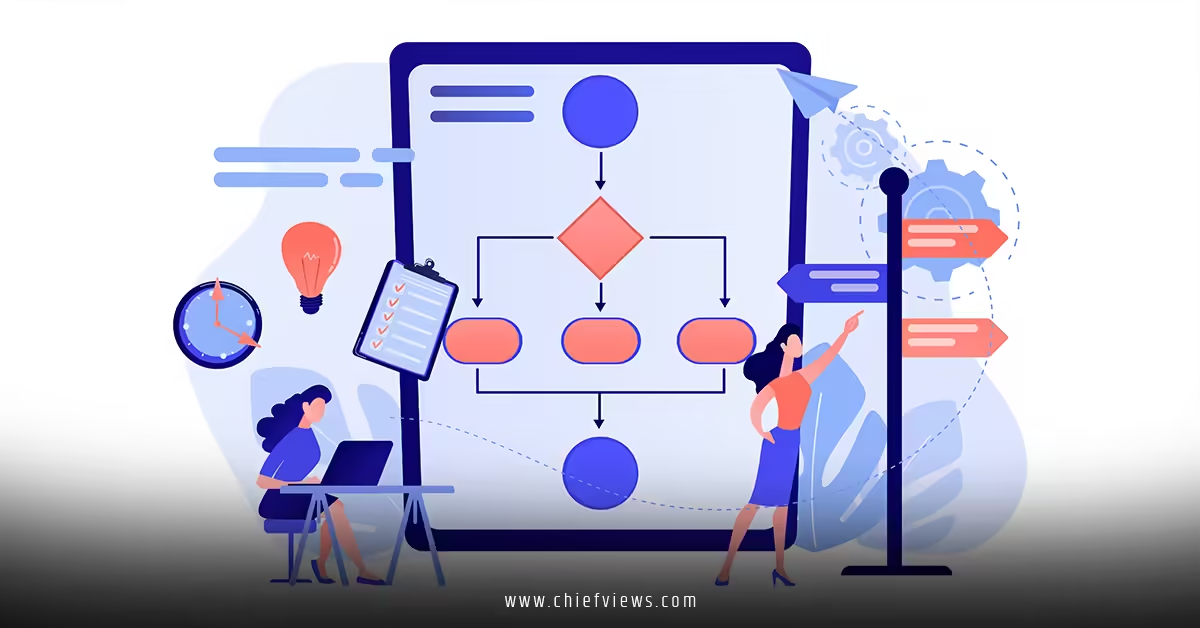
Omnichannel customer journey mapping visualizes every step a customer takes when interacting with your brand across online and offline channels. Unlike simple flowcharts, these maps capture the full story: emotions, pain points, preferences, and how channels interconnect.
Think of it as creating a detailed roadmap of the customer’s world. They don’t care about your departments or tools—they just want their experience to feel connected. A map shows where they start (maybe seeing an Instagram Reel), where friction happens (like repeating info in chat after email), and where delight occurs (receiving a personalized in-app offer right after an in-store visit).
This differs sharply from multichannel approaches. Multichannel means being present on many platforms, but often with disconnected experiences—different messaging, no shared context. Omnichannel customer journey mapping integrates everything, ensuring continuity. A customer abandons a cart online? They get a relevant reminder in-store or via SMS, picking up exactly where they left off.

Why Omnichannel Customer Journey Mapping Matters in 2026
Customers now demand seamlessness. Studies show people are willing to pay more for better experiences, and poor ones drive them away fast—sometimes after just one or two bad interactions. Brands that map journeys properly see massive gains: higher retention, increased lifetime value, and better loyalty.
Consider the numbers. Omnichannel customers tend to be far more valuable over time, with some reports showing up to 30% higher lifetime value compared to single-channel buyers. When journeys feel unified, satisfaction surges, repeat purchases rise, and advocacy grows naturally.
For leaders, omnichannel customer journey mapping strengthens cmo leadership in omnichannel marketing by providing concrete evidence. Maps highlight revenue leaks (like drop-offs between channels) and opportunities (like cross-channel personalization triggers). CMOs use them to rally cross-functional teams—IT, sales, service—and secure budgets for integration tools. In short, it’s the foundation for proving marketing drives growth, not just spends money.
Key Differences: Omnichannel vs. Multichannel Customer Journeys
Many confuse the two, but the gap is huge. Multichannel focuses on presence: email here, social there, app somewhere else. Each channel operates somewhat independently, often repeating messages or losing context.
Omnichannel customer journey mapping flips this. It prioritizes integration and continuity. Data flows between channels, so interactions build on each other. A customer starts a chat on mobile? The agent sees the full history when switching to phone support. This creates trust and efficiency.
The result? Multichannel reaches broadly but risks frustration. Omnichannel converts better because it feels thoughtful and respectful of the customer’s time.
Step-by-Step Guide to Building Your Omnichannel Customer Journey Map
Ready to create one? Follow these practical steps.
Step 1: Define Your Customer Personas
Start with who you’re mapping for. Build detailed personas based on real data—demographics, behaviors, goals, frustrations. Focus on 2-3 key segments first to avoid overwhelm.
Ask: What motivates them? Which channels do they prefer at different stages? Use surveys, analytics, and interviews for accuracy.
Step 2: Identify All Touchpoints and Channels
List every possible interaction: social ads, website visits, email opens, app notifications, in-store visits, chat support, phone calls, even packaging inserts.
Include offline and online. Map how customers switch—e.g., researching online then buying in-store.
Step 3: Outline the Journey Stages
Break the path into phases: awareness, consideration, purchase, retention, advocacy. For each, note emotions, goals, and actions.
Make it nonlinear—customers zigzag. One might jump from awareness straight to purchase via a targeted ad.
Step 4: Gather Data and Insights
Pull from multiple sources: Google Analytics, CRM, heatmaps, customer feedback, NPS scores. Look for patterns in behavior and drop-offs.
Incorporate qualitative input—interviews reveal why people abandon carts or love certain experiences.
Step 5: Visualize the Map
Use tools like Miro, Lucidchart, or specialized software (Smaply, Touchpoint Dashboard). Create a visual timeline or flowchart showing channels, emotions (via emojis or graphs), pain points, and opportunities.
Add layers: what the customer thinks/feels/does at each step.
Step 6: Identify Gaps and Opportunities
Highlight friction: repeated info requests, inconsistent pricing, slow handoffs. Spot wins: moments for personalization or proactive help.
Prioritize fixes by impact—high-friction areas first.
Step 7: Implement, Measure, and Iterate
Turn insights into actions: integrate systems, automate triggers, train teams. Track KPIs like cross-channel conversion rates, retention, CSAT.
Treat the map as living—review quarterly as behaviors evolve.
Best Practices for Effective Omnichannel Customer Journey Mapping
- Involve cross-functional teams — Marketing alone can’t do this. Bring in sales, service, IT for complete views.
- Focus on emotions — Beyond actions, capture feelings. Frustration kills loyalty; delight builds it.
- Leverage AI and automation — Use predictive tools for real-time personalization based on journey stage.
- Prioritize mobile and emerging channels — With AR try-ons and voice search rising, include them early.
- Measure holistically — Track lifetime value, not just clicks. Unified analytics reveal true omnichannel impact.
Common Challenges and How to Overcome Them
Data silos top the list—info trapped in departments. Solution: invest in customer data platforms (CDPs) for a single view.
Legacy tech resists integration. Start small with high-impact connections.
Overcomplication kills momentum. Begin with one persona or journey type.
Resistance from teams? Show quick wins—reduced support tickets or higher conversions—to build buy-in.
Tools to Supercharge Your Omnichannel Customer Journey Mapping
Popular options include:
- MoEngage or Bloomreach for journey orchestration and mapping templates.
- Sprinklr or Talkdesk for unified CX insights.
- Visual tools like Miro for collaborative mapping.
- Analytics combos: Google Analytics + CRM data.
Choose based on scale—start simple, scale up.
For deeper strategies on leading these efforts, explore cmo leadership in omnichannel marketing—it shows how CMOs turn maps into boardroom wins.
Real-World Examples of Successful Mapping
Airlines like Pegasus use mapping for hyper-personalized ads, boosting ROAS significantly. Retailers trigger in-store offers from online behavior, creating magic moments. B2B firms map long cycles across LinkedIn, email, and events for better nurturing.
These successes share one thing: they treat the map as a strategic asset, not a one-off exercise.
Conclusion
Omnichannel customer journey mapping isn’t optional—it’s the blueprint for surviving and winning in a channel-agnostic world. By visualizing every touchpoint, spotting friction, and creating continuity, you deliver experiences customers crave. This directly empowers strong cmo leadership in omnichannel marketing, turning customer insights into measurable growth.
Don’t wait for perfection. Grab one persona, sketch a basic map, and start iterating today. The brands that act now will own the future of customer loyalty. Your customers are already on multi-channel paths—make sure your brand leads them seamlessly.
FAQs
What is the main goal of omnichannel customer journey mapping?
The primary goal is to create a unified, frictionless experience by visualizing and connecting all customer touchpoints across channels, ensuring continuity and personalization.
How does omnichannel customer journey mapping support cmo leadership in omnichannel marketing?
It provides CMOs with data-driven insights to align teams, justify investments, break silos, and demonstrate marketing’s direct impact on revenue and retention.
What are the key steps in omnichannel customer journey mapping?
Start with personas, identify touchpoints, outline stages, gather data, visualize, find gaps, implement changes, and iterate regularly based on performance.
What tools are best for omnichannel customer journey mapping in 2026?
Popular choices include MoEngage for orchestration, Miro for visualization, Sprinklr for unified insights, and CDPs for data integration.
Why is omnichannel customer journey mapping better than multichannel approaches?
It focuses on integration and continuity rather than isolated presence, reducing frustration and boosting metrics like lifetime value and satisfaction.