





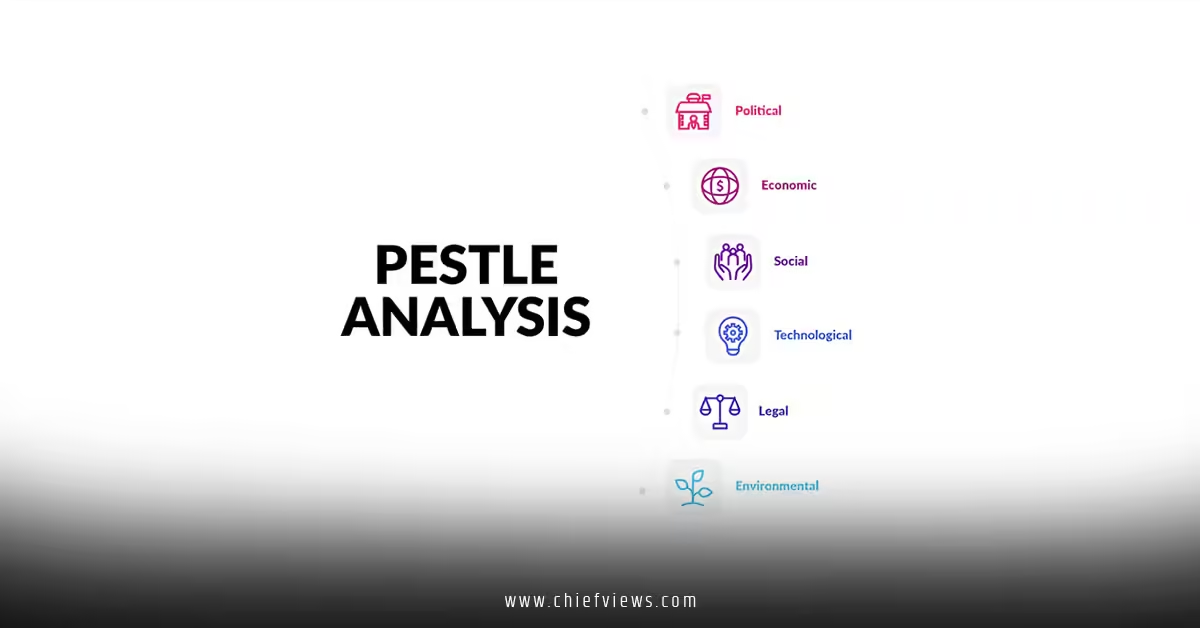
PESTLE analysis in international business is your secret weapon for navigating the wild waters of global markets. Imagine you’re a captain setting sail across oceans—without checking the weather, currents, or potential storms, you’re just asking for trouble. That’s where PESTLE comes in: Political, Economic, Social, Technological, Legal, and Environmental factors all rolled into one powerful framework. As a business leader eyeing international horizons, mastering PESTLE analysis in international business can mean the difference between smooth expansion and a shipwreck. And if you’re tying this into broader strategies, like those outlined in our guide on CXO global expansion and market entry strategy, it becomes even more potent.
Why bother with PESTLE analysis in international business? In a world where borders blur but complexities multiply, this tool helps you spot opportunities and dodge pitfalls before they hit. Whether you’re a startup dipping toes into foreign waters or a multinational fine-tuning operations, PESTLE keeps you ahead. Let’s unpack this, shall we? I’ll walk you through it conversationally, like we’re chatting over coffee, because who wants dry textbook stuff?
Understanding the Basics of PESTLE Analysis in International Business
At its core, PESTLE analysis in international business is a strategic tool that scans the external environment. It’s not some fancy acronym to throw around in meetings—it’s practical. Think of it as a health checkup for your global ambitions. You evaluate six key areas to understand how they impact your business decisions.
Why does this matter in international contexts? Domestic markets are familiar, but abroad? Everything changes. PESTLE analysis in international business forces you to think globally, adapting to diverse realities. For instance, what flies in the U.S. might flop in Asia due to cultural nuances. By incorporating PESTLE, you build resilience.
The Evolution of PESTLE Analysis in International Business
PESTLE didn’t pop up overnight. It evolved from PEST (dropping the L and E initially), gaining layers as businesses went global. In the 1960s, it was basic; now, with climate change and tech booms, it’s essential for PESTLE analysis in international business. Companies like Apple or Unilever swear by it—why? Because ignoring it led to famous flops, like Walmart’s German misadventure where cultural clashes tanked sales.
Rhetorical question: Ever wonder why some brands thrive worldwide while others retreat? Often, it’s the depth of their PESTLE analysis in international business.



Breaking Down the Components of PESTLE Analysis in International Business
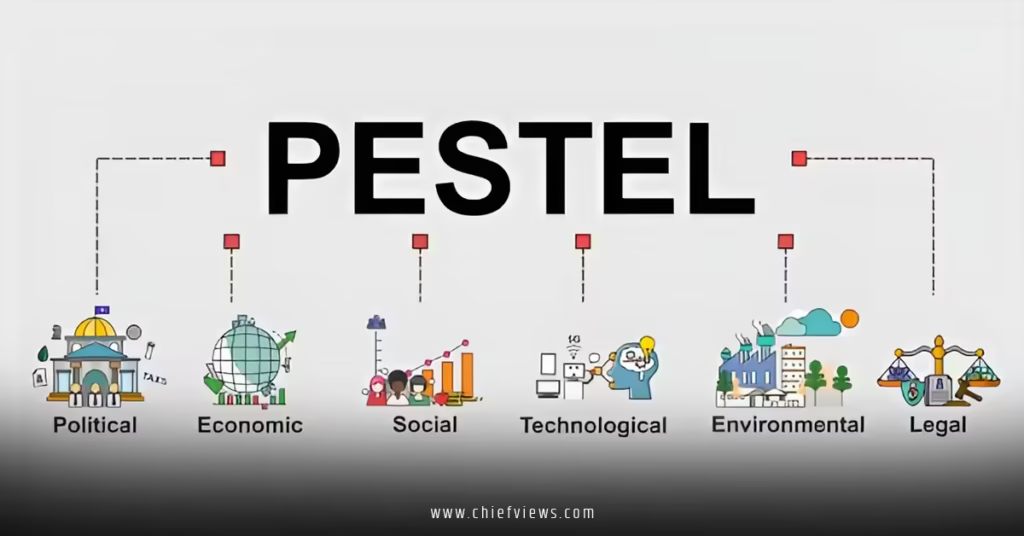
Let’s dissect PESTLE piece by piece. Each letter stands for a force that could propel or derail your international ventures. We’ll explore how they interplay in real-world scenarios.
Political Factors in PESTLE Analysis in International Business
Politics isn’t just elections—it’s trade policies, stability, and regulations. In PESTLE analysis in international business, political factors are your first checkpoint. Tariffs from trade wars? Government incentives for foreign investors? These swing doors open or shut.
Take Brexit: It reshuffled Europe’s business landscape. Companies using PESTLE analysis in international business anticipated supply chain disruptions and pivoted early. Or consider U.S.-China tensions—firms like Huawei felt the heat. As a leader, ask: Is this country stable? Are policies business-friendly? Linking back, this ties directly into CXO global expansion and market entry strategy, where political savvy is non-negotiable.
Navigating Geopolitical Risks with PESTLE Analysis in International Business
Geopolitics adds spice. Wars, sanctions, alliances—PESTLE helps map them. For example, Russia’s Ukraine conflict spiked energy costs globally. Businesses applying PESTLE analysis in international business diversified suppliers, avoiding over-reliance on volatile regions.
Economic Factors in PESTLE Analysis in International Business
Money talks. Economic factors in PESTLE analysis in international business cover GDP growth, inflation, exchange rates, and consumer spending. Emerging markets like India boom with rising middle classes, but recessions in Europe could crimp luxury sales.
Analogy: It’s like checking the fuel gauge before a road trip. Weak currencies make exports cheap but imports pricey. During COVID, economic slowdowns hit tourism hard—firms using PESTLE analysis in international business shifted to digital models swiftly.
Currency Fluctuations and PESTLE Analysis in International Business
Exchange rates can make or break profits. A strong dollar hurts U.S. exporters. In PESTLE analysis in international business, forecast these with tools like economic reports. Hedging strategies become your shield.
Social Factors in PESTLE Analysis in International Business
People power. Social factors delve into demographics, culture, lifestyles. In PESTLE analysis in international business, understanding aging populations in Japan means tailoring products for seniors, while youth bulges in Africa scream tech-savvy innovations.
Cultural blunders? Legendary. Like when a U.S. brand’s slogan translated poorly in China. PESTLE analysis in international business promotes cultural intelligence, ensuring relevance.
Demographic Shifts and PESTLE Analysis in International Business
Boomers retire, Gen Z rises. PESTLE spots trends like urbanization or health consciousness, guiding marketing. In international business, this prevents one-size-fits-all flops.
Technological Factors in PESTLE Analysis in International Business
Tech evolves fast—AI, blockchain, 5G. In PESTLE analysis in international business, assess adoption rates. Silicon Valley leads, but places like Estonia are e-gov pioneers.
Disruption alert: Uber transformed transport globally. Firms ignoring tech in PESTLE analysis in international business get left behind. Embrace it for efficiency, like automating supply chains.
Innovation Hubs and PESTLE Analysis in International Business
Where’s the next big thing? PESTLE points to regions like South Korea for K-tech. In international business, partner or invest there.
Legal Factors in PESTLE Analysis in International Business
Laws vary wildly. Labor rights, IP protection, antitrust—PESTLE analysis in international business ensures compliance. EU’s GDPR? A privacy game-changer. Non-compliance fines cripple.
Trade agreements like USMCA facilitate flows. In PESTLE, legal scans prevent lawsuits, smoothing entries.
Intellectual Property in PESTLE Analysis in International Business
Counterfeits plague China entries. Strong IP laws in the U.S. protect innovations. PESTLE guides where to patent first.
Environmental Factors in PESTLE Analysis in International Business
Green is gold. Climate change, sustainability—PESTLE analysis in international business factors in eco-regs and consumer eco-demands. Carbon taxes, plastic bans reshape industries.
Tesla thrives on green tech. Ignoring this? Backlash, like oil firms facing protests.
Sustainability Trends in PESTLE Analysis in International Business
Circular economies rise. PESTLE helps adopt green practices, appealing to eco-conscious markets.
Applying PESTLE Analysis in International Business Strategies
Theory’s great, but application wins. How do you use PESTLE analysis in international business daily?
Start with data: Reports from World Bank, IMF. Then, workshops—brainstorm impacts. Scenario planning: What if a factor changes?
In CXO global expansion and market entry strategy, PESTLE informs mode choices—like joint ventures in politically risky spots.
Case Studies: PESTLE Analysis in International Business Success Stories
Real wins: Starbucks in China adapted to social tea culture via PESTLE. Amazon’s India entry navigated legal e-com rules.
Failures too: Google’s China exit due to political censorship. Lessons? Thorough PESTLE analysis in international business.
Tools and Techniques for Conducting PESTLE Analysis in International Business
SWOT integration amps PESTLE. Software like MindManager visualizes.
Expert tips: Involve locals for insights. Update annually—world changes.
Challenges in PESTLE Analysis in International Business
Overwhelm from data? Prioritize. Bias? Seek diverse views. In dynamic markets, PESTLE must be agile.
Future Trends in PESTLE Analysis in International Business
AI enhances predictions. Post-pandemic, health factors grow. Geopolitical shifts like U.S.-China decoupling demand vigilant PESTLE.
Sustainability dominates. Digital nomads blur social lines.
Conclusion
Wrapping up, PESTLE analysis in international business is indispensable for thriving globally. From political pitfalls to environmental imperatives, it equips you to make informed moves. Integrate it into your toolkit, perhaps alongside CXO global expansion and market entry strategy, and watch your business soar. Don’t just react—anticipate. Start your PESTLE dive today; the international arena rewards the prepared.
FAQs
What makes PESTLE analysis in international business different from domestic use?
PESTLE analysis in international business accounts for cross-border variations like diverse regulations and cultures, unlike the more uniform domestic applications.
How often should companies perform PESTLE analysis in international business?
Ideally, update PESTLE analysis in international business annually or after major global events to stay relevant and proactive.
Can PESTLE analysis in international business predict market failures?
While not foolproof, PESTLE analysis in international business highlights risks, helping avoid failures by informing strategic adjustments.
What tools complement PESTLE analysis in international business?
SWOT, Porter’s Five Forces, and data analytics tools enhance PESTLE analysis in international business for deeper insights.
How does PESTLE tie into CXO strategies?
PESTLE analysis in international business directly supports CXO global expansion and market entry strategy by evaluating external factors for informed decision-making.