






Remote team management best practices have evolved dramatically since 2020, transforming from emergency pandemic protocols into sophisticated leadership frameworks. Today’s most effective managers combine structured communication systems, outcome-focused performance tracking, and intentional relationship building to create high-performing distributed teams.
The stats paint a compelling picture: organizations with well-managed remote teams report 27% higher productivity, 40% lower turnover, and 21% increased profitability compared to poorly managed remote operations. But here’s the reality—most managers are still winging it.
What separates exceptional remote team leaders:
- Structured communication rhythms: Predictable touchpoints that build trust and alignment
- Outcome-based accountability: Clear expectations focused on results, not activity monitoring
- Intentional culture creation: Deliberate efforts to build connection and shared purpose
- Technology mastery: Strategic use of collaboration tools that enhance rather than complicate work
- Adaptive leadership style: Flexibility to adjust management approach based on individual team member needs
The difference between good and great remote management isn’t about natural talent. It’s about systematic approach and consistent execution.
The Remote Management Mindset Shift
Beyond Physical Proximity
Traditional management relies heavily on visual cues and casual interactions. Remote management requires a fundamental shift from presence-based to outcome-based thinking.
Old mindset: “I need to see people working to know they’re productive.” New mindset: “I need to see results to know the team is successful.”

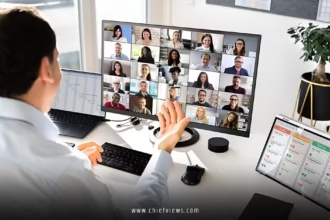
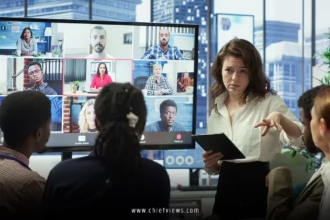
This shift affects everything from how you structure meetings to how you evaluate performance. The managers who struggle with remote teams are often those who can’t let go of proximity-based management habits.
Trust as the Foundation
Remote teams live or die on trust. Without the ability to “check in” through physical presence, managers must build systems that demonstrate and maintain trust consistently.
Trust builders in remote environments:
- Transparent goal setting and progress tracking
- Regular one-on-one check-ins focused on support, not surveillance
- Clear communication about expectations and deadlines
- Consistent follow-through on commitments and promises
- Open sharing of information and decision-making rationale
Trust killers:
- Micromanaging through excessive check-ins or monitoring software
- Inconsistent availability or responsiveness
- Unclear or changing expectations
- Lack of recognition for good work
- Poor communication about team changes or company updates
Trust isn’t built through grand gestures. It’s created through consistent, small actions that demonstrate reliability and respect.
Communication Framework for Remote Teams
The Three-Layer Communication Model
Effective remote team management requires structured communication at three distinct levels:
Layer 1: Operational Communication Daily standups, project updates, and immediate problem-solving. These interactions keep work moving and address urgent issues quickly.
Layer 2: Strategic Communication Weekly team meetings, monthly planning sessions, and quarterly goal reviews. These conversations align the team with broader objectives and ensure everyone understands priorities.
Layer 3: Relationship Communication Regular one-on-ones, team social events, and informal check-ins. These interactions build personal connections and maintain team cohesion.
Many managers focus exclusively on operational communication and wonder why their remote teams feel disconnected. All three layers are essential.
Meeting Optimization Strategies
Remote meetings can either energize teams or drain them completely. The difference lies in purposeful design and skilled facilitation.
High-Impact Meeting Types:
| Meeting Type | Frequency | Duration | Purpose | Success Metrics |
|---|---|---|---|---|
| Daily Standup | Daily | 15 mins | Coordination & obstacle removal | Issues identified & resolved |
| Weekly Team Meeting | Weekly | 60 mins | Strategic alignment & collaboration | Decisions made & next steps clear |
| One-on-One | Bi-weekly | 30 mins | Individual support & development | Employee satisfaction & growth |
| Monthly All-Hands | Monthly | 45 mins | Company updates & culture building | Information clarity & engagement |
Meeting Best Practices:
- Start with purpose: Every meeting should have a clear objective and agenda shared in advance
- Engage everyone: Use round-robin updates, breakout rooms, and interactive tools to ensure participation
- End with clarity: Summarize decisions, action items, and next steps before closing
- Respect time: Start and end on schedule; encourage async alternatives for information sharing
Asynchronous Communication Mastery
The secret weapon of exceptional remote managers? They know when not to meet.
Async-First Communication Principles: Document decisions and rationale in shared spaces. Use video messages for complex explanations that need tone and context. Create threaded discussions for topics that require input from multiple people. Reserve meetings for real-time collaboration and relationship building.
Tools That Work:
- Slack or Microsoft Teams: For quick questions and team coordination
- Loom or similar: For explanatory videos that provide context and personality
- Notion or Confluence: For documentation and knowledge sharing
- Project management tools: For transparent progress tracking and accountability
The U.S. General Services Administration’s digital strategy guidelines emphasize async-first communication for distributed government teams—principles that apply equally well to private sector remote management.
Performance Management and Accountability
Outcome-Based Performance Metrics
Traditional time-based performance indicators fail spectacularly in remote environments. Smart managers focus on outcomes, impact, and contribution rather than activity or hours worked.
Effective Remote Performance Indicators:
Quality Metrics:
- Error rates and rework requirements
- Customer satisfaction scores
- Peer feedback and collaboration ratings
- Innovation contributions and process improvements
Productivity Metrics:
- Goal completion rates and deadline adherence
- Project milestone achievement
- Problem-solving effectiveness
- Knowledge sharing and mentoring activities
Growth Metrics:
- Skill development progress
- Increased responsibility acceptance
- Cross-functional collaboration expansion
- Leadership behavior demonstration
The Art of Remote Accountability
Accountability in remote teams requires a delicate balance. Too little, and performance suffers. Too much, and you destroy trust and autonomy.
Effective Accountability Systems:
- Clear goal setting: SMART objectives with defined success criteria and deadlines
- Regular progress check-ins: Weekly updates that focus on obstacles and support needs
- Transparent tracking: Shared dashboards where everyone can see team progress
- Peer accountability: Team members supporting and challenging each other
- Recognition systems: Consistent acknowledgment of good work and achievement
Red Flags to Avoid:
- Keystroke monitoring or excessive surveillance
- Hourly check-ins or status reports
- Punishment-based accountability systems
- Comparison-based performance rankings
- Unclear or constantly changing expectations
One-on-One Excellence
Individual meetings become even more critical in remote environments. They’re your primary tool for building relationships, providing support, and maintaining alignment.
Effective One-on-One Structure:
- Personal check-in (5 minutes): How are you doing? Any challenges outside of work affecting performance?
- Work progress review (10 minutes): What’s going well? Where are you stuck? What support do you need?
- Goal and development discussion (10 minutes): Progress toward objectives, skill development opportunities, career conversations
- Feedback exchange (5 minutes): What can I do better as your manager? Any team or process concerns?
One-on-One Best Practices:
- Employee leads the agenda—you’re there to support, not interrogate
- Take notes and follow up on commitments
- Focus on coaching and development, not just status updates
- Create psychological safety for honest feedback and concerns
- Maintain consistent scheduling—don’t cancel except for true emergencies

Building Culture and Connection Remotely
Intentional Culture Creation
Company culture doesn’t happen by accident in remote teams. It requires deliberate design and consistent reinforcement.
Culture-Building Activities That Work:
Virtual Coffee Chats: 15-minute informal video calls between team members, scheduled regularly but kept casual and optional.
Shared Wins Celebrations: Weekly team highlights where members share professional and personal accomplishments.
Learning Sessions: Monthly knowledge sharing where team members teach each other new skills or share interesting discoveries.
Virtual Team Building: Online escape rooms, cooking classes, or book clubs that create shared experiences and conversation topics.
Digital Water Cooler: Slack channels or Teams spaces for non-work conversations, memes, and personal updates.
Managing Team Dynamics Remotely
Remote environments can amplify both positive and negative team dynamics. Proactive management prevents small issues from becoming major problems.
Common Remote Team Challenges:
Communication Breakdowns: Information gaps that lead to duplicated work or missed deadlines. Solution: Structured communication channels and documentation systems.
Isolation and Disconnection: Team members feeling left out or unimportant. Solution: Regular check-ins and inclusive meeting practices.
Uneven Participation: Some voices dominating while others remain silent. Solution: Facilitation techniques that ensure everyone contributes.
Time Zone Inequity: Certain team members consistently inconvenienced by meeting times. Solution: Rotating meeting schedules and async-first practices.
Recognition and Feedback Systems
Recognition becomes more important and more challenging in remote environments. You can’t rely on casual praise or visible appreciation.
Effective Remote Recognition:
- Public acknowledgment: Team meetings, company channels, or email shoutouts
- Specific feedback: Detailed comments about what was done well and why it mattered
- Growth opportunities: New projects or responsibilities as recognition for good work
- Peer nomination systems: Allowing team members to recognize each other’s contributions
- Personal thank you notes: Direct, individual messages that acknowledge specific achievements
Technology Stack for Remote Management
Essential Tools for Remote Team Leaders
The right technology stack makes remote management significantly easier. The wrong tools create frustration and inefficiency.
Communication Tools:
- Video conferencing: Zoom, Microsoft Teams, or Google Meet with reliable audio/video quality
- Instant messaging: Slack or Teams for quick coordination and informal communication
- Async video: Loom or similar for explanatory messages that need tone and context
Project Management:
- Task tracking: Asana, Monday.com, or Jira for transparent project visibility
- Document collaboration: Google Workspace or Microsoft 365 for real-time editing
- Knowledge management: Notion, Confluence, or similar for documentation and information sharing
Performance Tracking:
- Goal management: OKR tools or integrated performance management systems
- Time tracking: Optional tools for project estimation and billing (avoid surveillance)
- Feedback collection: Regular pulse surveys and 360-degree feedback systems
Security Considerations
Remote teams expand security risks significantly. According to the National Institute of Standards and Technology cybersecurity framework, remote work increases potential attack vectors by 300-400%.
Essential Security Measures:
- VPN or zero-trust network access for all company resources
- Multi-factor authentication on all business applications
- Regular security training for team members
- Device management and security policies for personal devices
- Secure file sharing and storage systems
Manager’s Role in Security: You’re not the IT department, but you are responsible for creating a security-conscious culture. This means modeling good practices, ensuring team members understand policies, and making security compliance as easy as possible.
Managing Different Personality Types Remotely
Adapting Your Style
Remote management requires more intentional adaptation to individual team member preferences and work styles than in-person management.
The Introvert Advantage: Many introverts thrive in remote environments where they can process information before responding and avoid draining office interactions. Management approach: Provide agenda items in advance, use written communication for complex topics, respect processing time.
The Extrovert Challenge: Extroverts may struggle with reduced social interaction and energy from others. Management approach: Create more opportunities for verbal processing, encourage video calls over text, provide social interaction opportunities.
The Detail-Oriented Perfectionist: These team members may struggle with ambiguous communication and unclear expectations. Management approach: Provide comprehensive written instructions, set clear deadlines and success criteria, check in regularly on progress.
The Big-Picture Innovator: May get frustrated with too much structure or detailed progress tracking. Management approach: Focus on outcomes rather than process, provide autonomy in how work gets done, engage in strategic conversations.
Motivating Remote Team Members
Motivation techniques that work in office environments don’t always translate to remote work. Understanding what drives each team member becomes even more critical.
Intrinsic Motivators in Remote Work:
- Autonomy: Control over how, when, and where work gets done
- Mastery: Opportunities to develop skills and expertise
- Purpose: Clear connection between individual work and company mission
- Recognition: Acknowledgment of contributions and achievements
- Growth: Career development and increased responsibility
External Motivators That Help:
- Flexible scheduling that accommodates personal preferences
- Professional development budgets and learning opportunities
- Career advancement paths and promotion opportunities
- Competitive compensation and benefits packages
- Equipment and workspace improvement stipends
Common Remote Management Pitfalls
Mistake 1: Over-Communicating About Process, Under-Communicating About Purpose
The Problem: Managers focus on how work should be done rather than why it matters and what success looks like.
The Fix: Start every project and goal conversation with context. Explain how this work fits into broader objectives and why it’s important. Save process discussions for when team members ask for guidance.
Mistake 2: Treating All Team Members Identically
The Problem: Applying one-size-fits-all management approaches without considering individual preferences, work styles, and life circumstances.
The Fix: Learn each team member’s communication preferences, peak productivity hours, and motivation factors. Adapt your management style accordingly while maintaining consistent standards and expectations.
Mistake 3: Neglecting Informal Relationship Building
The Problem: Focusing exclusively on work-related communication and missing opportunities to build personal connections that strengthen team dynamics.
The Fix: Schedule regular informal check-ins, create space for non-work conversation in meetings, and encourage team members to share personal updates and interests.
Mistake 4: Inconsistent Availability and Response Times
The Problem: Unpredictable communication patterns that create anxiety and inefficiency for team members.
The Fix: Establish clear availability hours, set expectations for response times to different types of communication, and communicate when you’ll be unavailable or delayed in responding.
Mistake 5: Avoiding Difficult Conversations
The Problem: Remote environments can make managers reluctant to address performance issues or interpersonal conflicts, allowing problems to fester.
The Fix: Address issues promptly through video calls, prepare thoroughly for difficult conversations, and follow up in writing to ensure clarity and accountability.
Advanced Remote Management Strategies
Cross-Functional Collaboration
Managing remote teams becomes more complex when your team members collaborate regularly with other departments or external partners.
Strategies for Cross-Functional Success:
- Shared communication channels: Include relevant stakeholders in project channels and updates
- Clear handoff processes: Document and communicate how work moves between teams
- Regular stakeholder check-ins: Proactive communication with other department leaders
- Conflict resolution protocols: Established processes for addressing cross-team issues
Managing Remote Team Performance Issues
Performance problems require even more careful handling in remote environments where context and nuance can be easily lost.
Performance Improvement Framework:
- Document specific behaviors and impacts: Focus on observable actions and measurable results
- Schedule video conversation: Never handle performance issues through text or email
- Explore underlying causes: Remote work can create new types of obstacles and challenges
- Create specific improvement plan: Clear expectations, timeline, and support offered
- Increase check-in frequency: More frequent touchpoints during improvement period
- Document everything: Written follow-up to all performance conversations
Career Development for Remote Teams
Professional development can be more challenging to manage remotely, but it’s even more important for retention and engagement.
Remote Development Strategies:
- Virtual mentoring programs: Pair team members with internal or external mentors
- Online learning stipends: Budget for courses, conferences, and certification programs
- Stretch project assignments: Opportunities to work on high-visibility or cross-functional initiatives
- Leadership rotation: Temporary leadership roles on specific projects or initiatives
- External networking support: Encourage and fund participation in industry events and communities
Measuring Remote Management Success
Key Performance Indicators
Track the right metrics to understand whether your remote management approach is working.
Team Performance Metrics:
- Goal completion rates and deadline adherence
- Quality indicators and error reduction
- Customer satisfaction and stakeholder feedback
- Innovation metrics and process improvement suggestions
Team Health Metrics:
- Employee satisfaction and engagement scores
- Retention rates and voluntary turnover
- Internal promotion and development rates
- Collaboration effectiveness ratings
Manager Effectiveness Metrics:
- 360-degree feedback from team members
- One-on-one meeting consistency and quality ratings
- Decision-making speed and clarity
- Communication effectiveness scores
Continuous Improvement Process
Remote team management requires ongoing refinement. What works today may need adjustment as teams, technology, and business needs evolve.
Monthly Review Process:
- Individual performance review: Assess each team member’s progress and satisfaction
- Team dynamics assessment: Evaluate collaboration effectiveness and relationship health
- Process efficiency analysis: Identify communication or workflow improvements
- Technology evaluation: Review tool effectiveness and identify upgrade needs
- Personal management reflection: Assess your own management effectiveness and areas for growth
Integration with Hybrid Work Models
Understanding remote team management best practices becomes even more crucial when managing teams that split time between remote and office work. Many of the challenges executives face in implementing CXO insights on hybrid work models for global teams stem from inadequate remote management capabilities.
Hybrid-Specific Considerations:
- Equity between remote and office workers: Ensure remote team members have equal access to information, opportunities, and recognition
- Meeting inclusion: Design meetings that work well for both in-person and remote participants
- Communication consistency: Maintain the same communication standards regardless of team member location
- Culture consistency: Ensure company culture reaches all team members equally
Key Takeaways
- Trust is the foundation of effective remote management — focus on building and maintaining trust through consistent actions and transparent communication
- Structure enables freedom — well-designed communication rhythms and accountability systems create space for autonomy and creativity
- Outcomes matter more than activity — shift performance evaluation from time-based to result-based metrics
- Individual adaptation is essential — tailor your management approach to each team member’s communication style, motivation factors, and work preferences
- Intentional culture building is non-negotiable — remote team culture requires deliberate design and consistent reinforcement
- Technology supports but doesn’t create good management — tools enhance effective management practices but can’t compensate for poor leadership
- Continuous improvement is necessary — remote management requires ongoing refinement and adaptation as teams and needs evolve
- Communication clarity prevents most problems — over-communicate expectations, decisions, and context to reduce confusion and conflict
Conclusion
Remote team management best practices aren’t just about adapting in-person techniques to virtual environments. They require a fundamental rethinking of how leadership, communication, and performance management work in distributed teams.
The managers who succeed in remote environments are those who embrace the unique opportunities and challenges it presents. They build stronger trust relationships, create more intentional communication systems, and focus relentlessly on outcomes rather than activity.
The investment in developing these skills pays dividends beyond remote work success. The clarity of communication, focus on results, and individual adaptation that remote management requires makes you a better leader in any environment.
Start with the fundamentals: clear communication rhythms, outcome-based accountability, and trust-building behaviors. Build from there based on your team’s specific needs and challenges.
Remote team management isn’t harder than traditional management—it’s different. Master the difference, and you’ll build higher-performing teams regardless of where they’re located.
Your team’s success depends on your willingness to evolve beyond proximity-based leadership.
Frequently Asked Questions
What are the most important remote team management best practices for new managers?
Start with three fundamentals: establish clear communication rhythms (daily standups, weekly team meetings, regular one-on-ones), focus on outcome-based performance metrics rather than activity monitoring, and invest time in building trust through consistent actions and transparent decision-making. New managers should also learn to use async communication effectively and adapt their style to individual team member preferences.
How often should I check in with remote team members?
The optimal frequency depends on experience level and project complexity. Generally, daily 15-minute standups for coordination, weekly 60-minute team meetings for strategic alignment, and bi-weekly 30-minute one-on-ones for individual support work well. Adjust based on team member preferences and performance—high performers may need less frequent check-ins, while new team members may benefit from more frequent touchpoints.
What tools are essential for managing remote teams effectively?
Core tools include reliable video conferencing (Zoom, Teams, or Google Meet), instant messaging platforms (Slack or Teams), project management systems (Asana, Monday.com, or Jira), document collaboration tools (Google Workspace or Microsoft 365), and async video communication (Loom). The key is choosing tools your team will actually use consistently rather than implementing too many solutions.
How do you handle performance issues with remote team members?
Address performance issues promptly through video calls, never text or email. Document specific behaviors and impacts, explore underlying causes (remote work can create new obstacles), create a specific improvement plan with clear expectations and timeline, increase check-in frequency during the improvement period, and follow up all conversations in writing for clarity.
What’s the biggest mistake managers make when leading remote teams?
The biggest mistake is trying to replicate in-person management techniques without adapting to remote work realities. This includes over-monitoring activity instead of focusing on outcomes, neglecting relationship building and culture creation, inconsistent communication patterns, and treating all team members identically without considering individual work styles and preferences in remote environments.