



Strategic CFO vs traditional CFO differences boil down to mindset and impact. One keeps the books balanced. The other shapes where the company heads next.
Traditional CFOs excel at compliance, accurate reporting, and cost control. Strategic CFOs sit at the strategy table, driving growth, navigating uncertainty, and turning financial data into competitive advantage.
In 2026, this shift matters more than ever. Economic swings, AI disruption, and tighter capital markets reward leaders who look ahead rather than just tally the score.
Here’s the quick breakdown:
- Traditional CFOs focus on historical accuracy and operational efficiency.
- Strategic CFOs blend finance with enterprise-wide decisions on investments, innovation, and risk.
- Companies with strategic financial leadership often move faster on opportunities and weather storms better.
- The gap shows up clearest in how each spends their time and influences the C-suite.
This evolution isn’t optional for growing businesses. It’s table stakes.
What Traditional CFOs Actually Do Day-to-Day
Picture the classic setup. A traditional CFO runs the finance machine. They own month-end closes, audits, tax filings, and banking relationships. Budgets get built. Forecasts get delivered on time. Controls stay tight.


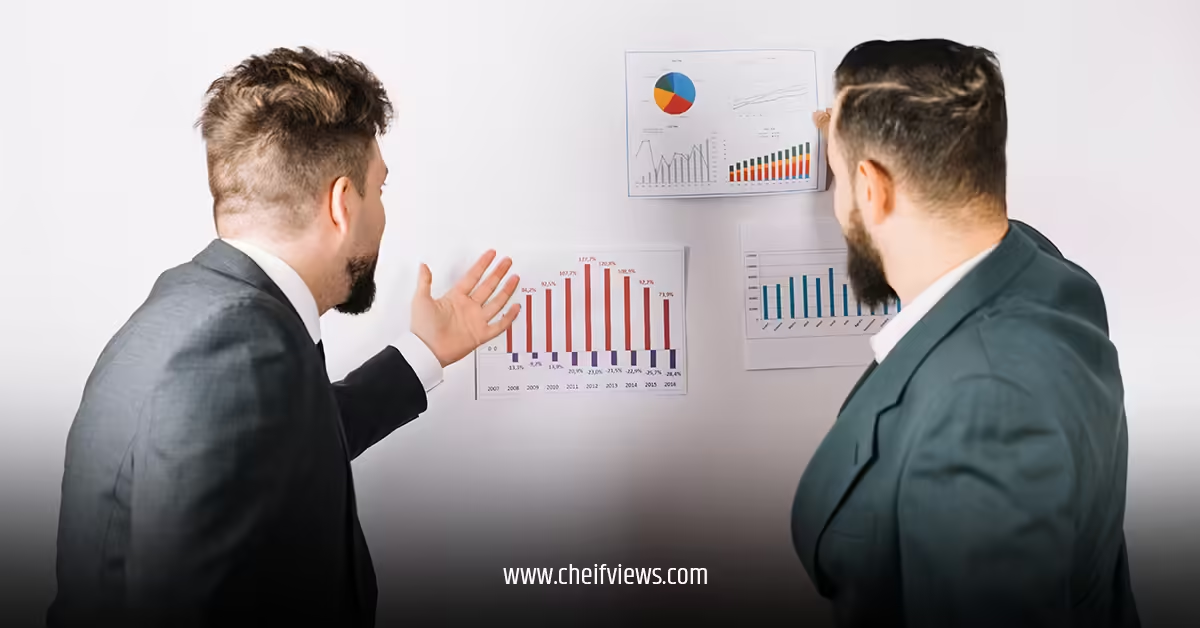
Strategic CFO vs Traditional CFO Differences:Their world revolves around “getting the numbers right.” Risk means avoiding errors or regulatory headaches. Success looks like clean audits and predictable cash flow.
Nothing wrong with that foundation. Every company needs it. But it stops short when markets shift overnight or competitors leverage new tech.
In smaller or stable firms, this approach works fine. Scale up or face volatility, and it starts feeling limiting. The CFO becomes the “no” person instead of the “how do we make this happen” partner.
How Strategic CFOs Operate Differently
Strategic CFOs still nail the basics. They just refuse to stay chained to them. They spend less time buried in spreadsheets and more time connecting dots across sales, operations, product, and markets.
They ask tougher questions: Which initiatives actually drive value? Where should we invest or cut to win in the next 18-36 months? How do we use real-time data and AI for better calls?
In practice, this means leading scenario planning, evaluating M&A targets, optimizing capital structure for growth, and even influencing pricing or go-to-market strategy. They speak the language of the entire business, not just finance.
The kicker? They build finance teams that act as internal consultants. Analysts don’t just report variances—they translate them into actionable plays for department heads.
Strategic CFO vs Traditional CFO Differences: Side-by-Side
| Aspect | Traditional CFO | Strategic CFO |
|---|---|---|
| Primary Focus | Compliance, reporting, cost control | Growth strategy, value creation, foresight |
| Time Allocation | 70-80% operations & backward-looking | Balanced; heavy on forward planning & cross-functional |
| Decision Role | Advisor on financial implications | Co-pilot shaping business direction |
| Key Metrics | Accuracy, efficiency ratios, audit scores | ROI on initiatives, market positioning, long-term value |
| Technology Approach | ERP systems, basic automation | AI analytics, predictive modeling, real-time dashboards |
| Risk Management | Defensive, rule-based | Proactive, opportunity-focused |
| C-Suite Influence | Functional expert | Enterprise strategist |
This table captures the essence. Real life blurs lines—strong traditional CFOs dip into strategy—but the emphasis defines the difference.
Why the Shift to Strategic Matters in 2026
Business moves faster now. Deloitte surveys show 57% of CFOs play a leading role in shaping strategy. Only 1% get left out of those conversations entirely.
PwC highlights CFOs as “architects of reinvention,” linking finance tightly to tech, talent, and capital allocation.
Ignore this and you risk slow decisions, missed opportunities, or watching nimbler rivals pull ahead. Embrace it and finance becomes a growth engine.
What would you rather have? A guardian of the past or a navigator for the future?
Building Strategic Finance Capabilities: Step-by-Step Action Plan
Beginners and intermediates, start here. You don’t flip the switch overnight.
- Master the Foundations First
Nail reporting, controls, and cash visibility. Without this, no one trusts you on bigger calls. Audit your current processes. Fix leaks. - Carve Out Thinking Time
Block calendar space weekly for big-picture analysis. Study your industry, competitors, and macro trends. What changes are coming? How do they hit your margins or opportunities? - Deep Dive into Operations
Shadow other departments. Understand customer acquisition costs, product profitability, supply chain realities. Finance insight without business context stays shallow. - Upgrade Your Tech Stack
Move beyond basic tools. Implement better forecasting software, visualization platforms, and AI-assisted analytics. Start small—pilot one predictive model. - Practice Storytelling with Data
Turn numbers into narratives. Present options with clear trade-offs and recommendations. Influence without authority first. - Engage the C-Suite Proactively
Bring insights unprompted. “Here’s what the latest data suggests for our expansion plans…” Volunteer for cross-functional projects. - Measure and Iterate
Track your own impact: initiatives influenced, decisions accelerated, value unlocked. Adjust based on feedback.
What usually happens is teams that follow this see their CFO (or themselves) invited into more rooms within 6-12 months.
Common Mistakes & How to Fix Them
Many leaders stumble transitioning.
- Staying Buried in Tactics: They micromanage close processes instead of delegating. Fix: Hire or promote strong controllers and build repeatable systems. Free your calendar ruthlessly.
- Lack of Business Acumen: Pure finance view misses the bigger picture. Fix: Invest time in operations immersion and external networks. Read beyond finance journals.
- Poor Communication: Great analysis, weak influence. Fix: Practice executive presence. Focus on outcomes, not just inputs. Use simple visuals and analogies.
- Ignoring Team Development: Lone wolf strategic efforts fail. Fix: Train your people to think strategically too. Turn finance into a business partner function.
- Chasing Shiny Objects: Jumping on trends without data. Fix: Tie every recommendation to clear financial and strategic logic. Test assumptions.
Strategic CFO vs Traditional CFO Differences:In my experience, the biggest trap is trying to do everything at once. Pick one or two high-impact areas—like better forecasting tied to sales pipeline—and deliver wins there first. Momentum builds from proof.
Real-World Impact and Examples
Companies embracing strategic CFOs report tighter alignment between finance and strategy. They allocate capital smarter amid uncertainty. They spot risks early while chasing upside.
For deeper reading on modern finance leadership, check PwC’s CFO insights on 2026 priorities. Or explore Deloitte’s CFO Signals for survey-backed trends. Harvard Business Review also offers strong pieces on C-suite evolution.
Key Takeaways
- Strategic CFO vs traditional CFO differences center on forward-looking leadership versus operational excellence.
- Both roles need core finance skills—the strategic version layers on business acumen, communication, and tech fluency.
- In 2026, expect AI, real-time data, and capital discipline to separate top performers.
- Beginners should focus on delegation and cross-functional knowledge.
- Avoid common pitfalls by proving value incrementally.
- The payoff? Faster decisions, stronger growth, and a seat at the strategy table.
- Finance teams that evolve become true partners, not just scorekeepers.
- Assess your current setup honestly. Where are the gaps?
Strategic finance leadership isn’t about abandoning accuracy. It’s about building on it to drive real outcomes.
The companies winning right now treat their CFO as a co-pilot, not just the accountant. Make that your north star.
Start by auditing one process or initiating one strategic conversation this week. Small moves compound.
FAQs
What are the main strategic CFO vs traditional CFO differences in daily responsibilities?
Traditional roles emphasize compliance and reporting accuracy. Strategic CFOs prioritize scenario planning, investment analysis, and cross-departmental initiatives that fuel growth while still maintaining strong controls.
Can a small business afford a strategic CFO approach?
Yes. Even without a full-time hire, fractional or part-time strategic talent can deliver big impact. Focus on high-leverage activities like cash forecasting tied to growth plans rather than building a huge team immediately.
How do you measure success in a strategic CFO vs traditional CFO role?
Traditional success looks like clean audits and on-time reports. Strategic success includes influence on key decisions, ROI on new initiatives, improved forecasting accuracy, and contributions to revenue or market positioning. Track both financial metrics and business outcomes.