




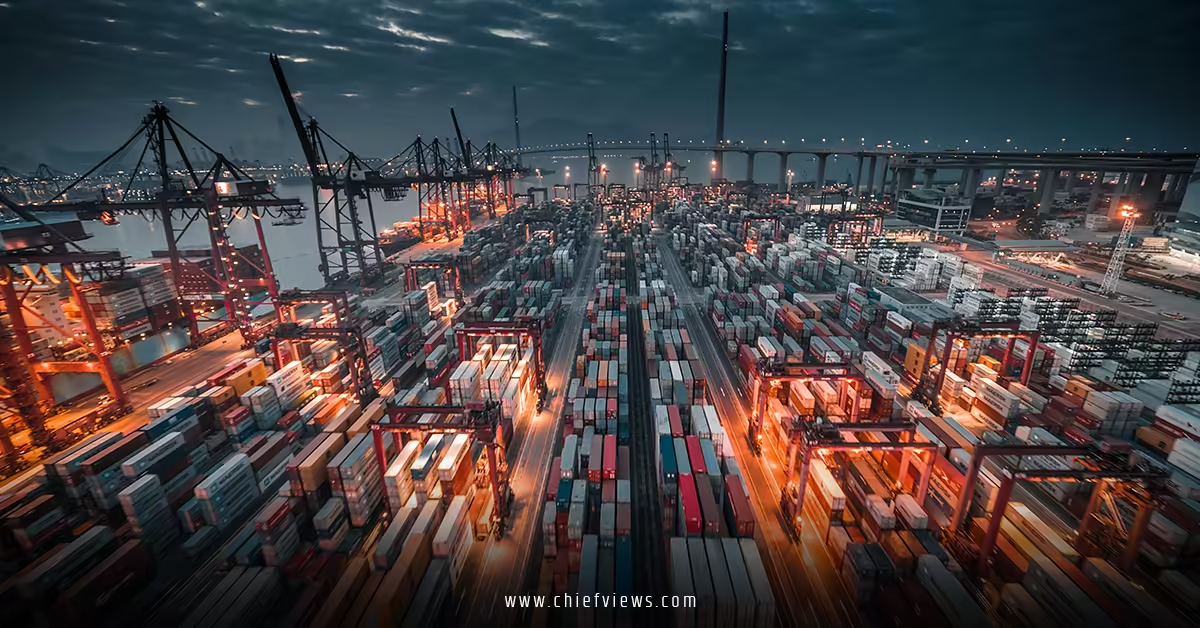
Building resilient supply chains with AI in 2026 is no longer optional. It’s the difference between riding out the next disruption or watching your operations grind to a halt while competitors pivot.
Geopolitical tensions, climate events, and demand swings hit harder and faster than ever. Old playbooks—lean inventory, single-source suppliers—crack under pressure. AI changes that. It spots risks early, reroutes flows automatically, and keeps things moving when everything else stalls.
This ties directly into balancing scalability, cost control, and innovation as COO in 2026. Smart AI use scales capacity without ballooning headcount or fixed costs. It cuts waste through better forecasting and predictive maintenance. And it drives innovation by turning data into autonomous decisions that free your team for higher-value work.
Here’s the quick overview:
- Resilience means bouncing back fast from shocks—AI predicts and mitigates them before they escalate.
- AI’s role shifts from dashboards to agentic systems that act: rerouting shipments, qualifying suppliers, adjusting inventory on the fly.
- Business impact includes double-digit efficiency gains, reduced decision time from days to seconds, and stronger margins even in volatile markets.
- COO reality — you orchestrate this balance so growth doesn’t sacrifice control or breed uncontrolled experiments.
Why Supply Chain Resilience Matters More Than Ever in 2026
Supply chains face constant fire. Surveys show most leaders expect more disruptions, yet few feel ready. AI flips the script from reactive firefighting to proactive defense.
Agentic AI—systems that don’t just recommend but execute within guardrails—leads the charge. These “digital colleagues” monitor suppliers 24/7, flag financial red flags, trace sub-tier risks, and propose fixes.



The result? Faster recovery, lower downtime, and operations that adapt without proportional cost spikes. This directly supports scalability (handle surges smoothly), cost control (avoid excess inventory or emergency shipping), and innovation (test new sourcing models quickly).
Key Ways AI Builds Resilience
AI attacks vulnerability at multiple layers.
Predictive Risk Detection
AI crunches weather data, news feeds, geopolitical signals, and supplier financials to forecast disruptions weeks ahead. No more blind spots from quarterly audits.
Autonomous Decision-Making
Agentic systems resolve routine issues without human input. Gartner predicts that by 2031, 60% of disruptions could resolve autonomously. In 2026, we’re already seeing real traction in exception handling and routing adjustments.
Digital Twins and Simulations
Create virtual copies of your entire chain. Stress-test scenarios—port closures, supplier failure, demand spikes—then optimize in advance. This builds flexibility without over-investing in buffers.
Supplier Diversification and Monitoring
AI scans millions of profiles for alternatives, assesses risks continuously, and shortens onboarding from weeks to hours. Multi-sourcing becomes practical, not painful.
Demand Forecasting and Inventory Optimization
Better signals mean right-sized stock. Reduce overstock (ties up cash) or stockouts (lost sales). Many see 20-30% inventory reductions with solid AI application.
These moves create a chain that’s strong yet lean—exactly what COOs need when balancing scalability, cost control, and innovation as COO in 2026.
Comparison: Traditional vs. AI-Powered Resilient Supply Chains
| Aspect | Traditional Approach | AI-Powered Approach (2026) | Key Benefit |
|---|---|---|---|
| Risk Detection | Periodic reviews, manual alerts | Continuous 24/7 monitoring with agentic AI | Earlier warnings, fewer surprises |
| Response Time | Days or weeks for adjustments | Seconds to minutes for routine fixes | Faster recovery, less downtime |
| Inventory Management | Static buffers based on history | Dynamic optimization with real-time data | 20-30% lower holding costs |
| Supplier Management | Tier-1 focus, annual checks | Sub-tier visibility, autonomous qualification | Broader, more reliable network |
| Scalability During Shocks | Rigid, costly expediting | Adaptive rerouting and capacity flexing | Growth without margin erosion |
| Cost Impact | High waste from over/under stocking | Targeted spend with measurable ROI | Sustainable efficiency gains |
Real-world edge comes when you connect these. One area improves another—better forecasts cut costs, which funds innovation in visibility tools.
Step-by-Step Action Plan to Build AI-Resilient Supply Chains
Start practical. No need for a full overhaul on day one.
- Assess Your Current State (Weeks 1-2)
Map vulnerabilities: single-source dependencies, data gaps, slow decision loops. Talk to planners and logistics teams—they know the pain points. - Clean and Connect Your Data (Weeks 3-6)
AI is only as good as its fuel. Prioritize unified, real-time data across planning, procurement, and execution. Fix quality issues first. - Pilot High-Impact Use Cases (Weeks 7-12)
Pick one or two: AI demand forecasting or supplier risk monitoring. Measure before-and-after on cost, speed, and disruption impact. Keep scope tight for quick wins. - Introduce Agentic Capabilities with Guardrails (Months 4-6)
Start with low-stakes automation—exception alerts, basic rerouting. Define clear rules: what AI can decide alone versus what needs human approval. - Scale and Integrate (Ongoing, Quarterly Reviews)
Expand to digital twins or end-to-end orchestration. Link to broader ops systems. Tie everything back to KPIs that reflect scalability, costs, and innovation output.
Rule of thumb: Focus on problems first, then apply the right AI level. Overkill on complex models kills adoption. Targeted tools earn trust faster.
Common Mistakes and Fixes
- Chasing shiny AI without data foundations. Fix: Nail data quality and integration before fancy agents. Garbage in, garbage out.
- Broad pilots that drain budgets with no ROI. Fix: Demand clear success metrics and sunset criteria upfront. Link to cost savings or resilience improvements.
- Ignoring the human side. Teams resist if AI feels like a threat. Fix: Position it as a co-pilot that removes drudgery. Invest in upskilling for oversight and strategic roles.
- Underestimating integration complexity. Legacy systems fight back. Fix: Plan for composable architectures that let specialized agents work together.
- Focusing only on efficiency, not resilience. Lean can break. Fix: Balance both—use AI to simulate trade-offs between cost and robustness.
In my experience, the biggest wins come when COOs treat AI as part of the balancing scalability, cost control, and innovation as COO in 2026 equation, not a separate tech project.
For proven frameworks on operational strategy, explore McKinsey’s insights on succeeding in the AI supply-chain revolution. Gartner’s predictions on agentic AI in supply chains offer forward-looking benchmarks. And Deloitte’s work on agentic supply chains highlights practical governance approaches.
Key Takeaways
- AI shifts supply chains from reactive to predictive and autonomous, especially through agentic systems.
- Resilience and efficiency can coexist—AI helps model the right trade-offs.
- Start with data quality, then targeted pilots, then guarded scaling.
- Tie every AI initiative to measurable impact on cost, scalability, and innovation.
- Human oversight remains essential; build trust through quick, visible wins.
- Continuous monitoring of sub-tier risks and dynamic optimization become table stakes.
- Quarterly reviews keep the balance alive amid changing conditions.
Conclusion
Building resilient supply chains with AI in 2026 turns volatility into a manageable variable. You gain visibility, speed, and adaptability that protect margins and support growth.
The payoff? Operations that scale smoothly, control costs intelligently, and innovate without chaos. This is core to effective COO leadership today.
Next step: Pick one pain point in your chain—forecast accuracy, supplier risk, or inventory—and run a small AI pilot this quarter. Measure ruthlessly. Adjust. Build from there.
The chains that win won’t be the biggest. They’ll be the smartest.
FAQs on Building Resilient Supply Chains with AI in 2026:
1. What does AI-driven supply chain resilience actually mean in 2026?
AI-driven resilience means using technologies like machine learning, predictive analytics, and automation to anticipate disruptions, respond faster, and maintain continuity. Instead of reacting to problems (like delays or shortages), companies predict them in advance and adjust sourcing, inventory, and logistics in real time.
2. How does AI help prevent supply chain disruptions?
AI analyzes massive datasets—weather patterns, geopolitical signals, demand trends, and supplier performance—to identify risks early. Tools powered by Predictive Analytics can forecast delays or shortages, allowing businesses to reroute shipments, switch suppliers, or adjust inventory before disruptions hit.
3. What are the key AI technologies used in supply chains today?
The backbone technologies include:
Machine Learning for demand forecasting
Natural Language Processing for supplier communication and contract analysis
Computer Vision for warehouse automation and quality control
Together, these tools create smarter, faster, and more adaptive supply chain systems.
4. Can small and mid-sized businesses realistically use AI for supply chain resilience?
Yes—but not by building everything from scratch. In 2026, many SMEs use AI-as-a-service platforms offered by companies like Amazon and Microsoft. These tools provide affordable forecasting, inventory optimization, and logistics insights without heavy upfront investment.
5. What are the biggest challenges in implementing AI in supply chains?
The main hurdles include:
Poor data quality or fragmented systems
High initial integration costs
Resistance to change within organizations
Cybersecurity risks as supply chains become more digital
Companies that succeed focus on clean data, phased implementation, and workforce training rather than trying to overhaul everything at once.