





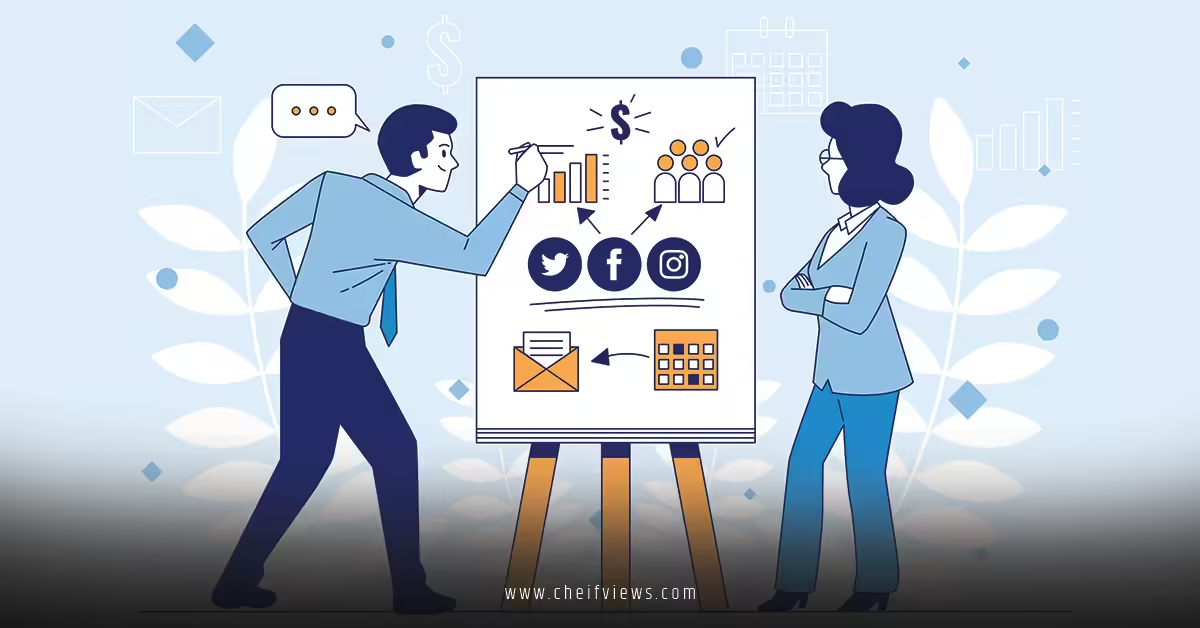
CMO CFO alignment strategies turn two historically clashing roles into a revenue-creating powerhouse. Finance wants predictable returns and cost control. Marketing wants bold bets and customer impact. Bridge them correctly, and you protect budgets, prove value, and accelerate growth. Get it wrong, and marketing stays the first line item on the chopping block.
- Shared metrics: Move beyond vanity to joint KPIs like ROMI, CAC payback, and brand-influenced revenue.
- Common language: Translate creative outcomes into financial impact.
- Regular collaboration: Monthly reviews replace surprise budget cuts.
- Unified data: One source of truth for attribution and forecasting.
- Why it matters: Strong CMO-CFO partnerships can unlock 20–40% more financial upside through better marketing efficiency and revenue growth.
In 2026, with tighter budgets and higher scrutiny, these strategies separate thriving marketing functions from shrinking ones.
Why CMO-CFO Tension Persists—and What It Costs
Only 21% of marketers feel completely aligned with their CFO on budgets and metrics. Yet 62% believe their CFO sees marketing as a measurable revenue driver.
The gap creates friction. CMOs push for long-term brand bets. CFOs demand quick ROI. The result? Underfunded campaigns, reactive cuts, and missed growth.
Here’s the thing. Both roles ultimately answer to the same goal: profitable, sustainable growth. Smart leaders treat the CFO as a strategic partner, not a gatekeeper.
What usually happens is a quarterly dance of justification. Marketing shows engagement lifts. Finance asks for incremental revenue proof. Alignment strategies short-circuit that cycle.



Core CMO CFO Alignment Strategies That Actually Work
Start with empathy. Understand the CFO’s world—cash flow, risk, enterprise value. Then show how marketing directly moves those levers.
Speak finance fluently. Frame every major initiative with expected payback period, contribution to margin, and impact on LTV.
Build joint models. Marketing Mix Models (MMM) and incrementality tests give both sides confidence in what’s working.
Create shared visibility. Unified dashboards kill dueling data sets.
Alignment Maturity Table
| Stage | Relationship Level | Key Characteristics | Revenue Impact |
|---|---|---|---|
| 1: Transactional | Low trust | Budget approvals only, separate metrics | Limited, frequent cuts |
| 2: Collaborative | Emerging | Monthly check-ins, basic ROI sharing | Moderate improvement |
| 3: Aligned | Strong | Joint planning, shared KPIs, co-owned forecasts | 20%+ uplift potential |
| 4: Strategic Partnership | High | Co-create growth plans, marketing influences P&L decisions | 20–40% financial upside |
Use this as a quick diagnostic. Where does your current relationship sit?
Step-by-Step Action Plan
Step 1: Schedule recurring business reviews. Monthly one-on-ones focused on strategy, not just status. Come prepared with financial impact updates.
Step 2: Map marketing activities to financial outcomes. Build or refine attribution that connects campaigns to revenue, not just leads. Involve finance early in the process.
Step 3: Co-develop the annual plan. Joint budget setting beats marketing proposing then defending. Align on scenarios for best/worst case.
Step 4: Implement shared tools and data. Single source of truth reduces arguments. Invest in platforms both teams trust.
Step 5: Pilot joint accountability. Take ownership for specific revenue or margin targets. Deliver, then expand scope.
Step 6: Review and adjust quarterly. Treat the relationship like any growth initiative—measure, learn, iterate.
This plan works for both beginners looking to stabilize and intermediates pushing for strategic influence.

Common Mistakes and How to Fix Them
Mistake 1: Leading with marketing jargon. Fix: Always translate to dollars, payback, and risk reduction.
Mistake 2: Springing big budget asks without prior alignment. Fix: Socialize ideas early through informal conversations.
Mistake 3: Relying on last-click or vanity metrics. Fix: Adopt multi-touch and incrementality approaches that finance respects.
Mistake 4: Treating the CFO as an obstacle. Fix: Position them as a co-pilot for growth. Ask their input on forecasts.
Mistake 5: Inconsistent communication. Fix: Establish a cadence and stick to it—even when results are mixed.
Advanced Tactics for 2026
Progressive teams now link marketing directly to customer P&L influence. They run scenario planning together and use AI for faster, more accurate forecasting.
The best CMOs also tie their work back to broader executive alignment. Strong CMO-CFO foundations make how CMOs align with CEO on brand strategy and revenue ownership far more effective.
Read the full picture in Marketing Dive’s analysis of CMO-CFO numbers. Explore EY insights on collaboration benefits. And check Analytic Partners’ four stages framework.
Key Takeaways
- Alignment starts with shared language and metrics that both roles respect.
- Treat the CFO as a growth partner, not just a budget approver.
- Unified data and regular cadences build trust fast.
- Translate marketing impact into financial terms consistently.
- Joint planning prevents defensive budget battles.
- Strong CMO-CFO ties amplify CEO-level strategy execution.
- Measure the relationship itself—maturity directly correlates to results.
- Start small with one co-owned metric or pilot.
Master these CMO CFO alignment strategies and marketing becomes a proven investment instead of a debated expense.
Ready to strengthen the partnership? Book that next meeting with your CFO. Bring one clear proposal linking a marketing initiative to a financial outcome they care about. Momentum builds from there.
FAQs
What are the most effective CMO CFO alignment strategies in 2026?
Focus on shared KPIs, unified data platforms, joint forecasting, and regular strategic reviews that connect marketing directly to revenue and margin outcomes.
How does CMO CFO alignment support broader executive goals?
It creates a solid foundation for how CMOs align with CEO on brand strategy and revenue ownership by providing the financial proof and predictability executives demand.
Can mid-level marketers influence CMO CFO alignment strategies?
Absolutely. Deliver consistent, finance-friendly reporting, suggest joint pilots, and translate campaign results into business impact language to build credibility upward.