

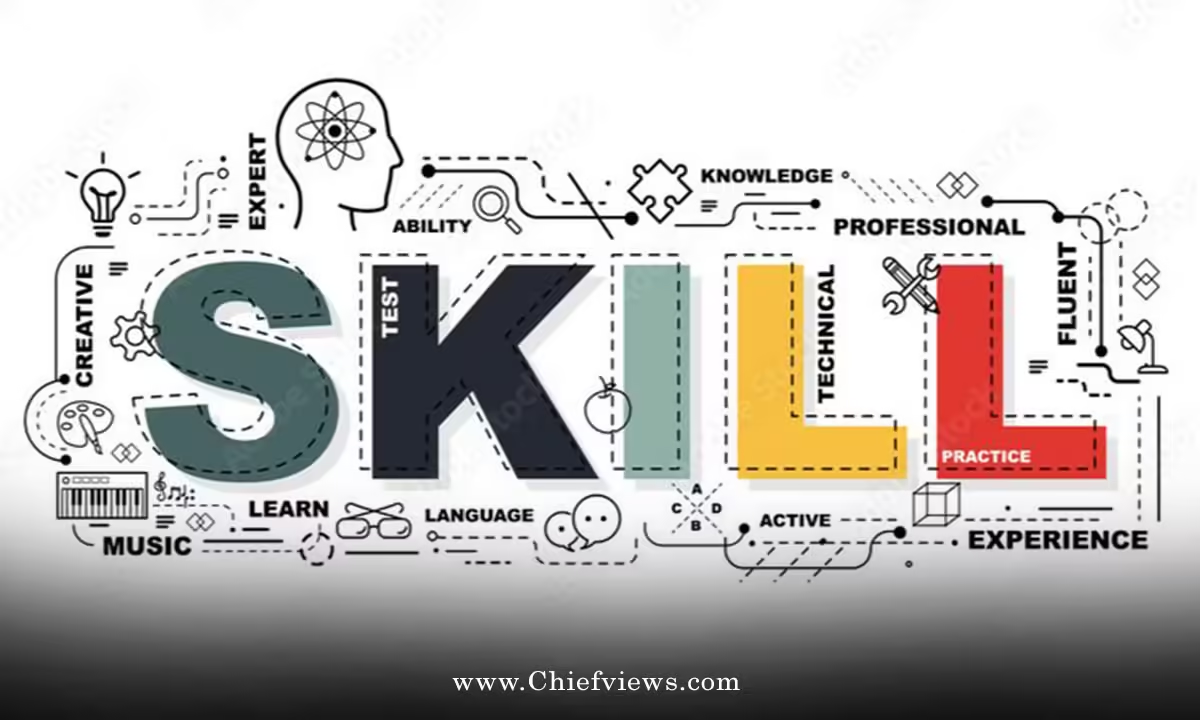
AI Skills Gap Analysis for HR Teams delivers the exact roadmap HR leaders need to stop guessing and start closing critical capability holes fast in 2026.
AI skills gap analysis for HR teams isn’t a nice-to-have exercise anymore. It’s table stakes. With AI adoption exploding across organizations, most HR departments lag dangerously behind in the very skills they’re supposed to develop in others.
- 90% of enterprises face critical AI skill shortages by 2026.
- Only about 35% of organizations feel their teams are adequately prepared.
- HR specifically struggles: 82% see AI as vital, yet skills remain a primary barrier.
Here’s the thing. HR teams that master AI skills gap analysis position themselves as strategic powerhouses instead of support functions. They turn potential chaos into competitive advantage.
Why AI Skills Gap Analysis Matters for HR Right Now
The gap isn’t just technical. It’s practical. HR professionals handle talent strategy, leadership development, and culture — all now deeply intertwined with AI.
What usually happens is organizations deploy AI tools first, then discover months later that HR can’t effectively evaluate outputs, redesign roles, or coach managers on hybrid teams.
Deloitte’s 2026 State of AI report calls the skills gap the biggest barrier to integration. IDC projects a staggering $5.5 trillion global productivity hit if unaddressed.
AI skills gap analysis for HR teams fixes this by creating a clear picture of current capabilities versus what’s needed for AI transformation success.
Skip it and you risk stalled initiatives, frustrated leaders, and talent walking out the door.
What Strong AI Skills Gap Analysis for HR Teams Looks Like in 2026
Modern analysis goes beyond annual surveys. It’s continuous, data-driven, and action-oriented.
Key areas to assess:
- AI Literacy — Understanding prompts, outputs, limitations.
- Ethical AI Judgment — Bias detection, privacy, decision accountability.
- Talent Intelligence — Using AI for skills mapping and workforce planning.
- Change Leadership — Guiding teams through AI-driven role evolution.
- Data Interpretation — Turning AI insights into people strategies.
Leaders who get this right treat skills as dynamic, not static.
Like tuning an engine while driving — you adjust in real time as speed and conditions change. Static yearly reviews don’t cut it anymore.
Step-by-Step Framework for AI Skills Gap Analysis for HR Teams
Beginners and intermediate teams can run this process effectively.
- Define Strategic Objectives
Align with business goals. What AI outcomes matter most — faster hiring, better retention, leadership readiness? - Map Current Skills
Use surveys, self-assessments, performance data, and AI-powered tools to baseline capabilities. - Identify Future Requirements
Project 6-18 months ahead. Factor in planned AI tools and role changes. - Calculate the Gap
Score proficiency levels. Prioritize high-impact gaps. - Prioritize and Plan Interventions
Create targeted learning paths, hiring strategies, or partnerships. - Implement and Monitor
Track progress monthly. Adjust based on real adoption metrics. - Review and Scale
Embed into regular HR processes. Make it continuous.
This framework turns analysis into momentum.
Comparison: Traditional vs. AI-Powered Skills Gap Analysis
| Element | Traditional Approach | AI-Powered Approach (2026) | Impact for HR Teams |
|---|---|---|---|
| Frequency | Annual or bi-annual | Continuous, real-time | Faster response to emerging needs |
| Data Sources | Surveys + manager input | Integrated HRIS, AI tools, performance data | More accurate and unbiased |
| Speed | Weeks to months | Days | Quicker action on priorities |
| Personalization | Generic training programs | Tailored learning paths | Higher engagement and retention |
| Predictive Power | Limited | Strong forecasting of future gaps | Proactive workforce planning |
AI-powered methods deliver sharper insights and better ROI.
Common Mistakes in AI Skills Gap Analysis for HR Teams (And Fixes)
Mistake 1: Focusing only on technical skills.
Fix: Balance with human skills like ethical judgment and change management.
Mistake 2: Relying solely on self-reporting.
Fix: Combine with objective assessments and observed behavior data.
Mistake 3: One-and-done analysis.
Fix: Build ongoing dashboards and quarterly reviews.
Mistake 4: Ignoring department differences.
Fix: Segment analysis by role — recruiters need different AI fluency than L&D specialists.
Mistake 5: No clear link to business outcomes.
Fix: Tie every gap to measurable results like time-to-hire or engagement scores.
Connecting to Broader Priorities
Effective AI skills gap analysis for HR teams directly supports larger CHRO priorities for AI transformation leadership development and culture in 2026. It provides the data foundation for leadership programs and culture initiatives that actually stick.
Without solid analysis, those priorities stay theoretical.
Read Gartner’s latest on HR AI strategies for additional benchmarks.
Key Takeaways
- AI skills gap analysis for HR teams is now a core strategic function.
- 90% of companies face shortages — don’t let HR be the weak link.
- Focus on both technical and human-centric AI capabilities.
- Make analysis continuous rather than event-based.
- Use insights to drive targeted upskilling and hiring.
- Link everything back to business impact and culture health.
- Start small, scale fast, measure relentlessly.
HR teams that close their own AI skills gaps first become the ones who transform the entire organization.
Your next move? Run a quick pilot assessment with your leadership team this quarter. The data will surprise you — and point the way forward.
FAQs
What are the most critical AI skills HR teams need in 2026?
Prompt engineering, ethical AI evaluation, AI-assisted talent analytics, and hybrid team leadership top the list. These enable HR to drive rather than react to transformation.
How often should HR teams conduct AI skills gap analysis?
Shift to quarterly or continuous monitoring. Annual checks miss the pace of AI evolution and leave gaps unaddressed too long.
How does AI skills gap analysis for HR teams support overall organizational goals?
It directly feeds into leadership development, culture building, and workforce planning — key elements of successful AI transformation strategies.