



CHRO Priorities for AI-Driven Workforce Transformation and Leadership Development in 2026 stand at the intersection of massive tech shifts and human realities. CHROs face pressure to turn AI hype into actual business results while keeping teams motivated and skilled.
Here’s the quick rundown:
- AI integration: Move beyond pilots to reshape HR operations and workflows.
- Workforce redesign: Blend human and machine capabilities for a “now-next” talent approach.
- Leadership readiness: Equip managers to handle uncertainty and drive change.
- Skills evolution: Focus on continuous upskilling and culture building.
This isn’t theory. It’s what separates organizations that thrive from those playing catch-up.
Why CHRO Priorities for AI-Driven Workforce Transformation and Leadership Development in 2026 Matter Now
The ground shifted fast. CEOs push aggressive AI growth targets, yet many initiatives deliver minimal value. CHROs sit in the hot seat—bridging tech ambition with people realities.
In my experience, companies that get this right see real productivity lifts without the usual morale crash. What usually happens is leaders over-index on tools and under-invest in the humans using them. The result? Resistance, burnout, and wasted spend.
The kicker? Those who treat transformation as a people-first exercise win bigger. They redesign roles around human-AI collaboration. They build leaders who orchestrate rather than command. And they create cultures where change feels exciting, not exhausting.



CHRO priorities for AI-driven workforce transformation and leadership development in 2026 demand this balanced approach. Ignore it, and your talent walks. Nail it, and you build resilience that competitors can’t copy.
Core Pillars of CHRO Priorities for AI-Driven Workforce Transformation and Leadership Development in 2026
Harnessing AI to Transform HR Operations
CHROs must build a clear HR-focused AI strategy. This goes beyond chatbots for recruiting. Think evolving the entire HR operating model.
Gartner research highlights that updating the HR model delivers the biggest AI productivity impact—around 29%. Smart CHROs start here. They automate admin drudgery so teams focus on strategy. They use AI for better talent matching and predictive workforce planning.
But here’s the thing: technology alone flops without governance. CHROs need to own ethical AI use, data privacy, and bias checks. Partner tightly with CIOs. That collaboration marks the difference between surface-level adoption and deep transformation.
Redesigning Work for the Human-Machine Era
Forget replacing people. The real game is augmentation.
CHRO priorities for AI-driven workforce transformation and leadership development in 2026 center on creating blended workforces. Identify tasks AI handles well versus those needing human judgment, creativity, or empathy.
This requires fresh job architectures. Some roles consolidate. Others expand with new hybrid responsibilities. The winners run skills audits today to spot gaps early.
| Aspect | Traditional Approach | 2026 AI-Driven Model | Expected Impact |
|---|---|---|---|
| Role Design | Static job descriptions | Dynamic, skills-based with AI augmentation | 25-40% productivity gain in targeted workflows |
| Talent Strategy | Headcount focus | “Now-Next” blended workforce planning | Better retention and agility |
| Performance Management | Annual reviews | Real-time AI insights + human coaching | Faster skill development |
| Cost Structure | Fixed labor costs | Optimized human-AI mix | Reduced routine task expenses |
This table shows the shift. Companies clinging to old models risk falling behind fast.
Building Future-Ready Leaders
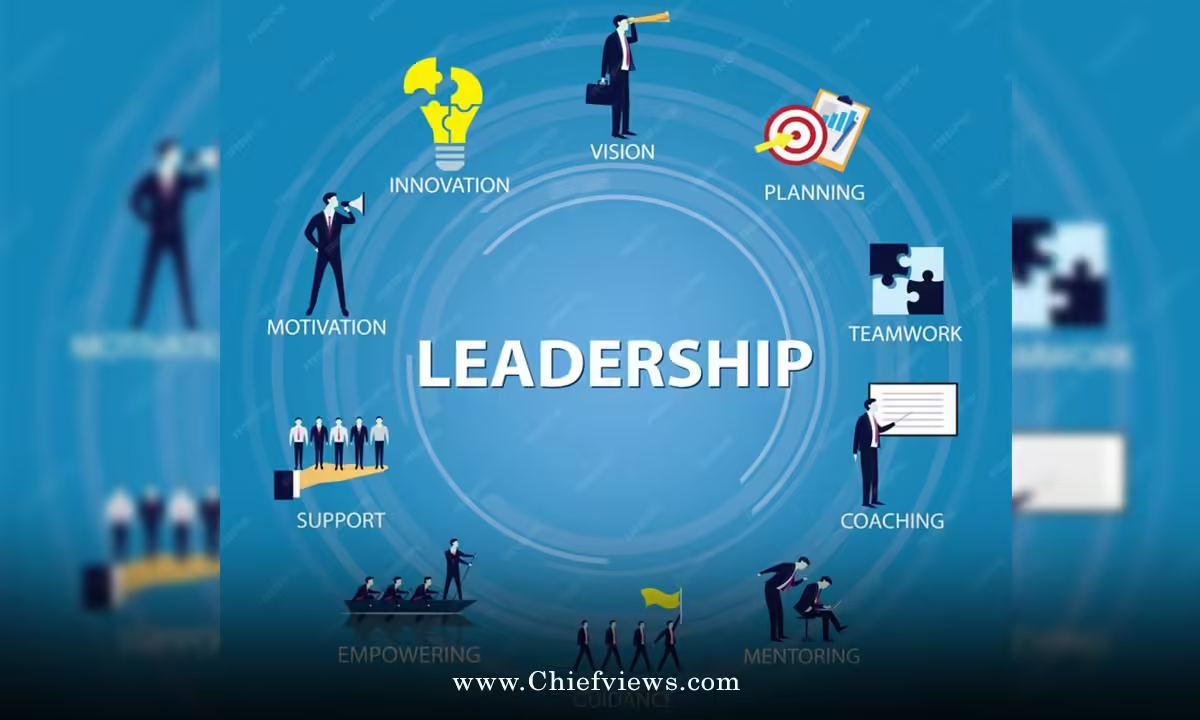
Leadership development tops CHRO lists again this year. The definition changed, though.
Leaders now orchestrate networks, not just manage hierarchies. They need AI fluency paired with emotional intelligence. They must routinize change—make adaptation a daily habit instead of a crisis response.
CHRO priorities for AI-driven workforce transformation and leadership development in 2026 include programs that simulate real scenarios. Think AI-powered coaching platforms delivering personalized feedback. Combine that with stretch assignments in cross-functional AI projects.
Ask yourself: Are your managers ready to lead teams where half the “colleagues” are intelligent agents? Most aren’t. That’s the gap to close.
Step-by-Step Action Plan for Beginners
New to this? Don’t panic. Start practical.
- Assess Current State (Weeks 1-4): Run a skills inventory. Map where AI already impacts roles. Survey employees on comfort levels.
- Build AI Literacy (Months 1-3): Launch mandatory but engaging training. Focus on practical tools first. Make it bite-sized.
- Pilot Human-AI Workflows (Months 3-6): Pick one department. Redesign 2-3 processes. Measure output, engagement, and errors.
- Develop Leadership Pipeline: Identify high-potentials. Pair them with AI mentors or tools. Create “AI change champion” roles.
- Scale and Govern: Expand successful pilots. Establish cross-functional AI ethics board. Track metrics tied to business outcomes.
- Iterate Relentlessly: Review quarterly. Adjust based on what works. Technology moves fast—your plan must too.
This isn’t a one-and-done project. It’s ongoing adaptation.
Common Mistakes & How to Fix Them
Many CHROs stumble here. They treat AI as a tech project owned by IT. Big error. HR must co-own it.
Another trap: Focusing only on executives for leadership development. Middle managers make or break adoption. Invest there heavily.
Over-promising on AI benefits creates skepticism. Be transparent about limitations. Celebrate small wins publicly.
Ignoring culture kills everything. People resist when they feel replaced instead of empowered. Communicate relentlessly: AI handles the boring stuff so humans do more meaningful work.
Fix these by starting small, involving employees early, and tying everything to clear business value.
Measuring Success in CHRO Priorities for AI-Driven Workforce Transformation and Leadership Development in 2026
Track the right things. Productivity metrics matter, but so do retention, engagement scores, and internal mobility rates.
Look at AI adoption depth—not just usage. How many workflows actively combine human and machine strengths? What’s the reskilling completion rate?
World Economic Forum reports on future of jobs offer solid benchmarks for skills evolution. Use them.
Deloitte’s Human Capital Trends provide frameworks for measuring workforce agility.
Gartner’s CHRO resources deliver peer comparisons worth studying.
Key Takeaways
- CHRO priorities for AI-driven workforce transformation and leadership development in 2026 demand integrated people and tech strategies.
- Start with HR operating model evolution for maximum impact.
- Leadership development must emphasize adaptability and AI fluency at all levels.
- Focus on augmentation, not replacement, to maintain trust.
- Skills-based approaches beat traditional headcount planning.
- Culture and governance form the foundation for sustainable change.
- Measure both hard productivity and soft engagement metrics.
- Collaboration between CHRO and CIO accelerates results.
CHRO priorities for AI-driven workforce transformation and leadership development in 2026 boil down to one truth: technology amplifies humans when leaders get the balance right. Organizations that master this create competitive moats through superior talent experiences and agility.
Your next step? Schedule that cross-functional workshop with IT and business leads. Pick one process to redesign. Momentum beats perfection every time.
FAQs
How do CHRO priorities for AI-driven workforce transformation and leadership development in 2026 differ from previous years?
They shifted from experimentation to scaled integration. The focus moved to measurable business outcomes, middle-manager enablement, and ethical governance at enterprise level.
What skills should leaders develop under CHRO priorities for AI-driven workforce transformation and leadership development in 2026?
Prioritize AI literacy, change orchestration, network leadership, and emotional intelligence. The ability to blend data-driven decisions with human judgment stands out as critical.
How can smaller organizations approach CHRO priorities for AI-driven workforce transformation and leadership development in 2026?
Start lean. Focus on high-impact areas like recruiting or customer service. Leverage accessible tools and partner with industry groups for shared learning. Scale gradually based on proven ROI.