



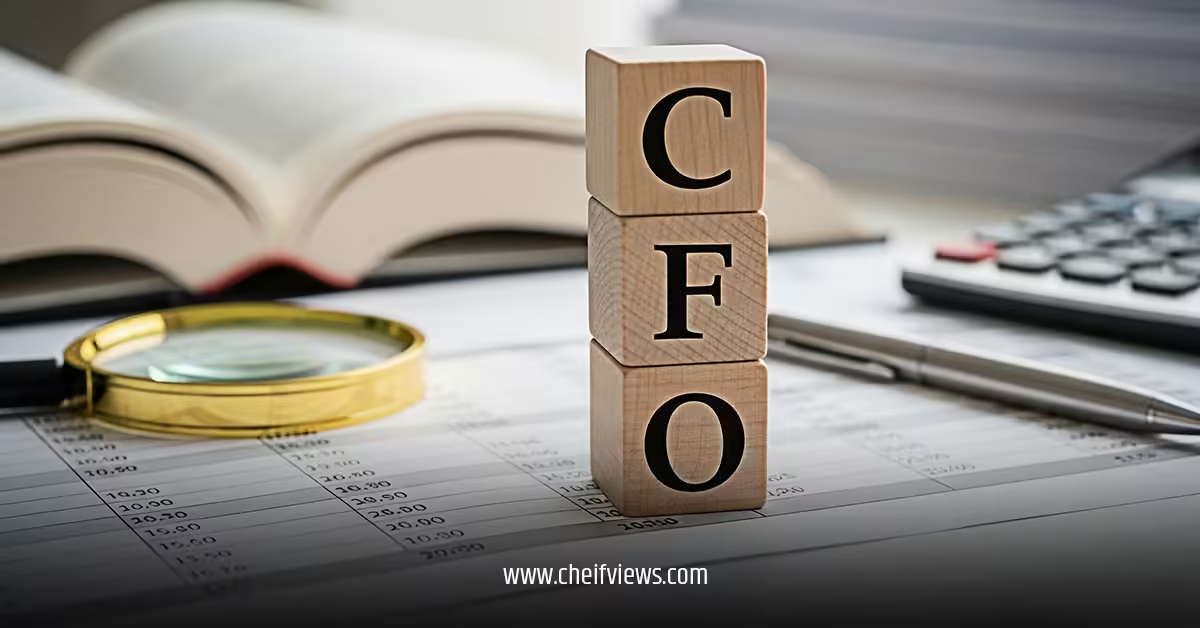
Becoming a strategic CFO changes everything. You stop being the numbers cop and start steering the company’s future.
This evolution demands more than technical chops. It requires business insight, leadership presence, and the ability to connect finance to real growth. In 2026, with AI reshaping decisions and capital harder to come by, companies crave CFOs who drive strategy instead of just reporting on it.
The shift pays off. Strategic players sit at the big table, influence major bets, and build finance teams that power the entire organization.
Here’s what it looks like in practice:
- Master core finance while expanding into strategy, tech, and cross-functional leadership.
- Transition from backward-looking reporting to forward-thinking value creation.
- Build influence through better communication and proven business impact.
- Leverage tools like AI for smarter forecasting and capital allocation.
If you’re a controller, VP of Finance, or ambitious finance leader, this path is open. It takes deliberate moves, but the payoff is a seat where you actually shape outcomes.
Why Becoming a Strategic CFO Matters Right Now
Markets reward speed and foresight. Traditional finance skills get you in the door. Strategic ones keep you relevant—and promoted.

PwC notes that top CFOs in 2026 act as architects of reinvention, linking finance tightly to strategy, technology, and talent. Deloitte surveys show finance chiefs prioritizing tech transformation and capital allocation to fuel growth.
The gap is real. Many stay stuck in compliance mode. Those who evolve become indispensable partners to the CEO and board.
Here’s the thing: You don’t need a fancy title to start acting strategically today. Small, consistent shifts compound fast.
Strategic CFO vs Traditional CFO Differences: The Foundation You Need
Before diving into the how, understand the target. Check out our deep dive on strategic CFO vs traditional CFO differences for the full comparison.
Traditional roles lock in on accuracy and controls. Strategic ones layer on foresight, influence, and enterprise thinking. Becoming a strategic CFO means deliberately bridging that gap.
Core Skills Every Aspiring Strategic CFO Must Build
Technical excellence remains non-negotiable. But it’s the baseline.
Focus on these:
- Strategic Thinking: Connect financial data to market moves, competitive threats, and growth levers.
- Data Fluency and AI Literacy: Use predictive analytics and real-time dashboards instead of static reports.
- Communication and Influence: Translate complex numbers into clear business stories that land with non-finance leaders.
- Cross-Functional Knowledge: Understand sales pipelines, product economics, operations bottlenecks, and customer dynamics.
- Leadership and Talent Development: Build and inspire teams that operate as business partners.
Wharton and Stanford programs emphasize these exact areas for emerging CFOs.
Step-by-Step Action Plan to Become a Strategic CFO
No magic shortcuts. Follow this practical sequence.
- Solidify Your Foundation
Nail the basics—reporting, controls, cash management. Audit your current processes and delegate ruthlessly. Weak execution kills credibility. - Expand Your Business Lens
Shadow other departments. Join cross-functional projects. Dig into industry trends, competitor moves, and customer behavior. Ask: What keeps the CEO up at night? - Upgrade Your Toolkit
Implement better forecasting tools, visualization platforms, and AI-assisted models. Start with one pilot project that delivers quick wins, like scenario planning tied to sales data. - Master Storytelling and Influence
Practice presenting options with clear trade-offs and recommendations. Volunteer insights unprompted in meetings. Focus on outcomes, not just variances. - Take on Strategic Projects
Lead or contribute to M&A evaluation, capital allocation reviews, or pricing strategy. Track your impact in dollars or speed of decisions. - Build and Develop Your Team
Train analysts to think beyond the numbers. Create a finance function known for proactive advice, not just scorekeeping. - Seek Feedback and Visibility
Find a mentor. Pursue executive education if it fits. Measure progress by invitations to strategy sessions and feedback from peers.
What usually happens? Leaders who hit steps 2-4 consistently see doors open within 6-18 months.
Comparison: Traditional Path vs Strategic Acceleration
| Stage | Traditional Path | Strategic Acceleration Path |
|---|---|---|
| Early Career Focus | Technical accounting & compliance | Technical + business exposure |
| Mid-Career | Controller or Director roles | Cross-functional projects & strategy involvement |
| Key Skill Emphasis | Accuracy and efficiency | Influence, foresight, tech fluency |
| Time on Strategy | Minimal | 40%+ forward-looking |
| Typical Promotion Speed | Steady, linear | Accelerated by proven business impact |
| 2026 Relevance | Baseline | Competitive edge |
Use this as your personal benchmark.
Common Mistakes & How to Fix Them
Plenty trip up on this journey.
- Waiting for Permission: Staying heads-down until promoted. Fix: Start contributing strategic insights now, even in your current role.
- Ignoring Soft Skills: Killer models, weak delivery. Fix: Practice with peers. Record yourself presenting. Get coaching on executive presence.
- Spreading Too Thin: Chasing every trend. Fix: Pick 1-2 high-impact areas aligned with company goals and deliver results there first.
- Neglecting the Team: Lone-wolf mode. Fix: Invest in developing others. A strong bench frees you for bigger thinking.
- Poor Networking: Staying in finance echo chambers. Fix: Build relationships across the C-suite and externally. Attend industry events with intent.
In my experience, the fix is almost always more deliberate exposure outside pure finance. Get uncomfortable. It accelerates everything.
Real-World Payoff in 2026
CFOs who make this transition influence M&A, drive digital transformation, and optimize capital in volatile times. They don’t just survive uncertainty—they capitalize on it.
For proven frameworks, explore PwC’s CFO leadership resources or Deloitte CFO Signals for the latest survey data.
Key Takeaways
- Becoming a strategic CFO starts with strong technical skills and expands into business leadership and influence.
- Prioritize delegation, cross-functional knowledge, and tech fluency in 2026.
- Act strategically before you have the title—results open doors.
- Avoid isolation by building a high-performing team and external networks.
- Track impact through business outcomes, not just financial metrics.
- Continuous learning via projects, mentors, and executive programs speeds the transition.
- The ultimate win: Finance becomes a true growth engine for the company.
- Start this week with one operational immersion or proactive insight.
The companies pulling ahead treat finance as a strategic weapon. Position yourself at the center of that shift.
Audit your calendar and skills honestly. Pick one action from the plan above and execute. Momentum builds fast once you begin.
FAQs
How long does it typically take to become a strategic CFO?
Most finance leaders spend 8-15 years building experience, but the strategic shift can accelerate once you start delivering business impact. Focused effort on influence and cross-functional work often shortens the timeline significantly.
What education or certifications help in becoming a strategic CFO?
CPA, CMA, or MBA provide strong foundations, but executive programs from Wharton, Stanford, or Harvard on strategic financial leadership deliver targeted skills in communication, strategy, and decision-making.
Can you become a strategic CFO without prior controller experience?
Yes, though strong technical grounding helps. Paths through FP&A, corporate development, or strategy roles can work if you deliberately build operational depth and demonstrate value creation early.