




CXO strategies for improving end to end customer journey mapping help you see exactly how customers move through your business from their very first click or call all the way to becoming loyal fans. Many entrepreneurs watch customers drop off at random points and wonder why sales stall or reviews turn sour. You pour money into marketing, yet the experience feels disconnected across your website, support team, and follow-up emails.
In this article, we’re going to be taking a look at CXO strategies for improving end to end customer journey mapping, and how you can boost loyalty and grow revenue. If you would like to find out more, feel free to read on.
Pic – CC0 License
Why end-to-end mapping makes sense for your business
You already know your product inside out. But your customers live in a different world where every interaction counts. End-to-end customer journey mapping shows the full picture instead of isolated pieces. It reveals moments where people get frustrated or delighted.
When you map the entire path, you spot gaps that hurt retention. Small fixes here often deliver bigger returns than another ad campaign. Business owners in the USA, UK, Australia, Singapore, and Dubai tell us the same thing: understanding the full journey helps them compete with larger players who seem to get every detail right.

Getting started without fancy tools
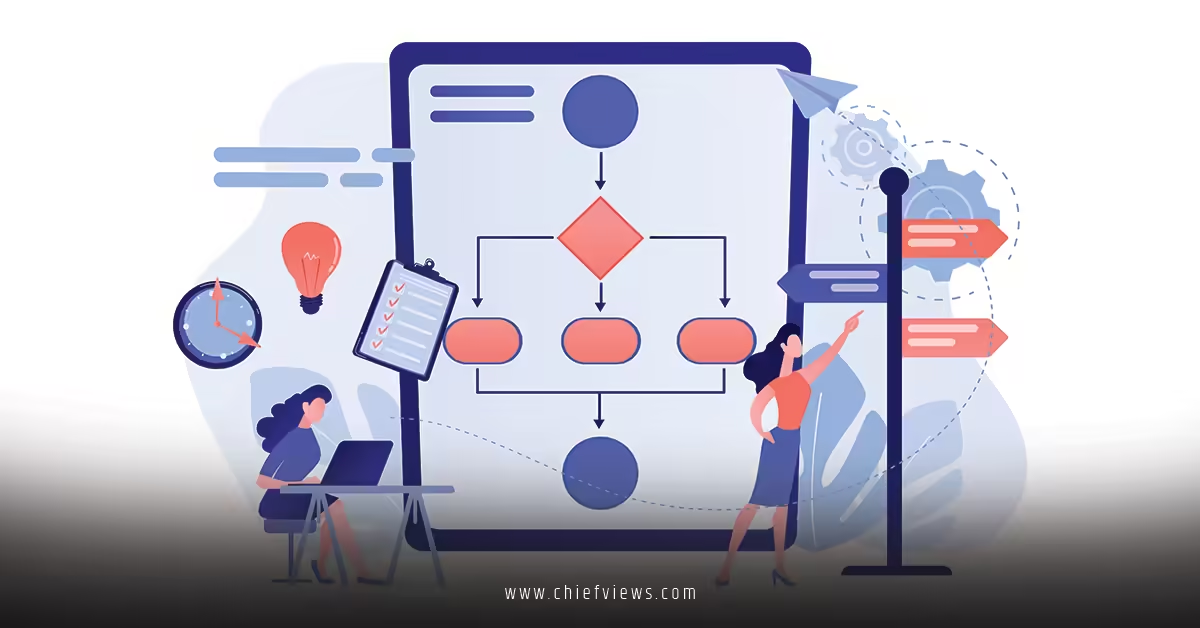
You do not need a big budget or complex software to begin. Grab a whiteboard or simple spreadsheet and list every step a customer takes. Start with awareness, move through consideration, purchase, delivery, support, and repeat business.
Talk to your team members who speak with customers daily. Their stories add real color to the map. Ask a few recent buyers what worked and what felt clunky. This basic approach already uncovers quick wins you can test this month.
Gathering real customer insights
CXO strategies for improving end to end customer journey mapping depend on listening closely. Send short surveys after key interactions. Review support tickets and social mentions. Watch how people actually use your site or app instead of guessing.
Combine numbers from analytics with real quotes from customers. One founder we know discovered that mobile users abandoned checkout because the form took too long on smaller screens. A simple redesign lifted conversions noticeably. Tools like heatmaps or session recordings make this easier without guessing.
Using technology to keep maps fresh
In 2026, smart businesses treat journey maps as living documents rather than dusty files. Customer expectations shift fast with new apps and channels. AI-powered platforms can highlight patterns across thousands of interactions and suggest improvements.
You can start small. Many affordable tools connect your CRM, email, and website data automatically. The goal stays simple: see what actually happens and fix friction points before they cost you customers. For more on modern tools, check resources from leaders like Salesforce on customer journey mapping.
Aligning your team around the customer
No single department owns the entire journey. Marketing brings people in, sales closes deals, operations delivers, and support keeps them happy. CXO strategies for improving end to end customer journey mapping work best when everyone looks at the same map.
Hold regular sessions where teams share updates from their part of the process. Celebrate fixes that improve the overall experience. When your whole business thinks in journeys, decisions become clearer and customers notice the difference.
Personalizing experiences at scale
Customers expect you to remember them. Good mapping shows where you can add relevant touches without being creepy. Use purchase history to recommend helpful next steps. Send timely reminders based on where someone is in their journey.
In markets like Singapore and Dubai, where service standards run high, these personal touches build strong loyalty. Test small changes and measure results. You will quickly learn what resonates with your audience.
Measuring what matters
Track metrics that connect to the full journey. Look beyond single touchpoints to overall satisfaction, repeat purchase rates, and referral numbers. Set clear goals for each stage and review progress monthly.
This data-driven loop turns mapping into a growth engine. When you see a dip in one area, you can trace it back and act fast. Many successful entrepreneurs say this ongoing measurement became their biggest competitive edge.
Common mistakes to avoid
Some owners create beautiful maps and then file them away. Others focus only on the happy path and miss what happens when things go wrong. Keep your maps practical and update them regularly as your business grows or markets change.
Do not try to map every possible variation at once. Start with your main customer paths and expand from there. Involve frontline staff early so the map reflects reality, not theory.
Building a culture of continuous improvement
The best CXO strategies for improving end to end customer journey mapping create habits, not one-off projects. Make it normal to review journeys during team meetings. Empower people to suggest and test small experiments.
Over time, this approach compounds. Your business gets better at anticipating needs and solving problems before customers complain. Owners in competitive regions like Australia and the UK often credit journey focus for stronger retention during tough periods.
We hope that you have found this article enlightening in some way and that it gives you practical steps to strengthen your customer relationships. Start mapping one key journey this week and watch how small changes create lasting impact for your business.