




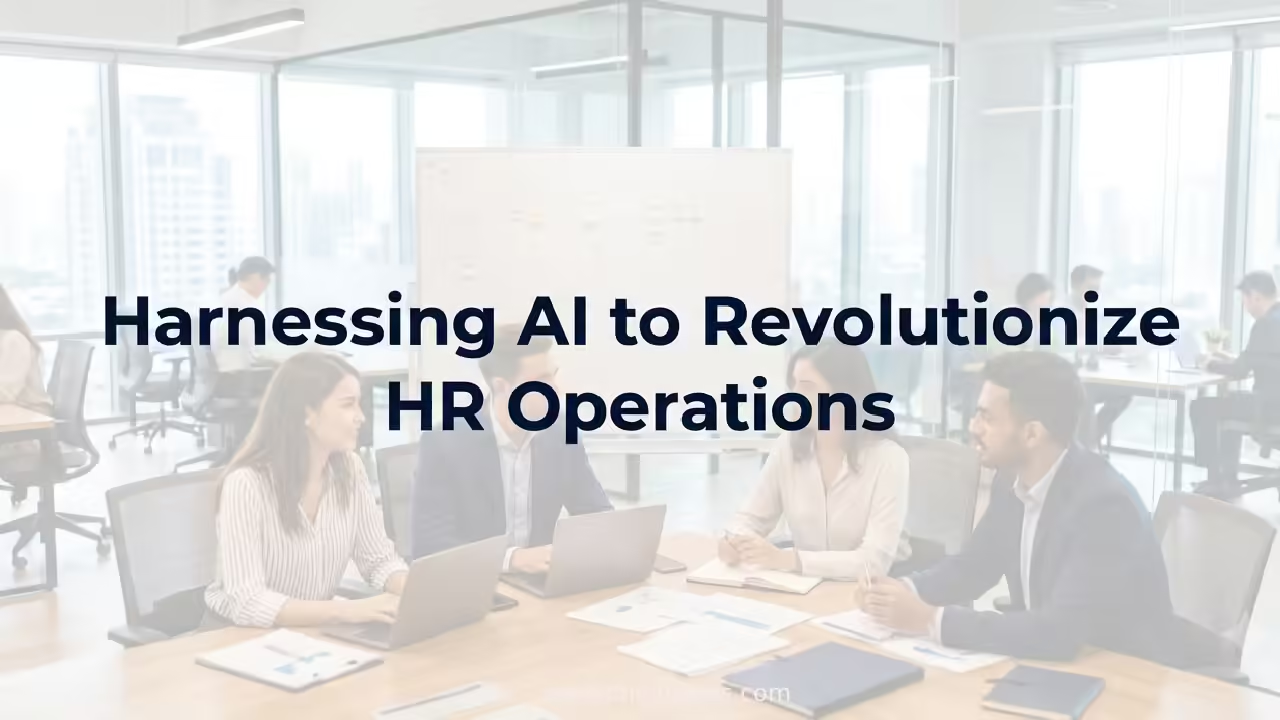
Harnessing AI to revolutionize HR operations turns routine people processes into faster, sharper decision engines while keeping humans in the driver’s seat. In 2026, the shift is real: AI agents handle screening, scheduling, policy answers, and basic analytics so HR teams spend less time on paperwork and more time on strategy, culture, and complex judgment calls. Here’s the quick read:
- AI automates high-volume tasks like resume screening and employee queries, cutting cycle times.
- Predictive tools flag flight risk and skill gaps before they become expensive problems.
- Adoption sits around 39–46% in U.S. HR functions, with recruiting leading the way.
- The payoff shows up in efficiency and role redesign, not mass layoffs.
- Success hinges on clean data, clear governance, and human oversight.
The old HR model ran on forms, spreadsheets, and endless email chains. That version is dying. What replaces it looks more like a smart control room than a filing cabinet.
Why Harnessing AI to Revolutionize HR Operations Matters Right Now
Look at the numbers from trusted sources. According to the Society for Human Resource Management’s State of AI in HR 2026 report, 46% of organizations expect to use AI in HR this year, with 39% already running tools in their functions. Recruiting tops the list at 27% adoption. SHRM also found AI is 5.7 times more likely to shift job responsibilities and three times more likely to create new roles than to eliminate jobs.
Deloitte’s 2026 Global Human Capital Trends survey drives the point home: seven in ten business leaders say speed and agility define their competitive edge for the next three years. AI helps orchestrate people and skills in real time instead of static annual plans.
In my experience working with mid-size and enterprise HR teams across the U.S., the biggest win is time. What used to take a recruiter three days of resume sorting now takes an afternoon of review. The kicker is quality—when the machine handles the volume, humans can actually talk to the best candidates longer.
Here’s the thing: AI does not replace HR judgment. It removes the noise so judgment can do its real job.


Where AI Already Changes the Daily HR Grind
Talent acquisition feels the impact first. AI parses resumes against skills frameworks, scores cultural and technical fit signals, and schedules interviews without the back-and-forth. Some teams report time-to-shortlist drops of 60% or more once the system is tuned.
Employee service shifts next. Chat-style agents answer benefits questions, PTO balances, and policy clarifications around the clock. Sensitive cases still escalate to people. That single change frees generalists from ticket queues.
Learning and development gets personal. AI maps individual skill gaps against business needs and recommends micro-learning paths. Performance conversations become less about memory and more about data patterns pulled from goals, feedback, and project outcomes.
Workforce planning moves from headcount spreadsheets to capability forecasts. Predictive models flag which roles will need reskilling six months out.
One analogy sticks with me. Think of traditional HR as a busy kitchen where every cook still chops every onion by hand. AI is the prep station that delivers clean, measured ingredients so the chefs can focus on the dish that actually matters.
Step-by-Step Action Plan for Getting Started
Beginners and intermediate teams do not need a five-year roadmap on day one. They need a clean sequence.
- Audit your current bottlenecks. List the three HR processes that eat the most hours every week. Recruiting volume and employee questions usually top that list.
- Clean the data foundation. AI is only as smart as the information it sees. Standardize job titles, skills taxonomies, and employee records before you plug anything in.
- Pick one high-volume, lower-risk use case. Resume screening or an internal HR chatbot are solid starting points. Avoid jumping straight into compensation decisions or sensitive performance scoring.
- Choose tools that integrate with your existing HRIS. Standalone pilots create more work than they save.
- Set governance rules before launch. Decide what the system can auto-resolve, what requires human review, and how bias audits will run. In states and cities with AI hiring rules (New York City Local Law 144 is a clear example), document everything.
- Train the team and the managers. Show them how to interpret outputs and when to override. In my experience, the teams that skip this step create quiet resistance that kills adoption.
- Measure the right things. Track time saved, quality of hire, employee response rates, and escalation volume. Adjust every 60–90 days.
What I’d do if I were starting a 200-person company tomorrow: stand up a tightly scoped recruiting AI and an employee query agent in the first quarter, then expand only after the first set of metrics prove clean.
Common Mistakes & How to Fix Them
Teams rush the tech and ignore the operating model. That is the most frequent failure I see. They buy a shiny tool, drop it on top of broken processes, and wonder why results stay flat. Fix it by redesigning the workflow first, then layering AI on top.
Another trap: treating AI as a black box. If recruiters cannot explain why a candidate ranked high or low, trust collapses. Require explainable outputs and keep a human in the final decision loop for hiring and promotion.
Data quality gets ignored. Garbage in still produces garbage out. Schedule regular data hygiene sprints the same way you schedule performance cycles.
Overlooking bias and compliance is expensive. Several U.S. jurisdictions already require bias audits for automated employment tools. Build audit cadence into the project plan from day one rather than reacting to a complaint.
Finally, some leaders expect overnight headcount cuts. Josh Bersin’s HR 2030 work projects that agentic systems could reshape 30–50% of traditional HR tasks by the end of the decade, but the value comes from shifting people toward higher-impact work, not from sudden layoffs. Plan for role evolution, not pure reduction.
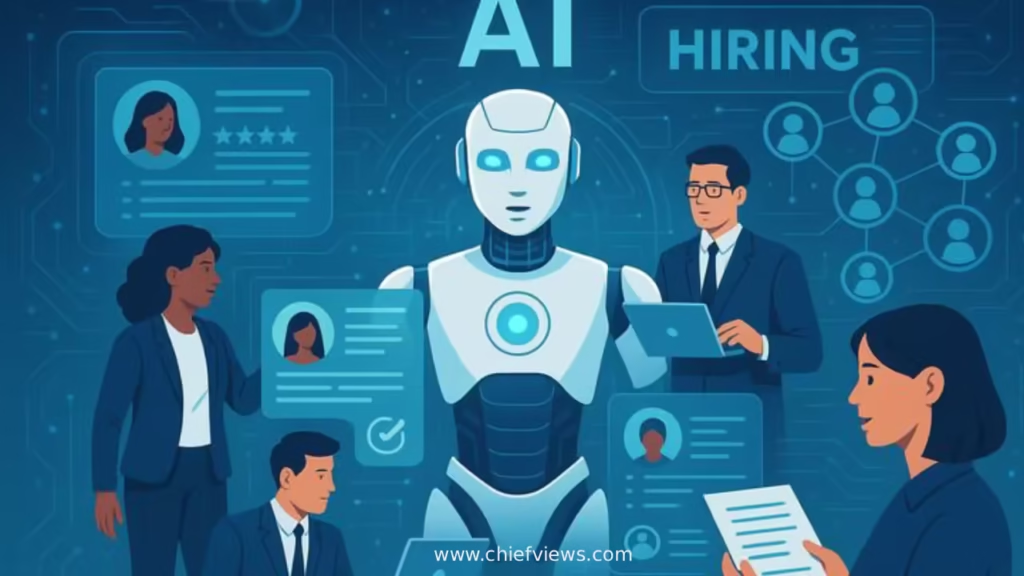
Practical Comparison: Traditional vs AI-Supported HR Processes
| Process | Traditional Approach | AI-Supported Approach | Typical Time Impact |
|---|---|---|---|
| Resume screening | Manual review by recruiters | AI scores against skills and experience | 60–80% faster shortlist |
| Employee policy questions | Email or ticket to HR generalist | 24/7 agent resolves common queries | Instant answers for majority of cases |
| Interview scheduling | Multiple email threads | Automated coordination with calendar access | Hours reduced to minutes |
| Skills gap analysis | Annual survey or manager guesswork | Continuous mapping from performance and learning data | Real-time visibility instead of lagging reports |
| Basic onboarding tasks | Checklist managed by coordinator | Guided self-service with smart escalation | Lower coordinator load, higher new-hire readiness |
Harnessing AI to Revolutionize HR Operations The table shows the pattern. AI owns the repetitive volume. Humans own the judgment, relationships, and exceptions.
Harnessing AI to Revolutionize HR Operations Without Losing the Human Core
The real differentiator in 2026 is not the algorithm. It is how deliberately you design the human-machine partnership. Deloitte’s research notes that organizations taking a purely tech-focused approach are less likely to beat investment expectations than those that put people and redesign at the center.
Ask yourself two sharp questions. First, which decisions should the system surface but never finalize? Second, what new skills does your HR team need so they can manage agents instead of just processing transactions?
In practice, the best teams treat AI agents like junior colleagues: give them clear scope, review their work, and coach them with better data. That mindset keeps culture intact while the technology scales.
Key Takeaways
- AI adoption in U.S. HR sits near 39–46% in 2026, with recruiting as the clearest early win.
- Expect role shifts and new skill demands far more than pure job loss.
- Start with clean data and one high-volume process rather than a full platform overhaul.
- Governance, bias audits, and human oversight are non-negotiable, especially under growing state rules.
- Measure time saved and quality outcomes, not just tool deployment.
- Redesign workflows before you add technology or you will automate inefficiency.
- The biggest return comes from freeing HR talent for strategy, culture, and complex problem-solving.
- Treat AI as a force multiplier, not a replacement.
Harnessing AI to Revolutionize HR Operations The organizations that move with intention right now will run leaner operations and stronger people strategies. Those that wait will spend the next two years catching up.
Start this week. Map your three biggest time sinks, check the quality of the data behind them, and run a focused pilot. That single move puts you ahead of most teams still talking about AI instead of using it.
FAQs
How does harnessing AI to revolutionize HR operations actually reduce bias in hiring?
When the system is trained on diverse, audited data and regularly tested for disparate impact, it can surface candidates more consistently than rushed human screening. The key is mandatory bias audits and keeping final decisions with people who understand context the algorithm misses.
What is the realistic timeline for seeing results from harnessing AI to revolutionize HR operations?
Most teams that start with a well-scoped recruiting or service pilot see measurable time savings inside 60–90 days. Broader operating-model changes take 12–18 months because data cleanup and change management sit in the critical path.
Does harnessing AI to revolutionize HR operations mean HR headcount will shrink dramatically?
Some administrative capacity will free up. Leading analysts project meaningful task automation by 2030, yet the same research shows new roles in AI governance, skills architecture, and employee experience design. The function becomes smaller in transactional work and larger in strategic impact.