







AI skills gap analysis for enterprises is the disciplined process of mapping the AI capabilities your business needs against the skills your people actually have—then quantifying the distance between the two.
Here’s the short version most leaders miss:
- It is not a one-time survey or a generic “AI literacy” score.
- It starts with business strategy, not training catalogs.
- The goal is role-specific proficiency targets, not making everyone a data scientist.
- Without a clear gap analysis, upskilling programs waste budget and fail to move the metrics that matter.
- Done right, it becomes the foundation for proving value through Measuring ROI of AI upskilling programs.
Most companies still guess. They buy licenses, launch courses, and hope the talent problem sorts itself out. Hope is expensive. The organizations that treat AI capability as a strategic asset run a proper skills gap analysis first.
Why the gap keeps widening in 2026
McKinsey’s latest State of AI work shows adoption is high—nearly 90% of organizations use AI in at least one function—yet only a minority report meaningful enterprise-level financial impact. The missing link is almost always skills. Gartner and Deloitte data point the same direction: talent readiness remains one of the top barriers to scaling.
The World Economic Forum’s Future of Jobs analysis continues to flag that core skills are shifting fast. AI and information-processing technologies are expected to transform the majority of businesses by 2030. That creates a dual pressure: some roles face overcapacity while AI-critical roles face acute shortages.
In practice, the gap shows up in three places. First, frontline teams lack the baseline literacy to use tools safely and productively. Second, technical and product teams lack the depth to build, integrate, or govern AI systems. Third, leaders lack the fluency to redesign workflows and measure outcomes. An effective AI skills gap analysis for enterprises surfaces all three layers.


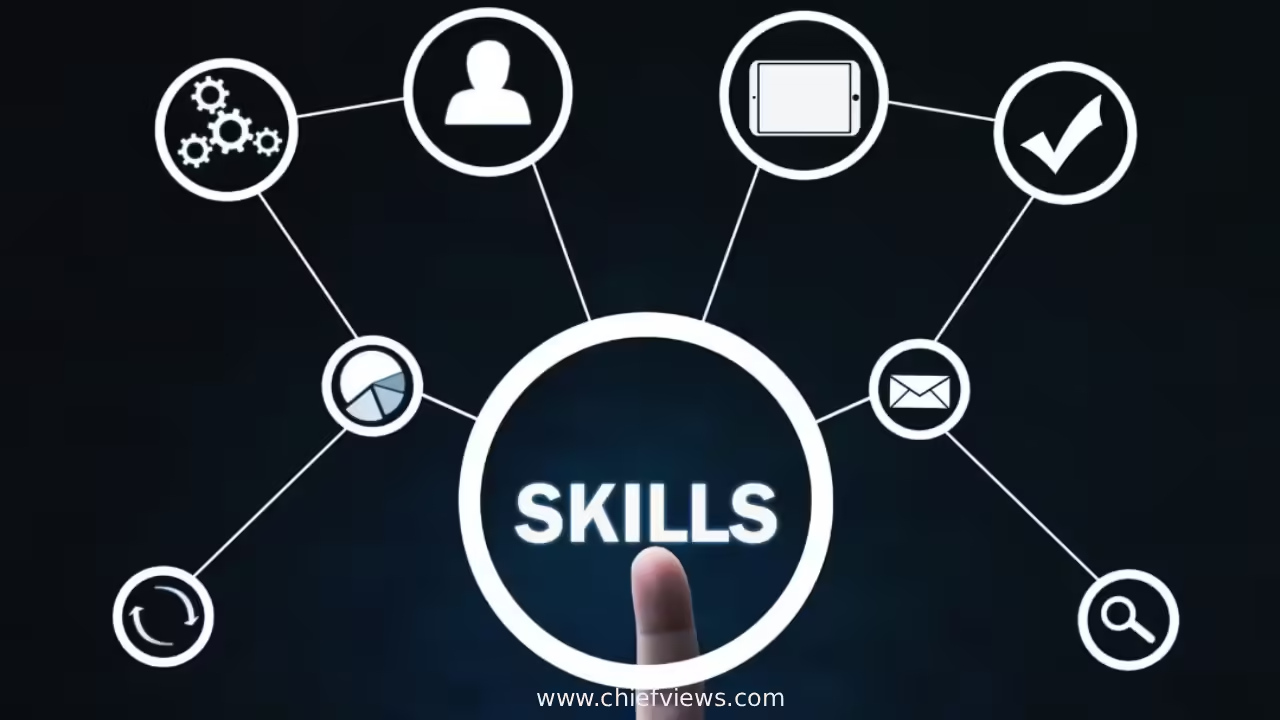
How to run an AI skills gap analysis for enterprises that actually works
If I were leading this for a mid-to-large U.S. organization right now, here is the sequence I would follow.
Step 1: Anchor to business outcomes
Start with the strategy, not the skills list. What revenue, cost, risk, or customer metrics must move in the next 12–24 months? Which processes or products depend on better AI capability? Those answers define the target state.
Step 2: Build a role-based capability model
Create a simple matrix. Define 4–6 role families (for example: AI consumers, operators, builders, leaders). For each, list the required proficiency levels—awareness, applied use, advanced application, or expert design. Keep it practical. Not every marketer needs to fine-tune models.
Step 3: Assess current state with multiple signals
Self-ratings alone are unreliable. Combine three sources: structured self-assessments, manager observation of real work, and practical tasks or diagnostics. Look at actual tool usage data where available. This triangulation reduces the optimism bias that kills most analyses.
Step 4: Quantify and prioritize the gaps
Plot current versus required proficiency. Score gaps by business impact (revenue risk, cost of delay, compliance exposure) and by feasibility of closing them. Focus first on the 20% of skills that drive 80% of the value.
Step 5: Translate gaps into action
Decide the mix of build (upskilling), buy (hiring or contractors), redeploy, or automate. This is where the analysis connects directly to Measuring ROI of AI upskilling programs—you now have clear baselines and target outcomes.
Sample prioritization matrix for AI skills gap analysis
| Role Family | Critical Skill Example | Current Avg Level | Target Level | Business Impact | Priority |
|---|---|---|---|---|---|
| Frontline / Ops | Safe daily tool use & prompt quality | Awareness | Applied | High (productivity + error risk) | Critical |
| Analysts / Knowledge Workers | Data interpretation + workflow automation | Applied | Advanced | High (cycle time + insight quality) | Critical |
| Technical / Builders | Integration, evaluation, governance | Mixed | Expert | High (build vs buy decisions) | High |
| Managers / Leaders | Workflow redesign + outcome measurement | Low | Applied | Very High (scaling & ROI) | Critical |
| Support Functions | AI ethics & risk flagging | Awareness | Applied | Medium-High (compliance) | Medium |
AI skills gap analysis for enterprises Adjust the rows to your industry. A healthcare organization will weight clinical decision support differently from a manufacturing firm.
Common mistakes that turn gap analysis into shelfware
Treating it as an HR project instead of a business strategy exercise. Fix: Put a cross-functional team (operations, product, finance, HR) in charge and tie every gap to a P&L or risk metric.
Relying only on self-assessment surveys. Fix: Add manager ratings and practical tasks. People overestimate their AI competence more often than they admit.
Creating one company-wide “AI literacy” target. Fix: Differentiate by role. A sales team and an engineering team need different depths.
Running the analysis once and filing the report. Fix: Refresh every 6–12 months. Skills requirements shift quickly; a static snapshot ages fast.
Skipping the link to measurement. Fix: Design the gap analysis so the same metrics become the baselines for later ROI tracking. Without that connection, training stays disconnected from results.
Key Takeaways
- AI skills gap analysis for enterprises must start with business strategy and end with prioritized, role-specific actions.
- Multiple assessment signals beat self-ratings alone every time.
- Prioritize the gaps that carry the highest business impact, not the ones that are easiest to train.
- The output should feed directly into upskilling design and into the process of Measuring ROI of AI upskilling programs.
- Refresh the analysis regularly—annual is the minimum in the current environment.
- Leaders and managers often show the largest hidden gaps; address them early.
- A clean gap analysis is the difference between scattered training spend and targeted capability building that moves real metrics.
AI skills gap analysis for enterprises AI skills gap analysis for enterprises The companies that close their AI skills gaps fastest are not the ones with the biggest training budgets. They are the ones that know exactly which capabilities matter, how far their people currently sit from those targets, and how to measure progress in business terms. Run the analysis properly once and the path to productive upskilling becomes obvious. Start with one high-impact function this quarter, establish the baselines, and you will have both clearer priorities and the foundation for proving return.
FAQs
How often should enterprises update their AI skills gap analysis?
Most organizations benefit from a full refresh every 6–12 months, with lighter pulse checks on critical roles more frequently. The pace of tool and process change makes annual-only reviews too slow.
What is the biggest difference between a traditional skills gap analysis and an AI skills gap analysis for enterprises?
Traditional analyses often focus on static job requirements. An AI-focused version must account for rapidly shifting proficiency needs, human-AI collaboration skills, and the redesign of work itself—not just adding new tools to old roles.
Can smaller companies run a meaningful AI skills gap analysis without expensive platforms?
Yes. Start with a focused spreadsheet matrix for the 3–5 most critical role families, combine self-assessment with manager input and a few practical tasks, and prioritize ruthlessly. The discipline matters more than the software at the beginning.

