








How CHRO can lead workforce redesign in human machine era starts with a simple reality check: AI agents are already executing tasks that used to sit inside human job descriptions, and the organizations winning right now treat the CHRO as the architect of that new mix rather than a late-stage change manager.
Here’s the quick overview most leaders need:
- Workforce redesign means breaking roles into tasks, then deciding which ones stay human-led, which become agent-led, and which run as true collaboration.
- The CHRO owns the human judgment layer, skills strategy, and governance that keep AI from creating bad jobs.
- Done right, this shift turns AI capacity into measurable revenue and innovation upside instead of just cost savings.
- Success hinges on tight CHRO-CIO partnership and middle-manager enablement.
- Waiting for perfect tools is the fastest way to fall behind.
The human-machine era isn’t coming. It’s here. Most companies still bolt AI onto old job descriptions and then wonder why the productivity needle barely moves. The smarter play treats the job itself as the redesign unit. That is where the CHRO earns the right to lead.
Why the Old Playbook Fails
Traditional workforce planning counted heads against growth targets. That model collapses when software can absorb large chunks of the work. IBM’s 2026 CHRO Study found that 46 percent of organizations still leave the CHRO out of AI strategy conversations. The ones that do involve HR early show roughly twice the revenue uplift and stronger workforce outcomes.
What usually happens is this: technology teams deploy tools, finance expects headcount leverage, and HR gets handed the residual people problems. Culture frays. Trust drops. Reskilling feels like an afterthought. The CHRO who waits for an invitation has already lost the initiative.

how CHRO can lead workforce redesign in human machine era through Task-Level Clarity
Start by refusing to redesign titles. Redesign the actual work.
Break every major role into discrete tasks. Score each one on three dimensions: repetition and data intensity, need for judgment or client trust, and risk if the output is wrong. Then assign a working mode:
- Agent-led: the system executes, a human samples and audits.
- Human-led: people own the outcome, agents support with research or drafts.
- Collaborative: both stay in the loop with clear handoff rules.
This is the core move. It keeps accountability with people while letting machines handle the volume work. In my experience, teams that skip this step end up with “AI-assisted” roles that still feel overloaded and unclear.
A practical table helps surface the differences fast:
| Aspect | Traditional Role Design | Human-Machine Redesign |
|---|---|---|
| Unit of analysis | Job title and headcount | Tasks and decision rights |
| Primary goal | Fill seats and control cost | Maximize value from human + agent capacity |
| Skills focus | Current competencies | Adaptive skills + AI fluency |
| Manager role | Direct and evaluate people | Orchestrate workflows and coach judgment |
| Success metric | Time-to-fill, turnover | Productivity per workflow, innovation throughput |
| Risk if ignored | Gradual obsolescence | Bad jobs, trust erosion, wasted AI spend |
The table is not theoretical. Organizations that map high-impact workflows where agents already shape or execute work end-to-end report clearer gains. That mapping belongs under CHRO ownership or shared HR-IT governance.
The Practical Action Plan for Beginners and Intermediate Leaders
If I were walking into a new CHRO role tomorrow, here’s the sequence I’d run.
- Claim the decision layer. Sit in the AI strategy sessions before vendors are selected. Define which decisions must remain human-led and who owns the final call. Make this explicit for two or three high-impact workflows first.
- Run a rapid task audit. Pick three critical roles. Decompose them with the people who actually do the work. Score and assign modes. This usually takes two to four weeks with focused facilitation.
- Build the CHRO-CIO operating rhythm. Weekly or bi-weekly joint reviews on work design, not just tool status. The partnership is non-negotiable. Technology builds the engine; HR redesigns the vehicle so the engine can actually deliver power.
- Invest in middle managers as the make-or-break layer. Give them clear authority over human-agent handoffs, training on exception handling, and metrics that reward good orchestration rather than pure output volume.
- Stand up skills infrastructure that matches the new work. Shift from annual training catalogs to continuous, workflow-embedded learning. Track which skills retain value and which depreciate fast. Premium AI talent costs are real; overpaying for skills that age out in two to five years destroys ROI.
- Pilot, measure, scale. Launch in one business unit. Measure both capacity released and quality of the remaining human work. Use those numbers to expand.
This sequence keeps the effort grounded. It also surfaces cultural friction early so you can address it before it hardens.
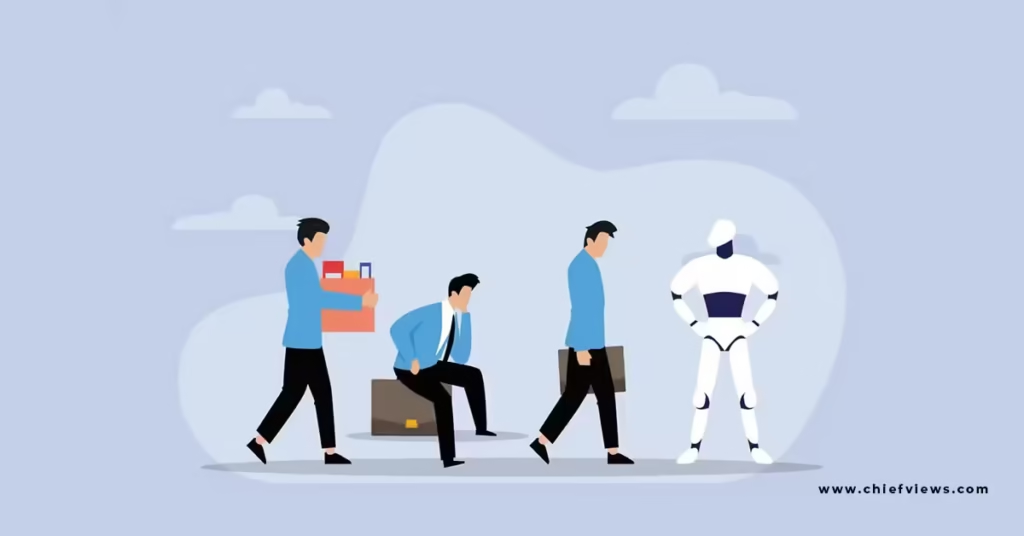
Common Mistakes and How to Fix Them
Most stalled efforts share the same patterns.
Mistake one: treating AI as a pure automation play. Fix: insist on work redesign alongside every major deployment. Automation inside unchanged jobs delivers marginal gains at best.
Mistake two: leaving middle managers under-equipped. They become the bottleneck or the resistance. Fix: redesign their roles too. Free them from administrative load so they can coach judgment and oversee agent performance.
Mistake three: measuring only HR metrics. Finance and the board care about business outcomes. Fix: report reskilling ROI and workflow productivity in language the CFO already understands.
Mistake four: ignoring the hidden workforce costs. Premium AI talent, rapid skill obsolescence, and potential rehire costs after cuts can erase expected savings. Gartner has flagged these risks clearly. CHROs need to surface the full cost picture early.
Mistake five: under-investing in the human edge. Curiosity, judgment, relationship depth, and creative problem-solving do not come from models. Protect and develop them deliberately.
Building Governance That Scales Trust
Governance is not a policy binder. It is the set of rules that tell people when to trust an agent output and when to escalate. CHROs should co-own the design of those rules with technology and legal partners. Clear escalation paths, audit sampling rates, and accountability for outcomes keep both humans and systems honest.
Culture follows the incentives. If promotion and pay still reward old volume metrics, people will treat agents as threats or toys. Redesign the performance system so collaboration quality and judgment quality count.
One useful analogy: think of the workforce as a high-performance kitchen during a dinner rush. The head chef (CHRO) does not cook every dish. She designs the stations, decides which prep the line cooks handle versus the automated equipment, and trains the team so the handoffs stay seamless under pressure. When the stations are wrong, even the best ingredients produce chaos.
how CHRO can lead workforce redesign in human machine era at the Enterprise Level
The organizations pulling ahead treat the CHRO as part of a leadership quartet—CEO, CFO, senior technology leader, and CHRO—rather than the traditional triad. Workforce capability, succession, and AI transformation sit on the same agenda. That shift moves the conversation from “how do we manage the people impact” to “how do we design the work system that creates competitive advantage.”
Skills graphs, dynamic workforce planning, and total workforce views that include agents all become practical tools once the ownership is clear. The CHRO who masters this becomes the enterprise leader of how work itself changes.
Key Takeaways
- Claim ownership of the human judgment layer and the work redesign process early, or someone else will define it for you.
- Break roles into tasks and assign clear working modes before scaling tools.
- Partner tightly with the CIO; work design is a joint sport.
- Equip middle managers as orchestrators of human-agent teams.
- Measure business outcomes, not just training completions.
- Surface hidden workforce costs of AI talent and rehire risk before they erode ROI.
- Protect and develop the uniquely human capabilities that models cannot replicate.
- Start with focused pilots in high-impact workflows and expand from proven results.
The payoff is straightforward. Organizations that redesign work instead of simply deploying AI convert capacity into growth. Those that treat the CHRO as the lead architect of that redesign move faster and with less cultural damage. The next step is practical: pick one critical workflow this quarter, run the task audit, and define the decision rights. Everything else builds from there.
FAQs
How can a CHRO start leading workforce redesign in the human machine era without a large transformation budget?
Begin with a focused task audit on two or three high-visibility roles. Use existing process experts and simple scoring frameworks. The insight generated usually unlocks internal support and modest pilot funding.
What skills matter most when CHROs lead workforce redesign in the human machine era?
Judgment under uncertainty, systems thinking, cross-functional influence, and the ability to translate technology possibilities into people outcomes. Domain expertise remains valuable; pure technical AI skills are less critical than the capacity to orchestrate the blend.
How do you measure success when leading workforce redesign in the human machine era?
Track released capacity that is redirected to higher-value work, quality and speed of decision outcomes in redesigned workflows, employee trust and clarity scores, and the business metrics those workflows support—revenue, innovation throughput, or customer experience.

