



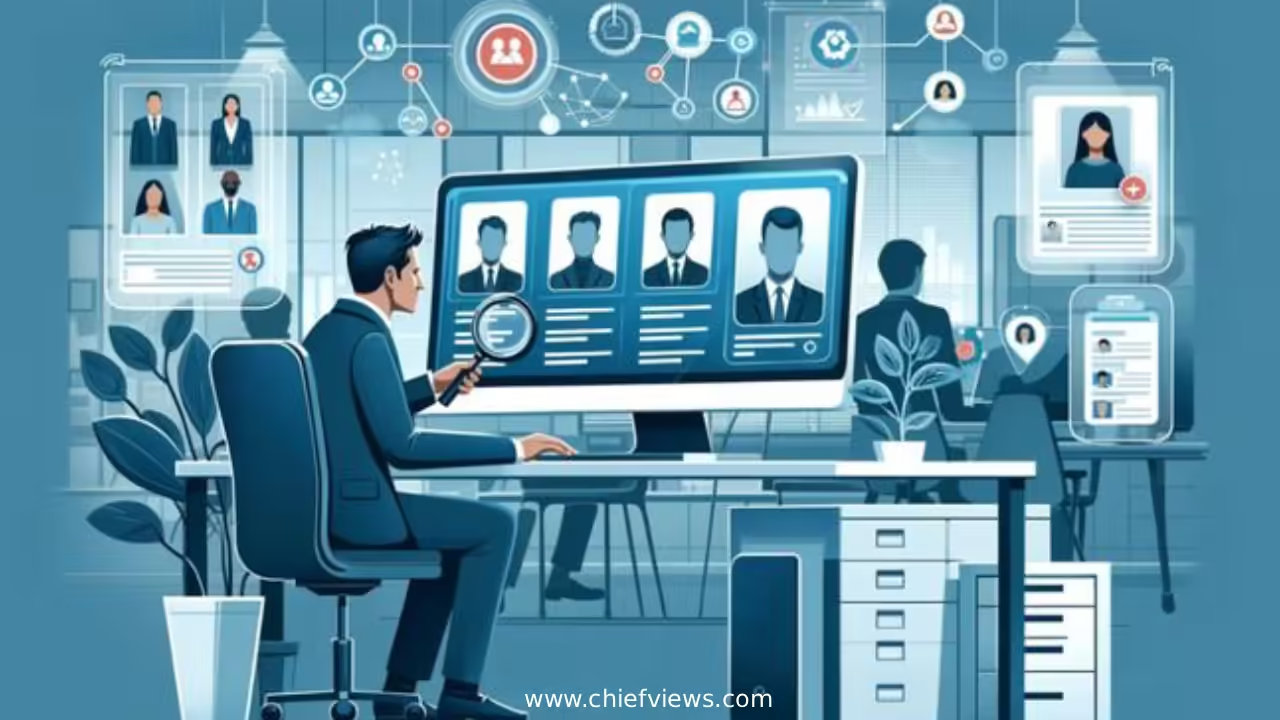
AI bias in recruitment tools has become the silent saboteur of diversity initiatives, costing companies millions in lost talent and legal settlements while perpetuating the very inequalities they claim to eliminate. Despite promises of objective, data-driven hiring, artificial intelligence systems often amplify historical biases at unprecedented scale, making discrimination faster and more systematic than ever before.
The reality hits hard:
- Systematic exclusion: AI tools can eliminate qualified candidates before human recruiters ever see them
- Legal liability: Biased algorithms create measurable disparate impact in hiring decisions
- Reputation damage: High-profile AI bias incidents destroy employer brands overnight
- Talent loss: Organizations miss diverse candidates who could drive innovation and growth
- Competitive disadvantage: Biased hiring limits access to the full talent pool
The Scale of AI Bias in Modern Recruitment
Let’s be blunt about this. AI bias in recruitment tools isn’t a theoretical problem—it’s happening right now in hiring systems across every industry.
Consider this analogy: if traditional hiring bias was a leaky faucet, AI bias is a burst dam. What used to affect dozens of candidates now impacts thousands, and what took months to manifest now happens in milliseconds.
Where Bias Hides in Your Recruitment Stack
Resume Screening Algorithms These tools learn from historical hiring data, which means they inherit past discrimination patterns. If your company historically hired fewer women for technical roles, the AI will “learn” that women are less suitable candidates.
Video Interview Analysis AI systems that analyze facial expressions, speech patterns, or word choice often penalize candidates from different cultural backgrounds. Accent detection algorithms particularly struggle with non-native English speakers.
Predictive Analytics Platforms Tools that predict candidate success based on employee data can perpetuate existing workplace inequalities. If current high performers share certain demographic characteristics, the AI may favor similar candidates.
Chatbot Interactions AI-powered recruitment chatbots can exhibit bias in their responses to candidate questions, potentially discouraging underrepresented groups from completing applications.
The Real-World Impact: What AI Bias Actually Costs
The Equal Employment Opportunity Commission (EEOC) has documented significant increases in AI-related discrimination complaints, with settlements reaching seven figures for systematic bias cases.
| Bias Type | Impact Area | Cost to Organizations |
|---|---|---|
| Gender Bias | Technical role screening | Lost innovation, legal liability, reputation damage |
| Racial Bias | Resume keyword filtering | Reduced diversity metrics, compliance violations |
| Age Bias | Skills assessment algorithms | Experience drain, age discrimination lawsuits |
| Disability Bias | Video interview analysis | ADA violations, accessibility compliance failures |
| Socioeconomic Bias | Educational background weighting | Limited talent pool, cultural homogeneity |
How AI Bias in Recruitment Tools Actually Works
Understanding the mechanics helps you spot problems before they become lawsuits.
The Training Data Problem
AI systems learn from historical data. If that data reflects biased hiring decisions from the past, the AI will reproduce and amplify those patterns. It’s like teaching someone to drive by only showing them accidents—they’ll learn, but not what you intended.
The Feature Selection Issue
Recruitment AI often uses proxy variables that correlate with protected characteristics. For example:
- Zip codes may correlate with race or socioeconomic status
- University names may favor candidates from privileged backgrounds
- Employment gaps may penalize caregivers disproportionately
- Extracurricular activities may reflect cultural or economic advantages
The Feedback Loop Trap
When biased AI systems make hiring decisions and those hires are later evaluated as “successful,” the bias gets reinforced. The system “learns” that its discriminatory patterns were correct, making future bias even stronger.
Identifying AI Bias in Your Recruitment Process: A Detection Guide
Step 1: Map Your AI Systems List every AI tool in your recruitment process—from job posting optimization to final candidate scoring. Include vendor-provided systems and internal algorithms.
Step 2: Request Bias Testing Documentation Ask vendors for recent bias audits. Legitimate AI providers should have documentation showing disparate impact testing across protected classes.
Step 3: Analyze Your Pipeline Data Track candidate progression rates by demographic group:
- Application to screening ratios
- Screening to interview ratios
- Interview to offer ratios
Step 4: Monitor Decision Explanations For any AI system making candidate decisions, you should be able to get explanations for why candidates were rejected or advanced.
Red Flags That Indicate Bias Problems
- Dramatic drops in diversity at specific pipeline stages
- AI recommendations that consistently contradict human recruiter assessments for diverse candidates
- Vendor inability or unwillingness to provide bias testing results
- Significant demographic disparities in AI scoring with no clear job-related justification
The Legal Landscape: What You Need to Know
The regulatory environment around AI bias in recruitment tools is evolving rapidly. The Department of Labor has issued new guidance on AI compliance for federal contractors, emphasizing proactive bias prevention.
Current Legal Requirements
Disparate Impact Testing: Employers must demonstrate that AI systems don’t disproportionately exclude protected groups.
Reasonable Accommodations: AI systems must accommodate candidates with disabilities, including alternative assessment methods.
Transparency Rights: Some jurisdictions require disclosure when AI is used in hiring decisions.
Record Keeping: Employers must maintain documentation of AI decision-making processes and outcomes.
Emerging Compliance Trends
Several states are considering legislation requiring AI bias audits for recruitment tools. New York City already requires bias audits for automated employment decision tools, and other jurisdictions are following suit.
Fixing AI Bias: Practical Solutions for Recruitment Teams
Immediate Actions You Can Take
1. Audit Current Tools Run disparate impact analyses on all AI-powered recruitment tools. Look for statistical differences in outcomes across protected classes.
2. Diversify Training Data Work with vendors to ensure training datasets include diverse representative samples, not just historical company data.
3. Implement Human Oversight Establish review processes where human recruiters can override AI recommendations, especially for borderline decisions.
4. Create Feedback Mechanisms Allow candidates to request explanations for AI-driven decisions and provide channels for bias reporting.
Advanced Bias Mitigation Strategies
Algorithmic Auditing Programs Partner with third-party auditing firms that specialize in AI bias detection. Schedule regular assessments, not just one-time reviews.
Diverse Development Teams When building internal AI tools, ensure development teams include diverse perspectives that can spot potential bias issues.
Continuous Monitoring Dashboards Create real-time monitoring systems that track bias metrics and alert you to emerging problems before they become patterns.
Vendor Accountability Standards Include bias prevention requirements in AI vendor contracts, with penalties for systems that produce discriminatory outcomes.
Building Bias-Resistant Recruitment Systems
The Inclusive Design Approach
Start with fairness as a core requirement, not an afterthought. This means:
- Setting bias prevention goals before selecting AI tools
- Including diverse stakeholders in vendor evaluation processes
- Requiring bias testing documentation before implementation
- Building override mechanisms into every AI decision point
Vendor Selection Criteria
When evaluating AI recruitment tools, prioritize vendors who can demonstrate:
- Regular third-party bias auditing
- Diverse training datasets
- Transparent algorithmic decision-making
- Ongoing bias monitoring capabilities
- Clear documentation of fairness measures
The Connection to Broader Ethical AI Governance
Addressing AI bias in recruitment tools effectively requires comprehensive organizational commitment to ethical AI practices. This is where building inclusive culture and ethical AI governance as a CHRO becomes essential—recruitment bias is just one symptom of broader AI governance challenges.
CHROs who implement organization-wide ethical AI frameworks find that recruitment bias problems become much easier to identify and solve because they have:
- Clear accountability structures for AI decision-making
- Established bias testing protocols across all AI systems
- Employee training programs that build AI literacy
- Cultural norms that prioritize fairness over efficiency
The most successful organizations treat recruitment AI bias as part of a larger ethical AI strategy rather than an isolated HR problem.
Measuring Progress: KPIs for Bias Reduction
Essential Metrics to Track
Pipeline Conversion Rates by Demographics
- Application to phone screen ratios
- Phone screen to final interview ratios
- Final interview to offer ratios
- Offer to acceptance ratios
AI Decision Quality Metrics
- False positive rates (qualified candidates rejected)
- False negative rates (unqualified candidates advanced)
- Human override frequency and success rates
- Candidate satisfaction with AI-driven processes
Business Impact Measures
- Diversity improvements in new hires
- Quality of hire metrics across demographic groups
- Time-to-fill improvements without bias increases
- Legal compliance and risk mitigation indicators
Creating Accountability
Your executive team needs to see bias reduction as a business imperative. Monthly reports should include:
- Bias risk indicators and trending
- Compliance status updates
- Diversity pipeline improvements
- Cost avoidance from bias prevention
Technology Solutions and Tools
Bias Detection Platforms
Several specialized tools can help identify bias in recruitment AI:
- Algorithmic auditing services that test for disparate impact
- Fairness monitoring platforms that provide real-time bias alerts
- Decision explanation tools that make AI recommendations interpretable
- Alternative assessment methods that reduce reliance on biased traditional measures
Implementation Best Practices
Phased Rollouts: Test bias mitigation measures on small candidate pools before full implementation.
A/B Testing: Compare biased and debiased algorithms to measure both fairness and effectiveness improvements.
Continuous Learning: Use bias detection results to continuously improve AI system training and performance.
Common Mistakes and How to Avoid Them
Mistake #1: Assuming AI is automatically more fair than humans Fix: Treat AI as amplifying existing bias patterns, requiring active bias prevention measures.
Mistake #2: Focusing only on gender and race bias Fix: Test for bias across all protected characteristics, including age, disability, and socioeconomic status.
Mistake #3: Relying solely on vendor assurances about fairness Fix: Conduct independent bias testing and require regular auditing documentation.
Mistake #4: Implementing bias fixes without measuring effectiveness Fix: Track bias metrics before and after implementing mitigation measures to ensure they work.
Mistake #5: Treating bias prevention as a one-time project Fix: Build ongoing monitoring and improvement into your standard recruitment operations.
The Future of Fair AI Recruitment
Emerging Technologies
Synthetic Training Data: Creating diverse datasets artificially to reduce historical bias influence.
Adversarial Fairness Testing: AI systems that actively test for and counter bias in other AI systems.
Multi-Modal Assessment: Combining various evaluation methods to reduce reliance on any single potentially biased measure.
Real-Time Bias Correction: Systems that adjust for bias as it’s detected, rather than waiting for periodic audits.
Preparing for What’s Next
The Federal Trade Commission (FTC) continues to increase scrutiny of AI bias in employment, making proactive compliance essential for future-ready organizations.
Stay ahead by:
- Building internal AI bias expertise
- Participating in industry bias prevention initiatives
- Maintaining relationships with bias testing specialists
- Keeping current with evolving compliance requirements
Key Takeaways
- Act immediately: AI bias in recruitment tools is happening now and getting worse with scale
- Test systematically: Regular bias auditing is essential, not optional
- Think holistically: Recruitment bias is part of broader AI governance challenges
- Measure relentlessly: Track bias metrics as closely as you track hiring metrics
- Build capability: Develop internal expertise rather than relying solely on vendors
- Stay compliant: Legal requirements are expanding rapidly
- Focus on culture: Technical solutions require cultural commitment to fairness
- Plan for evolution: Today’s bias fixes must adapt to tomorrow’s AI innovations
Taking Action on AI Bias
AI bias in recruitment tools won’t fix itself, and waiting for perfect solutions means losing great candidates every day. Start with a comprehensive audit of your current AI systems, focusing on the tools that make the most hiring decisions.
The organizations that address this challenge proactively won’t just avoid discrimination lawsuits—they’ll gain competitive advantage by accessing the full talent market while their competitors struggle with biased systems that limit their reach.
Your move: schedule that AI bias audit for next week, not next quarter. Your future hires depend on it.
Frequently Asked Questions
Q: How can we detect AI bias in recruitment tools if vendors won’t share algorithm details?
A: Focus on outcome analysis rather than algorithmic transparency. Track hiring pipeline conversion rates by demographic group and look for statistically significant disparities that can’t be explained by job-related factors. Many bias patterns become obvious through outcome data even without algorithmic access.
Q: What’s the most cost-effective way to test for AI bias in recruitment tools?
A: Start with internal data analysis using your existing HRIS data. Calculate adverse impact ratios (typically 80% rule) across protected classes for each stage of your recruitment process. This basic analysis costs nothing and identifies the highest-risk areas for deeper investigation.
Q: Should we stop using AI recruitment tools entirely until bias issues are resolved?
A: No—properly monitored AI can be fairer than unstructured human decision-making. The key is implementing bias detection and mitigation measures alongside AI tools, not abandoning them entirely. Focus on making AI systems accountable rather than eliminating them.
Q: How do we balance bias prevention with recruitment efficiency?
A: Frame it as risk management rather than efficiency reduction. One discrimination lawsuit costs more than years of bias testing. Additionally, unbiased AI systems often perform better overall because they’re accessing the full talent pool rather than artificially limiting options.
Q: What legal protections do we need when implementing bias testing for AI recruitment tools?
A: Work with employment law specialists to ensure bias testing processes don’t inadvertently create new legal risks. Document your bias prevention efforts as evidence of good faith compliance efforts, but ensure testing methodologies meet legal standards for evidence if needed in litigation.