



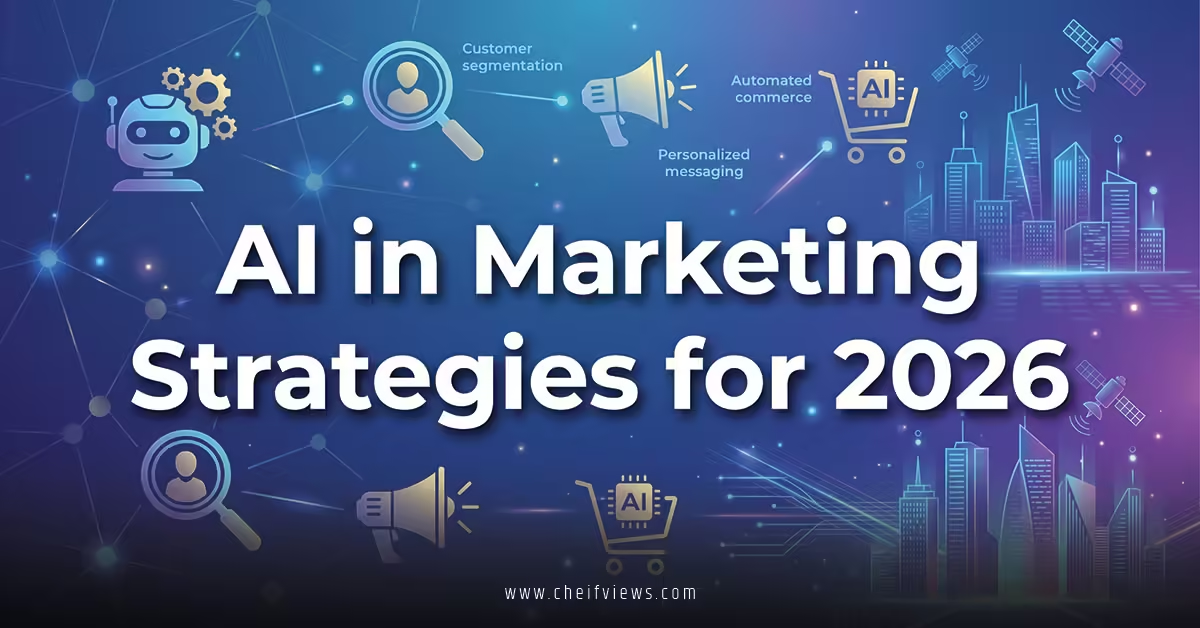
AI in marketing strategies for 2026 isn’t about flashy tools anymore. It’s about embedding intelligent systems into every layer of execution so campaigns adapt, optimize, and deliver measurable results while teams stay agile. CMOs who treat AI as a co-pilot rather than a magic button pull ahead. Those who don’t watch budgets evaporate and competitors lap them.
The shift feels brutal but rewarding. Generative AI handles grunt work at scale. Agentic systems run autonomous workflows. Yet human taste, strategy, and accountability remain the difference-makers. Get the balance right and you unlock speed, personalization, and efficiency that old playbooks can’t touch.
Quick Overview: What AI in Marketing Strategies for 2026 Really Means
- AI moves from experimentation to core infrastructure for personalization, automation, and decision-making.
- Agentic AI and multi-agent systems handle end-to-end campaign elements with minimal human intervention.
- Focus shifts to governance, data quality, and hybrid human-AI workflows for sustainable ROI.
- Integration with performance marketing trends and agile operating models for CMOs becomes essential for turning insights into rapid execution.
- Outcome: Faster iteration, lower waste, and higher returns in a privacy-first, AI-search world.
How AI Is Reshaping Marketing Fundamentals in 2026
Forget incremental gains. AI now rewires entire funnels. Predictive analytics forecast customer behavior before they act. Real-time optimization adjusts bids, creative, and targeting on the fly.
Hyper-personalization at scale stands out as the biggest lever. Brands deliver one-to-one experiences without manual segmentation. Agentic AI runs multi-step journeys—nurturing leads, adjusting offers, even closing simple sales autonomously.
The kicker? AI amplifies everything, including bad strategy. Clean data and strong guardrails separate winners from those burning money on hallucinated content or irrelevant targeting.



Key AI in Marketing Strategies for 2026 That Actually Deliver
Agentic AI and Autonomous Campaign Management
Gartner highlights brands adopting agentic AI for true one-to-one customer interactions. These systems handle complex workflows across channels without constant oversight.
AI-Powered Creative and Content at Scale
Generative tools produce thousands of variants for testing. Video generation improves dramatically for short-form and ad creatives. Yet the smartest teams keep humans in the loop for brand voice and authenticity—especially as consumers push back against obvious “AI slop.”
Predictive Analytics and Intent-Led Personalization
AI surfaces high-intent signals early. It powers dynamic audience building and lifetime value forecasting. This beats traditional demographic targeting by a mile.
AI-Augmented SEO and Search Everywhere Optimization
With AI assistants influencing discovery, content must earn citations in summaries and recommendations. Entity authority and semantic clarity trump old keyword stuffing.
Conversational and Commerce Experiences
Chat, voice, and in-app agents handle complex queries while feeding performance data back into the system for continuous improvement.
These strategies shine brightest when tied to flexible structures. Many leaders connect them directly to performance marketing trends and agile operating models for CMOs to test, learn, and scale fast.
Building AI-Ready Teams and Operating Models
Silos kill AI value. Successful CMOs build cross-functional pods where data scientists, creatives, performance specialists, and strategists collaborate in short sprints.
Start small. Pilot agentic workflows on one channel or segment. Measure not just output volume but actual business impact—revenue influence, customer acquisition cost, and iteration speed.
Tech backbone matters. Unified platforms with clean first-party data feed the models. Governance rules prevent drift. Training focuses on AI literacy so marketers direct systems instead of fearing them.
What usually happens is over-reliance on automation without oversight. Teams that review AI decisions weekly catch issues early and compound gains.
AI in Marketing Strategies for 2026: Pros, Cons, and Realistic Expectations
| Element | Traditional Approach | AI-Driven 2026 Approach | Realistic Impact |
|---|---|---|---|
| Personalization | Rule-based segments | Real-time, individual-level | 3-5x higher engagement in strong cases |
| Creative Production | Limited variants, slow testing | Thousands of AI-generated options | Faster optimization, but needs curation |
| Campaign Optimization | Manual or periodic | Autonomous agents with human guardrails | Reduced waste, higher ROAS |
| Measurement | Delayed reports | Real-time + predictive | Better attribution and forecasting |
| Team Speed | Quarterly planning | Bi-weekly sprints with AI insights | 2-3x faster adaptation |
| Risk | Human error | Hallucinations, bias, over-automation | Requires strong governance |
This comparison shows why integration matters. AI delivers speed and scale, but only agile operating models turn that into consistent wins.

Step-by-Step Action Plan for Implementing AI in Marketing Strategies for 2026
- Audit Your Foundation — Map current data quality, tech stack, and skill gaps. Fix garbage data first.
- Set Clear Objectives — Tie AI initiatives to revenue metrics, not just efficiency. Define success upfront.
- Pilot High-Impact Use Cases — Start with bidding automation, creative testing, or personalized email sequences.
- Build Governance Early — Create review processes, brand safety rules, and transparency standards.
- Train and Restructure Teams — Run AI literacy sessions. Shift to pod-based agile setups for faster decisions.
- Integrate with Performance Systems — Link AI insights directly into performance marketing trends and agile operating models for CMOs so insights turn into budget shifts within days.
- Measure, Iterate, Scale — Run retrospectives every sprint. Double down on what moves the needle.
Follow this and you’ll see tangible lifts within one quarter.
Common Mistakes & How to Fix Them
- Chasing Shiny Tools Without Strategy: Fix by starting with business problems, not vendor demos.
- Ignoring Human Oversight: AI drifts fast. Fix with weekly human review rituals.
- Poor Data Hygiene: Models amplify bad inputs. Fix by investing in clean first-party data pipelines.
- Underestimating Change Management: Teams resist new workflows. Fix by involving them in pilots and celebrating early wins.
- Measuring the Wrong Things: Vanity outputs over revenue impact. Fix by linking every AI project to pipeline or sales metrics.
Avoid these and you save serious time and money.
For proven frameworks, see Gartner’s Future of Marketing predictions and resources on performance marketing trends and agile operating models for CMOs.
Key Takeaways
- AI in marketing strategies for 2026 centers on agentic systems, hyper-personalization, and autonomous optimization.
- Success requires strong data foundations and human-AI collaboration.
- Tie AI initiatives to agile pods and performance measurement for real impact.
- Creative and strategic oversight prevent costly automation mistakes.
- Focus on earning visibility in AI-driven search and recommendation systems.
- Pilot relentlessly, measure revenue outcomes, and scale what works.
- Governance and training separate leaders from laggards.
- The biggest payoff comes when AI powers faster, smarter decisions inside flexible teams.
AI in marketing strategies for 2026 gives ambitious CMOs a genuine edge. Start by picking one workflow—creative testing or campaign optimization—and run a two-week agile sprint with AI tools. Track results ruthlessly. That single move builds momentum and clarity fast.
The brands winning right now treat AI as infrastructure for better thinking and faster execution, not a replacement for it. That mindset shift changes everything.
FAQs
How does AI in marketing strategies for 2026 connect to performance marketing trends and agile operating models for CMOs?
AI provides the real-time insights and automation that make agile pods and dynamic budget allocation actually work. Performance data feeds the models, while agile structures let teams act on recommendations immediately.
What ROI can marketers realistically expect from AI in 2026?
Early adopters report productivity gains worth 5-15% of marketing spend and significant lifts in response rates. Focus on governance yields the highest returns.
Which skills matter most for teams executing AI in marketing strategies for 2026?
AI literacy, prompt engineering, data interpretation, and strong strategic judgment. Technical skills matter, but the ability to direct AI toward business goals matters more.