






CIO guide to data governance and compliance in cloud migration is something many business owners worry about when they decide to move their operations to the cloud. You have valuable customer information, financial records, and important business data that you need to keep safe. At the same time, you want the flexibility and cost savings that cloud services offer. It feels like a big step that could either protect your company or expose it to serious risks if not handled right.
In this article, we’re going to be taking a look at CIO guide to data governance and compliance in cloud migration, and how you can build a secure, efficient setup that supports your growth. If you would like to find out more, feel free to read on.
Pic – CC0 License
Why this matters for your business right now
Moving to the cloud can help you scale faster and cut down on hardware costs. But without proper controls, you might run into data breaches, fines, or lost trust from customers. In places like the USA, UK, Australia, Singapore, and Dubai, rules around data privacy keep getting stricter. As a business owner, you need to stay ahead of these changes so your move supports your goals instead of creating new headaches.
We see many entrepreneurs start the migration process excited about new possibilities, only to discover midway that their data practices need serious work. Taking time upfront to get governance right saves money and stress later.


What data governance actually means in practice
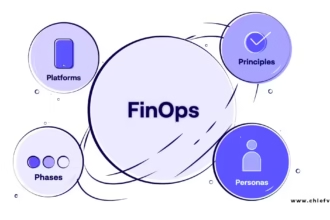
Data governance is simply the set of rules and processes you put in place to handle your information responsibly. It covers who can access what, how data is stored, and how you keep it accurate and secure. In a cloud environment, this becomes even more important because your data lives outside your physical office.
You define clear roles so everyone knows their responsibilities. You set standards for data quality so reports stay reliable. And you create policies that travel with your information no matter where it sits. This approach turns data from a potential liability into a real business asset.
Building your foundation before the move
Start by taking stock of what data you have and where it lives today. Classify information based on how sensitive it is – customer details, employee records, financials, and so on. This step helps you decide what moves first and what needs extra protection.
Create a small team or assign clear owners for data decisions. Even if you run a smaller operation, someone needs to own these choices. Document your policies in plain language so the whole team can follow them. Tools from major cloud providers can help automate parts of this, but you still set the direction.
CIO guide to data governance and compliance in cloud migration works best when you treat it as an ongoing practice rather than a one-time project.
Key compliance areas to watch
Different regions have their own requirements, but several big ones affect many businesses. In Europe and for companies dealing with EU customers, GDPR sets high standards for consent and data rights. California’s CCPA continues to evolve with updates that impact how you handle consumer information.
Australia, Singapore, and Dubai each have their frameworks too. The smart move is to aim for the strictest applicable rules so you build something that works across borders. Focus on areas like consent management, data breach notification timelines, and the right to be forgotten.
We recommend reviewing your processes against official GDPR guidance to make sure you cover the basics. Many businesses also check resources from the National Institute of Standards and Technology for practical security frameworks that translate well to cloud setups.
Practical steps you can take
- Map your data flows so you understand exactly what moves to the cloud and how it gets used.
- Implement strong access controls – only give people the permissions they need for their role.
- Set up monitoring that alerts you to unusual activity right away.
- Test your backup and recovery processes regularly.
Choose cloud partners that offer built-in compliance tools. Look at services from AWS, Azure, or Google Cloud that include encryption, audit logs, and automated policy enforcement. These features make your job easier without requiring a huge IT team.
CIO guide to data governance and compliance in cloud migration includes picking the right migration strategy. Some companies move everything at once while others do it in phases. Phased approaches often feel safer because you can fix issues as you go.
Training your team and keeping momentum
Technology alone does not solve everything. Your people need to understand why these rules exist and how to follow them in daily work. Run short training sessions that focus on real scenarios rather than technical jargon.
Encourage a culture where team members speak up about potential data issues. Reward careful handling of information instead of speed at any cost. This mindset shift pays off over time as everyone contributes to keeping things secure.
Common mistakes to avoid
Many businesses rush the migration and treat governance as an afterthought. This usually leads to rework and higher costs. Others copy policies from larger companies without adapting them to their own size and industry.
Avoid setting rules that no one follows. Keep things practical and review them regularly as your business grows. Also watch out for shadow IT where teams use unapproved cloud tools – these create hidden compliance gaps.
Measuring success along the way
Track a few simple metrics like the number of access incidents, how quickly you respond to data requests, and overall data quality scores. These numbers give you clear signals about whether your approach is working. Review them quarterly and adjust as needed.
We hope that you have found this article enlightening in some way…
Taking control of your data practices during cloud migration sets your business up for smoother growth and fewer surprises. You do not need to become an expert overnight, but starting with clear ownership, practical policies, and the right tools makes a real difference. Keep learning, stay consistent, and treat data governance as one of your smartest business investments. Your future self – and your customers – will thank you for it.