


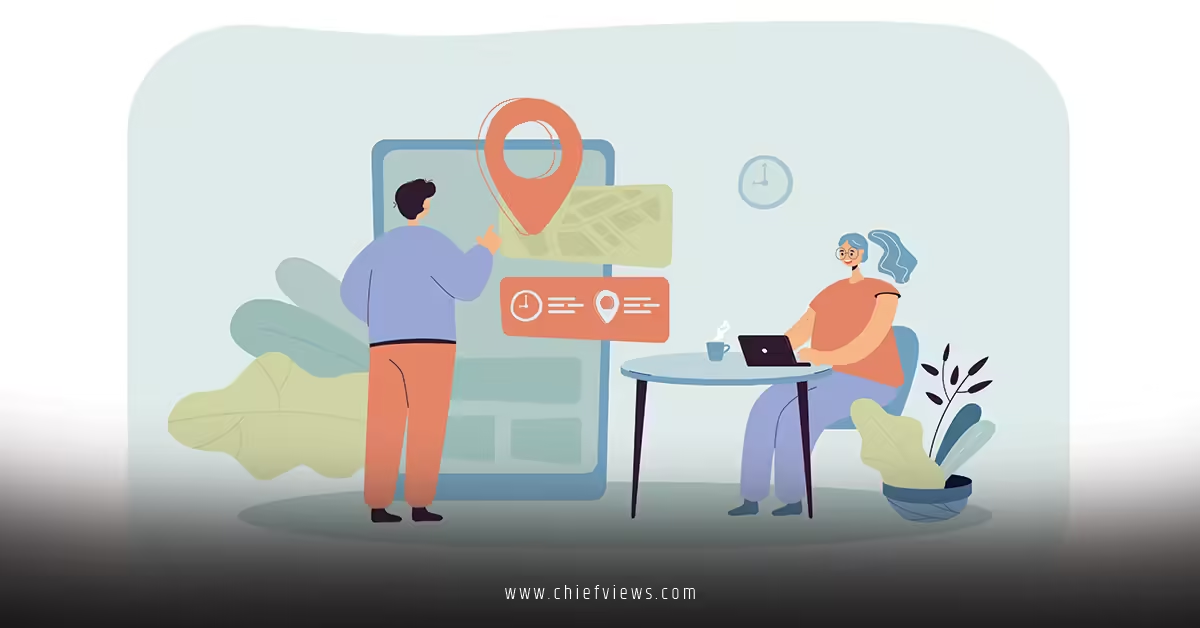
Customer journey mapping sounds like something only big brands do, but it’s one of the most practical tools any business can use to boost sales and improve customer experience. Whether you’re running an e‑commerce store, a B2B service, or a local brand in the USA, UK, AUS, Singapore, or Dubai, your customers are moving through a series of steps with you—from finding you, to buying, to coming back (or leaving). If you don’t understand that journey, you’re guessing.
We’re going to be walking through how customer journey mapping works, why it matters, and simple steps you can use to build your own map without hiring a consultant. Along the way, we’ll show you how it connects directly to best practices for CMO building zero party data strategy 2025, so your marketing becomes more honest, more personal, and more effective.
What Is Customer Journey Mapping?
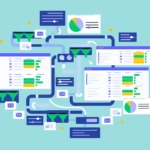
Customer journey mapping is a visual way of showing every step your customer takes with your business, from first touch to long‑term loyalty. It looks at what they’re doing, thinking, and feeling at each stage, and how your brand shows up in that moment.
Typically, a journey map covers stages like:
- Awareness (they discover you)
- Consideration (they compare options)
- Purchase (they decide and buy)
- Onboarding or delivery (they start using what they bought)
- Retention (they stay, renew, or buy again)
- Advocacy (they recommend you to others)
Instead of guessing what customers want, we lay out the journey and see where they’re confused, frustrated, or delighted. That’s where the real growth opportunities sit.
Why Customer Journey Mapping Matters for Entrepreneurs
As entrepreneurs and business owners, we’re juggling a lot. Marketing, sales, support, product—it can feel like pieces that don’t always connect. Customer journey mapping pulls everything together around one question: What is it like to be our customer?
Here’s what it helps you do:
- Spot friction points that quietly kill conversions (confusing forms, slow responses, unclear pricing).
- Align your team around the same view of the customer, instead of each department seeing only their slice.
- Plan better campaigns because you know the right message for the right stage.
- Build stronger loyalty by improving onboarding, support, and renewal moments.
When we combine journey mapping with best practices for CMO building zero party data strategy 2025, we move from guessing about customers to building based on what they openly tell us.
The Key Stages of a Simple Customer Journey Map
You don’t need a fancy tool to get started. A whiteboard, a spreadsheet, or a simple slide deck is enough. Focus on these core stages and keep it practical:
1. Awareness
This is how people discover you: search engines, social media, referrals, ads, events, or content. Ask:
- What triggers them to start looking for a solution?
- Which channels are bringing the strongest leads?
- What questions are they asking at this point?
2. Consideration
Here, they’re comparing options, reading reviews, checking prices, and visiting your site or talking to your team.
- Are your benefits clear and easy to understand?
- Can they find proof (case studies, testimonials, demos)?
- Is it easy to contact you or get a sample/trial?
3. Purchase
This is the moment of decision: checkout, signing a contract, booking a call, or confirming a subscription.
- Is the process smooth and fast?
- Are payment and terms clear?
- Do they get immediate confirmation and next steps?
4. Onboarding and Use
After buying, customers want to feel confident they made the right choice.
- Do you guide them with clear onboarding steps?
- Do they know how to get help if they get stuck?
- Are you checking in proactively, not just when there’s a problem?
5. Retention and Loyalty
Here, we want customers to stay, upgrade, and buy again.
- Do you offer loyalty rewards, useful content, or check‑ins?
- Do you regularly ask for feedback and act on it?
- Are you tracking why people leave and fixing patterns?
Mapping these stages gives you a structured view of your entire customer experience.

How Customer Journey Mapping Supports Zero-Party Data Strategy
One of the smartest SEO and growth moves you can make is tying customer journey mapping to best practices for CMO building zero party data strategy 2025. Zero‑party data is information customers willingly share—about their needs, preferences, and intentions. Your journey map tells you where, when, and how to ask for that information in a way that feels natural.
For example:
- At awareness and consideration: Short quizzes or preference forms help match them to the right product or content.
- At onboarding: Simple questions about goals and use cases let you personalize guidance.
- At retention: Feedback surveys and “check‑in” forms help tailor future offers and spot risk early.
When we plan these touchpoints inside the journey map, data collection stops looking like a random form and starts feeling like a helpful conversation.
Steps to Build Your First Customer Journey Map
Let’s keep this simple and actionable. Here’s a basic process you can follow:
- Pick one core customer segment
Start with your most important type of customer (e.g., “new online buyers in the USA” or “SMB clients in Singapore”). Don’t try to map everything at once. - List the main stages
Write down awareness, consideration, purchase, onboarding, retention, and advocacy. Add or adjust stages based on your business model. - Identify customer actions at each stage
Note what they actually do: search on Google, read reviews, book a demo, watch a tutorial, talk to support. - Capture emotions and questions
At every step, ask: what are they likely feeling? What questions are on their mind? This is where marketing and service opportunities come from. - Map your touchpoints
List every way they interact with you: website pages, emails, social posts, sales calls, app screens, store visits. - Highlight pain points and gaps
Look for slow responses, unclear messaging, missing content, or extra steps that create frustration. - Plan improvements and data collection
For each stage, decide what you want to fix and where you’ll respectfully ask for zero‑party data that improves their experience.
Once you’ve built this first map, you can refine it over time as you gather more insight from customers and your analytics.
Using Customer Journey Maps to Improve Marketing and Sales
Customer journey mapping isn’t just a planning exercise; it should reshape how we run marketing and sales day to day.
Here’s how you can use it:
- Targeted content: Create blogs, videos, and guides tailored to specific stages, like “first‑time buyers” or “renewal questions.”
- Smarter email flows: Build sequences that match where the customer is, instead of sending every contact the same message.
- Better sales conversations: Train your sales team to recognize the stage a prospect is in and adjust the conversation accordingly.
- Improved support scripts: Design help center articles and support flows that answer stage‑specific needs, not just generic FAQs.
Because your journey map is grounded in customer behavior, your campaigns become far more relevant and conversion‑focused.
Common Mistakes to Avoid in Customer Journey Mapping
As we build these maps, it’s easy to fall into a few traps. Keep an eye out for:
- Guessing without talking to customers: Always combine your internal view with surveys, interviews, or feedback.
- Making maps too complicated: Start simple. You can always add detail later.
- Treating the map as “one and done”: Update it as your products, markets, and channels evolve.
- Ignoring cross‑channel behavior: Your customers don’t see “departments”—they see one brand. Map online and offline together where relevant.
Staying practical and customer‑focused will keep your journey maps useful, not theoretical.
Bringing It All Together
Customer journey mapping gives us a clear window into how people actually experience our business. When we combine it with best practices for CMO building zero party data strategy 2025, we create a powerful engine for growth: a journey that feels smooth, honest, and tailored—because it’s fueled by insight customers choose to share.
By starting with one key segment, mapping the stages, and slowly layering in better content, smoother processes, and smarter data collection, you can turn your journey map into a real competitive advantage. The goal isn’t perfection; it’s progress that your customers can feel every time they interact with your brand.