





CXO strategies for measuring and improving NPS scores start with a simple idea: if you do not ask customers the right questions, you cannot fix the right problems. Many business owners collect feedback, but far fewer turn it into a clear plan that lifts loyalty, retention, and repeat revenue. If you want a practical way to measure what customers really think and improve it step by step, this article is for you. In this article, we’re going to be taking a look at CXO strategies for measuring and improving NPS scores, and how you can build a customer experience that keeps people coming back. If you would like to find out more, feel free to read on.
Pic – CC0 License
CXO strategies for measuring and improving NPS scores start with the right baseline
Before you improve your Net Promoter Score, you need a clean starting point. NPS asks one question: how likely is a customer to recommend your business on a scale from 0 to 10, and the score is calculated by subtracting detractors from promoters. That sounds easy, but the real value comes from measuring it in a consistent way across the customer journey. A single score without context tells you very little. [1]
Start by measuring NPS at the moments that matter most: after onboarding, after a support interaction, after a purchase, and after renewal. That gives you a clearer picture of what is driving trust or frustration. You should also segment the results by product line, location, customer type, and channel. A SaaS founder in Singapore may see different patterns from a retail operator in the UK, and that difference matters. [1]
Ask for feedback at the right time
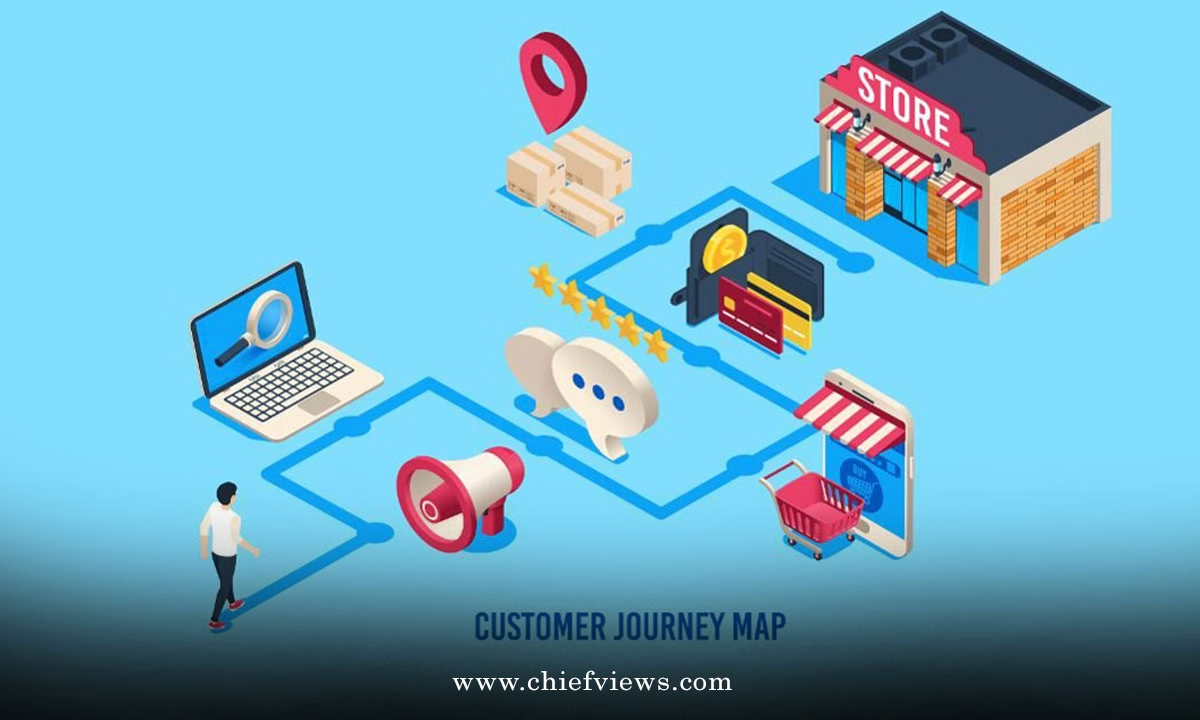
Timing changes the quality of the answer. If you send an NPS survey too early, customers may not have enough experience to judge your business. If you send it too late, the problem may already have turned into churn. The best CXO strategy is to map the customer journey and choose the moments where feedback is most useful.



Keep the survey short and easy to complete on mobile. Ask the score question first, then follow with one open-ended question such as, “What is the main reason for your score?” That second question often gives you the useful detail the number cannot. When you make feedback simple, you get more honest answers and better response rates.
CXO strategies for measuring and improving NPS scores need the voice of the customer
Numbers are useful, but the comments tell the story. CX leaders and founders should review the open-text feedback every week, not once a quarter. Look for repeated words, repeated complaints, and repeated praise. Those patterns show you where the business is winning and where it is leaking trust.
It also helps to listen across channels. Support tickets, live chat, call notes, and social comments often reveal the same pain points that appear in NPS results. When you connect those sources, you move from “the score is down” to “this process is causing the drop.” That is where better decisions begin.
Turn the score into action, not reporting
One of the biggest mistakes business owners make is treating NPS as a dashboard number. A score only matters if it leads to action. The best CXO teams assign owners to each major issue, set deadlines, and track whether the fix actually changes the customer response. Without that discipline, NPS becomes a report people glance at and ignore.
Use a simple loop: measure, review, fix, and measure again. For example, if customers complain about slow onboarding, shorten the setup process and then check whether the next NPS wave improves. If support response times are the issue, adjust staffing or routing and see whether detractor comments drop. That cycle keeps the work practical and visible.

Build a culture where employees care about the score
Customer experience is not just a front-office job. It depends on how your sales team sells, how operations delivers, and how support responds when things go wrong. If your people do not understand why NPS matters, the score will not improve for long. Training, coaching, and clear service standards all play a part.
Share NPS results with the teams closest to the customer. Show them what customers are saying, both good and bad, and connect those comments to real actions. When employees see that feedback leads to change, they are more likely to take ownership. That is how service improves in a way customers can feel.
Use benchmarks carefully and compare like with like
Benchmarking helps, but only if you compare your business against the right group. A national average across the USA, UK, Australia, Singapore, or Dubai may be interesting, but it is not always useful for decision-making. What matters more is whether your score is improving against your own past performance and whether the trend is strong in the segments that matter most.
If you do want external context, use reputable sources and broad market references rather than chasing a single “good” number. Bain, the original creator of NPS, explains the method and why it is best used as a relationship indicator rather than a standalone trophy metric. [2] For a wider customer experience perspective, Qualtrics has a useful overview of how NPS fits into customer listening programs. [3]
Make the improvements visible to customers
Customers notice when you act on their feedback. If you fix a recurring issue, tell them. If you launch a faster support route, simpler onboarding, or a clearer returns process, let them know what changed. That closes the loop and builds trust.
This is especially important for growing businesses. When customers see that their feedback leads to real improvements, they are more likely to stay loyal and recommend you to others. In practice, that means your CXO strategy is not just about measuring sentiment. It is about proving that the business listens.
We hope that you have found this article enlightening in some way, because the main lesson is simple: NPS works best when you treat it as a management tool, not a vanity metric. If you measure at the right moments, read the comments closely, and act fast on what you learn, you give your business a better chance to grow through trust, not guesswork.